Why Is Water Freezing Not A Chemical Change

There’s a quiet magic in watching a tray of liquid water transform into solid ice cubes, ready to chill a summer drink. This simple, everyday act—turning water into a refreshi...

There’s a quiet magic in watching a tray of liquid water transform into solid ice cubes, ready to chill a summer drink. This simple, everyday act—turning water into a refreshing, crystal-clear solid—is a physical pleasure we often take for granted. Yet, the very reason it’s so valuable—the fact that you can melt those cubes back into water without any loss of quality—is precisely why freezing is not a chemical change. Understanding this distinction helps us appreciate the reversibility and reliability of physical states, which underpins everything from preserving food to making perfect iced tea.
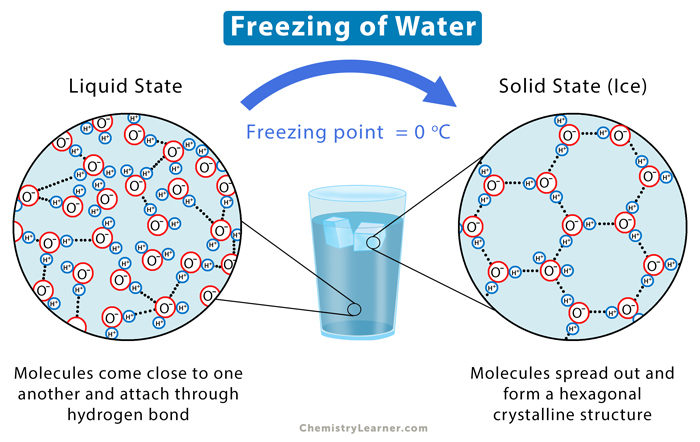
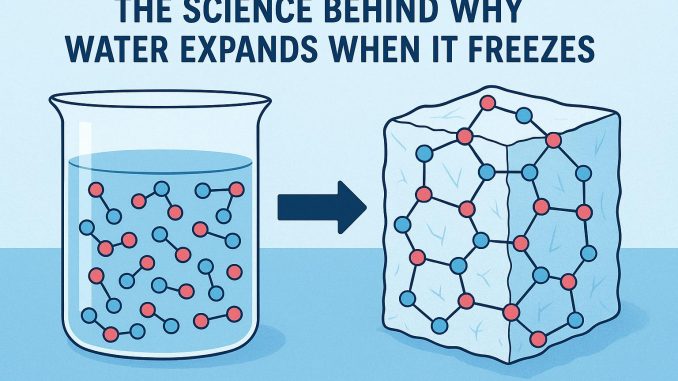
The key to identifying a chemical change is that it creates new substances with different properties. Think of burning wood: you cannot simply unburn the ash and smoke back into a log. Freezing water, however, produces ice, which is still chemically H₂O. The molecules themselves remain unchanged; they haven’t broken apart or recombined. The transformation is purely about energy—specifically, the loss of heat energy, which slows the water molecules down enough to lock them into a rigid, crystalline structure. This is why a frozen iceberg, when melted, yields the same pure water as before—no chemical reaction required.
The purpose of recognizing this difference is foundational to science and daily problem-solving. If freezing were a chemical change, we could never rely on ice to simply melt back into drinking water. In a practical sense, consider a chef who freezes a broth to store it for a week. She knows that thawing it will return the exact same broth, not a new, inedible substance. Similarly, your car’s radiator uses antifreeze to lower the freezing point of water—a physical adjustment that prevents engine damage. None of these everyday benefits would work if freezing altered the water’s chemical identity.
Must Read
Another vivid example is the humble puddle on a cold sidewalk. When the temperature drops, the puddle becomes a smooth, slippery sheet of ice. Chemically, it’s still water—just in a solid phase. When the sun comes out, the ice melts, and the puddle is back. This entire cycle—liquid to solid to liquid—is a physical process called a phase change. No new molecules were born, and none died. The only thing that changed was the arrangement and motion of the existing water molecules, driven by temperature. This reversibility is the hallmark of physical changes, and it’s why we can freeze and refreeze water indefinitely without creating anything new.
To help you explore this concept on your own, here are a few simple tips. First, test the reversibility at home: freeze a small cup of tap water, then let it thaw completely. Compare the taste and clarity of the thawed water with a fresh cup—you’ll find them identical. Second, observe the energy loss: place a thermometer in a cup of water in the freezer. You’ll notice the temperature drops steadily to 0°C (32°F) and stays there while the water freezes, then continues falling once it’s solid. This plateau is the physical release of latent heat, not a chemical reaction. Finally, contrast it with a chemical change: boil an egg. You cannot unboil it back into liquid egg—that’s a chemical alteration of proteins. Freezing water is nothing like that.
 The Science Behind Why Water Expands When It Freezes
For a deeper dive, try adding a solute like salt to water before freezing. The salt water will freeze at a much lower temperature than pure water (around -21°C for heavily salted brine). This is a physical property known as freezing point depression. The water molecules still remain H₂O, and the salt remains NaCl—they simply interact differently in the cold. You can melt the ice by raising the temperature, and the salt will still be dissolved in the recovered liquid water. This experiment powerfully demonstrates that no chemical bonds between hydrogen and oxygen were broken or formed; only the physical state changed.
Ultimately, appreciating why water freezing is not a chemical change enriches our understanding of the reliable world around us. It means we can trust that our ice will melt into drinkable water, that frozen food retains its original chemistry, and that natural cycles like winter snow melting into spring streams are predictable and safe. So the next time you pop an ice cube tray out of the freezer, take a moment to marvel: you are witnessing a beautiful, reversible dance of molecules, not a chemical transformation. It’s a small but profound reminder that much of what we use daily depends on the simple, physical properties of matter.