Why Is My Espresso Puck So Wet

There’s a simple, almost meditative pleasure in pulling the perfect shot of espresso at home. The morning ritual of grinding fresh beans, tamping with care, and watching that...
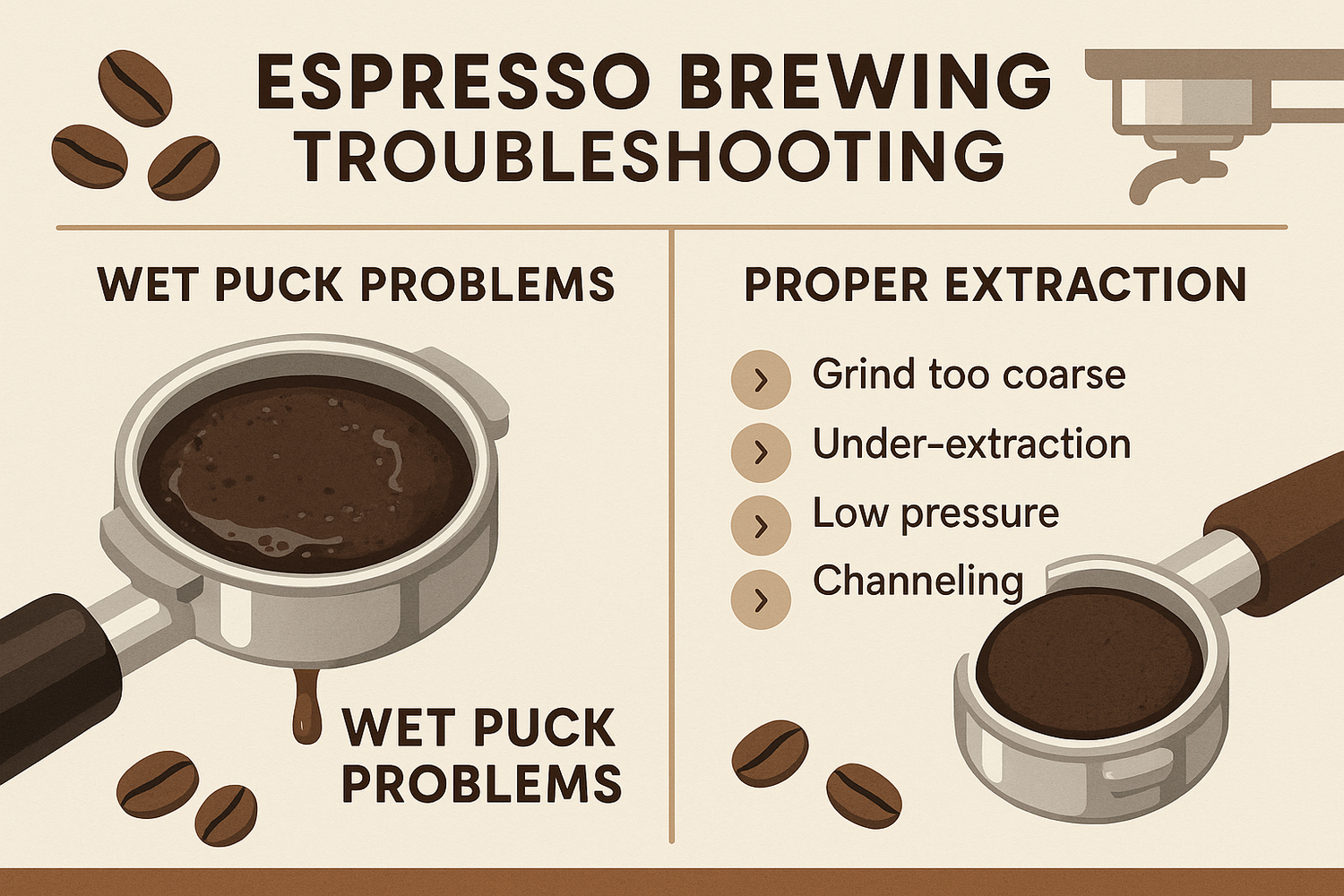
There’s a simple, almost meditative pleasure in pulling the perfect shot of espresso at home. The morning ritual of grinding fresh beans, tamping with care, and watching that rich, honey-like stream flow into a small cup is a humble luxury. For many, it’s not just about caffeine; it’s a daily anchor—a few minutes of focused calm before the day’s chaos begins. A well-made espresso offers an instant lift, both in energy and in the satisfaction of a skill mastered. But this satisfaction can evaporate the moment you knock out the spent coffee puck and find it soupy, muddy, or saturated with water instead of forming a firm, dry disc.
This wet puck is far more than a cosmetic annoyance. It is your machine’s way of whispering a technical secret; it signals that something in your brewing process is out of balance. A properly extracted espresso puck should be dry enough to hold its shape after being knocked out. When it’s wet, it often means the water channeled through the coffee too quickly, or it sat on top of the grounds for too long after the shot ended. Understanding this message is key to improving your shot quality, consistency, and the lifespan of your machine.
One of the most common culprits is grind size. Imagine trying to pour water through a sand castle versus a pile of gravel. If your grind is too coarse, water rushes through the coffee bed, creating weak espresso and leaving the grounds barely touched—a wet, muddy mess. Conversely, if the grind is too fine, the water may struggle to pass through, causing over-extraction and a "soup" of saturated coffee. The goal is to find the sweet spot where the grounds form a semi-permeable barrier. A simple test: adjust your grinder one or two steps finer. If the puck becomes firmer, you were too coarse. If it clogs the machine, you were too fine.
Must Read
Another frequent offender is tamping technique. A great shot begins with a level, consistent tamp. Think of it as laying a solid foundation. If your tamp is uneven—tilted to one side—the water will follow the path of least resistance and erode one side of the puck, leaving the rest of the coffee bed untouched and flooded with excess water. Even if your tamp is level, a force that’s too light can allow water to push past the sides of the basket. Conversely, using excessive force is rarely the problem; the real issue is consistency and alignment. Practice tamping with a steady, vertical motion, applying about 15–20 pounds of pressure, and always check that the surface is perfectly level before locking in the portafilter.
Your machine’s dosing and basket size play a crucial role as well. Most modern espresso baskets are designed to hold a specific weight of coffee—typically 18 to 22 grams for a double shot. Using too little coffee leaves a large "headspace" above the puck. After the shot, water pools in this gap, soaking the top of the coffee and creating a wet, soupy layer. On the flip side, using too much coffee can prevent the group head from pressing down properly, also leading to a wet puck. A basic rule: weigh your dose, aim for the basket’s capacity, and ensure the puck is snugly compressed by the shower screen after tamping. You can test this by locking in a dry, tamped portafilter and then removing it—if you see a clean imprint from the shower screen, your dose is likely correct.
 Why is My Espresso Puck Wet? How to Fix Wet Coffee Puck
Finally, consider your machine’s three-way solenoid valve. This is the internal mechanism that releases pressure from the group head after you stop the shot. It’s what causes that brief hissing sound. If this valve is partially clogged or failing, the excess water cannot be properly drained away from the puck. Instead, the water sits on top of the coffee, turning it into a wet, sticky sludge. A telltale sign is if your puck is not only wet but also has a small "divot" or hole in the center, where the water tried to escape but couldn’t. Regular cleaning of your machine’s group head and backflushing with a cleaning solution can prevent this. If the problem persists, it may be time for a professional descaling or a repair.
To explore this on your own, start with one variable at a time. First, check your grind size by pulling a shot and timing it—it should take 25–30 seconds for a double shot. Next, weigh your dose and ensure it matches your basket’s capacity. Then, practice your tamp by pressing down with a level, arm-strength motion. Finally, deep-clean your group head with a blind basket and a tablet of espresso machine cleaner. Each small adjustment brings you closer to the perfect, dry, and cleanly knocked-out puck. That satisfying "thump" of a solid puck hitting the knock box is not just a sound—it is a reward for your patience and precision, and a sign that tomorrow’s morning ritual will be just a little bit more perfect.

