Why Does Lactaid Milk Last Longer Than Regular Milk

Let’s be honest, there’s a special kind of disappointment that comes from pouring a glass of regular milk only to be met with a sour smell. That’s why the topic of Lactaid mil...
Let’s be honest, there’s a special kind of disappointment that comes from pouring a glass of regular milk only to be met with a sour smell. That’s why the topic of Lactaid milk’s longer shelf life is not just a fun science fact—it’s a practical lifesaver for busy households, coffee lovers, and anyone who hates wasting food. The main purpose of understanding this difference is simple: it saves you money, reduces trips to the store, and ensures your morning latte never gets ruined by curdled dairy. For people with lactose intolerance, it’s even more essential, as they rely on this milk as a daily staple. Common variations you might recognize include whole, 2%, or fat-free Lactaid, all of which share that handy extended freshness.
So, why does Lactaid last longer? The secret lies in how the milk is processed. Regular milk naturally contains a sugar called lactose. Lactaid milk is treated with an enzyme called lactase, which breaks that lactose down into simpler sugars—glucose and galactose. This is a game-changer for freshness. The breakdown process also slightly alters the milk’s chemistry, making it less hospitable to the bacteria and microbes that cause spoilage. Think of it like this: regular milk is a buffet for bacteria, while Lactaid is more like a smaller, less tempting snack plate.
Another key factor is the ultra-pasteurization process used for most Lactaid milk. Unlike regular milk, which is often pasteurized at a lower temperature (say, 161°F for 15 seconds), Lactaid is heated to a much higher temperature—around 280°F—for just a few seconds. This kills nearly all spoilage-causing microorganisms right from the start. While this does give the milk a slightly “cooked” or creamier taste, it’s the reason you’ll often see a “use by” date that’s 30 to 60 days out, compared to the typical 10–14 days for regular milk.
Must Read
It’s also worth noting that the packaging plays a role. Many Lactaid cartons are made with an aseptic, shelf-stable lining that blocks light and air—two major enemies of fresh milk. This design helps maintain the sterile environment created during ultra-pasteurization. However, don’t mistake this for being completely unspoilable. Once you crack open the carton, airborne bacteria can still get in, so you’ll want to follow the standard rule of using it within 7 to 10 days after opening. The extended date is mostly for the unopened shelf life.
Here are a few simple, actionable tips to make the most of your Lactaid. First, always check the “use by” date before buying—it’s your clearest guide. Second, store it in the coldest part of your fridge, not the door, to maintain its freshness after opening. Third, if you’re someone who only uses milk occasionally, buy a smaller carton of Lactaid to avoid waste. And for baking or cooking, you can even use it past the “use by” date if it still smells and looks fine, though it’s best to stick to the sniff test as your final judge.
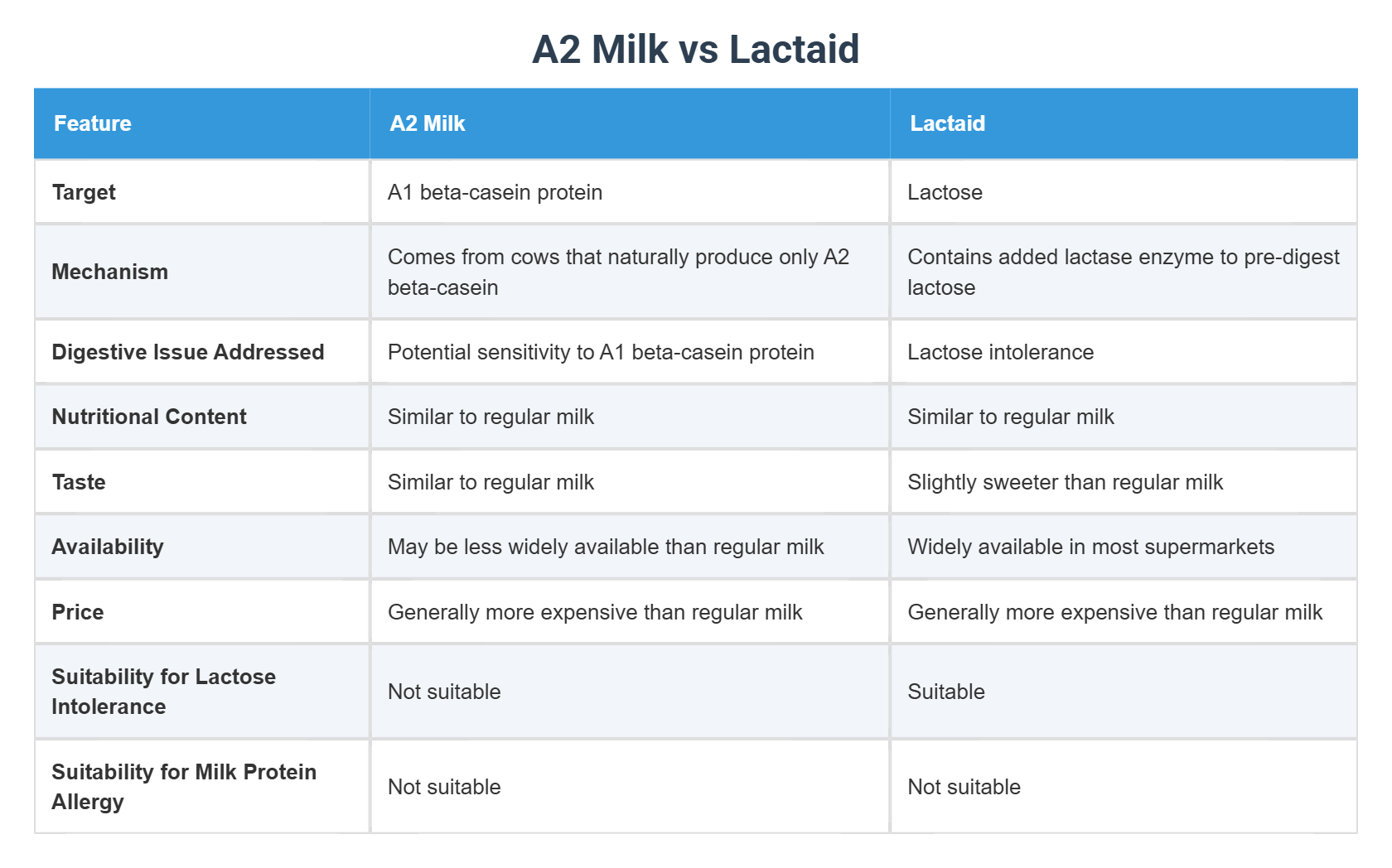 A2 Milk vs Lactaid
Of course, not everyone loves the slightly sweeter taste of Lactaid, which comes from those broken-down sugars. Some people prefer regular milk for cereal or drinking straight. But for others—like parents packing school lunches, campers heading out for a long trip, or anyone who hates sour surprises—that extra week or two of fridge life is a huge win. It’s a simple, clever solution that makes milk fit your schedule, not the other way around.
In the end, the reason Lactaid lasts longer comes down to smart engineering and understanding dairy chemistry. By combining enzyme treatment with high-heat pasteurization and quality packaging, you get a product that stays fresh far beyond what regular milk can manage. So next time you pour a glass of Lactaid that’s still perfectly creamy two weeks later, you can appreciate the science—and enjoy the peace of mind that comes with a longer, happier fridge life.
