Why Do Spiders Stay In The Same Spot For Days

You’ve probably noticed a spider hanging out in the same corner of your window for days, maybe even weeks. It’s a common, almost boring sight, but it’s actually a fascinating...

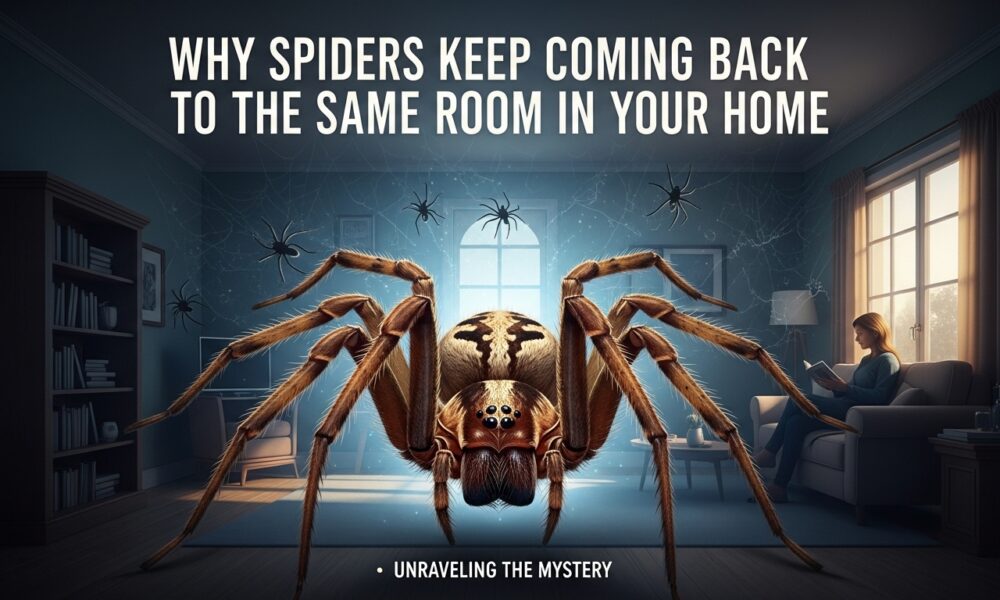
You’ve probably noticed a spider hanging out in the same corner of your window for days, maybe even weeks. It’s a common, almost boring sight, but it’s actually a fascinating glimpse into a master strategist’s life. Understanding why they stay put isn’t just a quirky fact—it matters for anyone who wants to coexist peacefully with these misunderstood neighbors or even learn from their patience. The benefits ripple out: for individuals, it reduces irrational fear; for families, it sparks curiosity instead of panic; and for communities, it promotes a healthier respect for local ecosystems.
The core reason is energy conservation. Spiders are cold-blooded and spend a huge amount of calories spinning silk, hunting, and digesting prey. By staying motionless in one spot—like a web’s hub or a sheltered crack—they’re powering down like a laptop in sleep mode. Think of it as their version of hustle culture done right: they only move when the payoff is guaranteed. For example, a garden orb-weaver will wait days at the center of its web, feeling vibrations, and only dash out when an insect lands. This teaches us a quiet lesson about patience and efficiency in our own frantic lives.
Another key factor is safety in stillness. A spider that stays still is harder for predators—like birds, wasps, or lizards—to spot. Their motionless posture is a survival hack that disappears them into the background. In real life, this is why you might see a cellar spider camped in a dim corner for a week: it’s betting its camouflage will outlast any threat. For families, this means you can point to that spider and say, “Look, it’s hiding to stay safe,” turning a startle into a teachable moment about natural defense mechanisms.
Must Read
Waiting for prey is the obvious reason, but it’s more nuanced than you’d think. Some spiders, like the jumping spider, don’t build a web—they stalk. Yet they’ll freeze in one spot for hours if they sense a nearby meal. This ambush strategy hinges on timing: they wait until the prey’s movement pattern is predictable, then strike. An example from my backyard: I watched a wolf spider hold still near a crack for two days, then snatch a passing ant in seconds. It’s a reminder that good things come to those who wait—a principle that applies whether you’re a spider or a human saving up for a goal.
Molting is another hidden reason. Before shedding its exoskeleton, a spider becomes vulnerable and utterly still for days. It stays in a safe spot, often in its web or a retreat, to avoid injury during the process. If you spot a spider that seems unusually sluggish and hasn’t moved from a web’s edge, it might be molting. This is crucial for communities caring for pet tarantulas: you know not to disturb them. For families, it’s a chance to explain growth phases—like a butterfly’s cocoon—and why quiet periods are sometimes essential for transformation.
 Why Do Spiders Stay In The Same Spot For Days | Detroit Chinatown
To apply this knowledge at home, here are practical tips. First, if you see a spider parked for days, don’t panic—don’t squish or spray it. Instead, give it space; it’s likely on a mission. Second, if you’re cleaning a corner, gently relocate the spider with a cup and paper, placing it in a sheltered spot outside. Third, for curious kids, keep a simple observation journal: note how long the spider stays, what it eats, and when it moves. This turns a passive sighting into a fun science project. Finally, if you have a garden, leave a few undisturbed areas like rock piles or dense plants—they’re perfect spider sanctuaries that naturally control pests.
So next time you pass a spider that hasn’t budged in three days, don’t dismiss it as lazy or creepy. Recognize it as a tiny, patient genius conserving energy, dodging predators, or molting into a stronger self. This realization benefits your life by replacing fear with fascination, and it strengthens your community’s bond with nature. In a world that constantly pushes us to move faster, the spider’s stillness is a gentle, positive reminder: sometimes, staying right where you are is the smartest move of all.