Why Do Persimmons Make Your Mouth Feel Weird

You bite into a beautiful, ripe persimmon, expecting pure honeyed sweetness. Bam. Suddenly, your entire mouth feels like it's lined with sandpaper or coated in a strange, fuzz...

You bite into a beautiful, ripe persimmon, expecting pure honeyed sweetness. Bam. Suddenly, your entire mouth feels like it's lined with sandpaper or coated in a strange, fuzzy blanket. Ever wonder why that happens, or what's actually going on in there?
It’s a wild sensation, right? One second you’re enjoying fruit, the next your tongue is throwing a tiny protest. This weird, drying, astringent feeling is the persimmon's secret party trick, and it’s actually pretty fascinating if you dig a little deeper.
Meet the Ninja in Your Fruit
The culprit isn't a bug or a seed; it's a chemical compound called tannin. Tannins are a natural substance found in many plants, from tea and dark chocolate to red wine and grapes.
Must Read
Think of tannins as little molecular ninjas. When you eat an unripe persimmon, these ninjas leap out and bind to the proteins in your saliva. Your usually slick saliva gets tangled up, turning thick and sticky, which creates that rough, dusty feeling.
It’s your mouth’s way of saying, "Hey! Too soon!" This isn’t a bad thing—it’s a clever evolutionary trick. The persimmon tree doesn't want animals eating its seeds before they're ready, so it uses astringency as a polite but firm "keep out" sign.
Fuzzy vs. Smooth: The Persimmon Family Feud
Not all persimmons are created equal, and this is where it gets really cool. You’ve got two main types: the common Hachiya and the squat, tomato-like Fuyu.
The Hachiya is the "fuzz bomb." It’s shaped like an acorn, and if you eat it while it’s still firm, you will instantly know what I’m talking about. It’s packed with tannins until it becomes completely jelly-soft and translucent.
 Why Persimmons Make Your Mouth Dry - YouTube
Then there's the Fuyu. This chunky guy is your safe, sweet friend. It’s a non-astringent variety, meaning it has way fewer tannins and can be eaten crisp like an apple. Bite into a Fuyu, and you get pure, sugary flavor with zero mouth drama. It’s like choosing a calm puppy over a wild wolf.
Why It’s Actually Awesome (Not Gross)
I know the feeling can be jarring, but that astringency is a sign of something cool: potent antioxidants. The same tannins that dry out your mouth are the same compounds that fight inflammation and protect your cells.
It’s a built-in freshness meter. An unripe persimmon is a guard dog protecting the fruit’s future. Once it’s fully ripe, the tannins break down or polymerize into harmless, sweet crystals. That moment when the fruit is so soft it’s nearly liquid? That’s the victory lap.
Think of it like this: you’d never eat a green banana and complain it’s chalky. You wait for the yellow. The fuzziness is just the persimmon telling you exactly when it’s ready for the party. Patience is rewarded with a flavor that tastes like honey and cinnamon with a hint of pumpkin pie.
How to Beat the Fuzz
If you’ve been traumatized by a rogue Hachiya, don't swear off persimmons forever. You just need a simple hack. Astringent persimmons can be "de-astringed" at home with a simple trick.
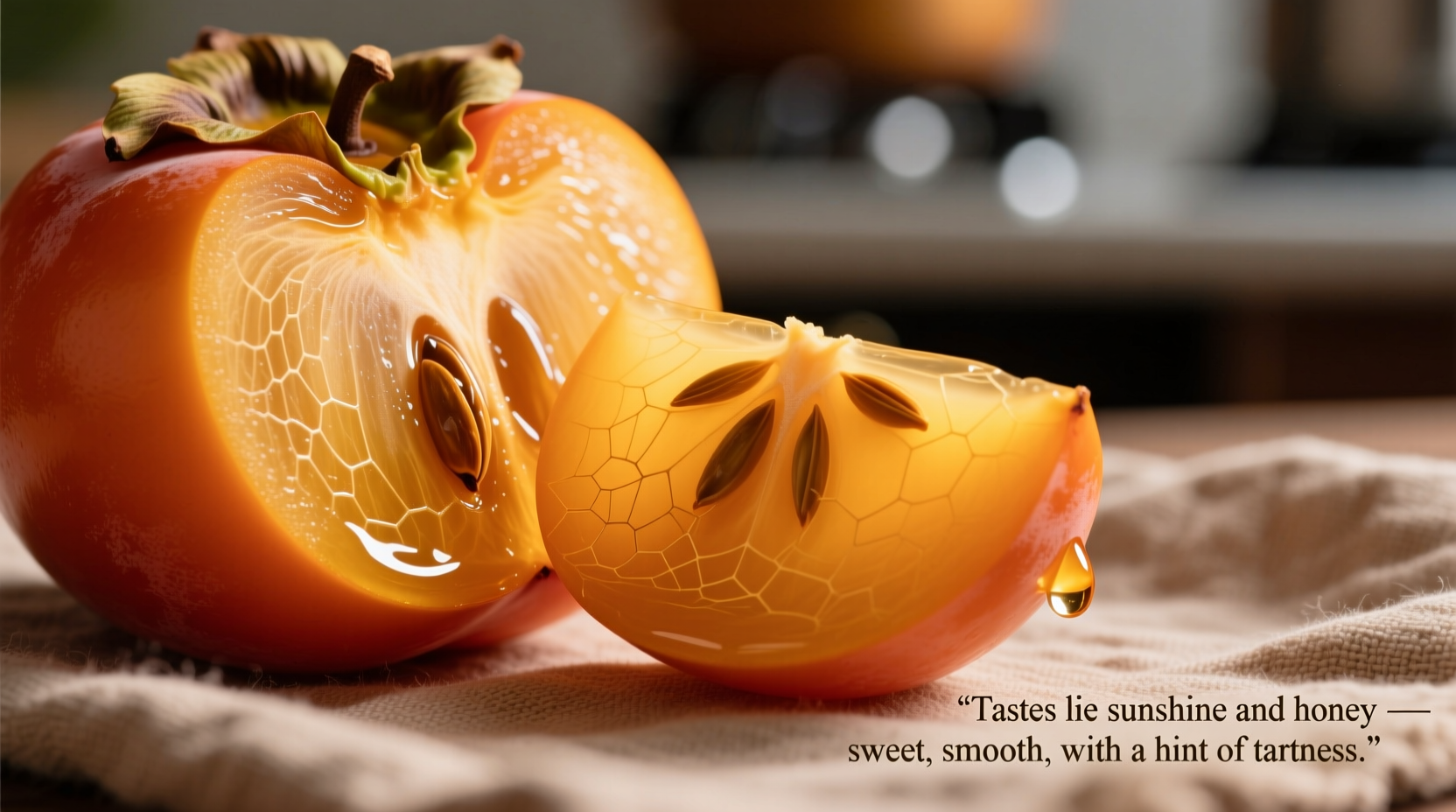 Persimmon Taste Explained: Sweet Honey vs Mouth-Puckering Truth
Pop an unripe Hachiya into a paper bag with a banana or an apple. The ethylene gas from the other fruit will trick the persimmon into ripening faster, breaking down those ninja tannins. Boom. Smooth, sweet, and ready to eat.
Another ancient trick? Freeze them! Stick a hard Hachiya in the freezer overnight. When it thaws, the cell walls burst and the tannins are neutralized. You’ll get a mushy, intensely sweet sorbet-like treat. It’s a total game-changer.
The Strangest Feeling, the Sweetest Reward
So next time you take a bite and your mouth puckers up like you just licked a chalkboard, don’t panic. You’ve just discovered one of nature’s most dramatic unripe signals. It’s the persimmon’s way of telling you to slow down.
It’s a little bit of a challenge. "Are you patient enough to wait for the good stuff?" And the answer is a resounding yes, because when that deep, honeyed, jammy sweetness finally arrives, it’s one of the finest fruits on the planet. Embrace the weirdness, learn the trick, and enjoy the ride.
Your mouth will thank you—eventually.
