Whole Grain Mustard Vs Dijon

Welcome, condiment curious! Have you ever stood in the grocery aisle, a jar of yellow mustard in one hand and a fancy brown one in the other, feeling completely lost? Don’t wo...
Welcome, condiment curious! Have you ever stood in the grocery aisle, a jar of yellow mustard in one hand and a fancy brown one in the other, feeling completely lost? Don’t worry—you’re not alone. Today, we’re diving into the friendly rivalry between whole grain mustard and Dijon mustard. This isn’t just a battle of the spreads; it’s a chance to unlock new flavors in your kitchen. The purpose here is simple: to help you understand these two superstar mustards so you can pick the perfect one for your sandwich, salad, or sauce. The advantage? You’ll never suffer from boring, one-note mustard again. Let’s get ready to add some tangy, punchy joy to your meals!
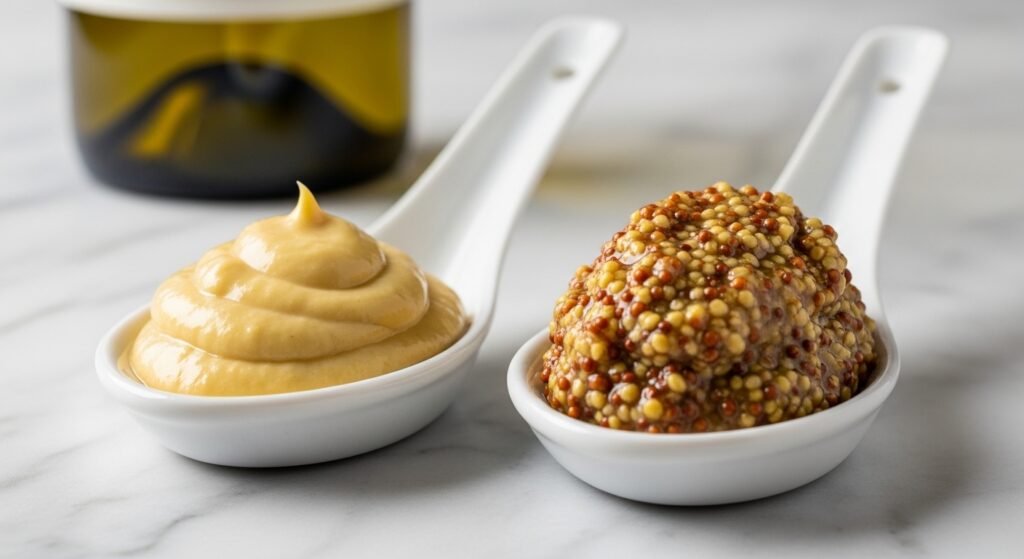
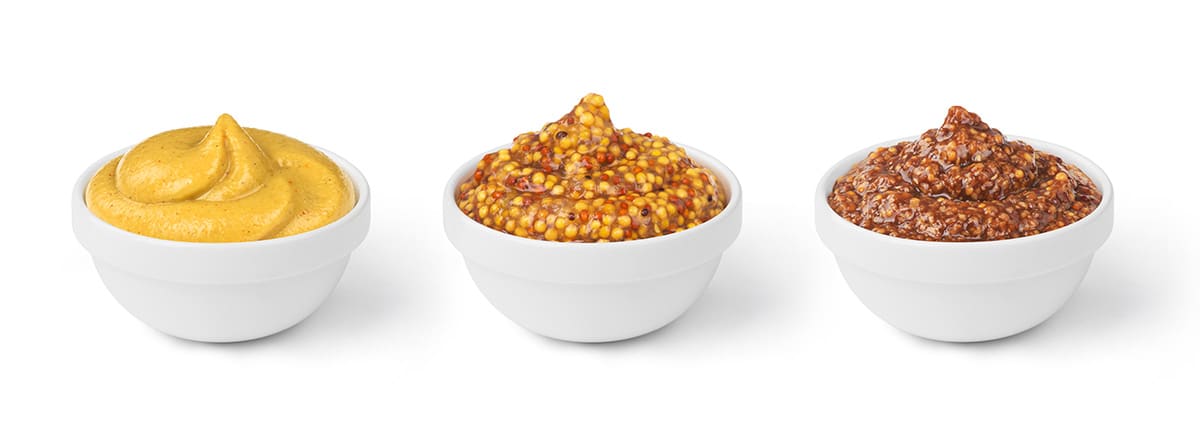
First, let’s get to know the personalities. Dijon mustard is the smooth, sophisticated cousin. Originating in Dijon, France, it’s made from brown or black mustard seeds that are ground into a fine paste, mixed with verjuice (or white wine), and a touch of salt. It’s creamy, intensely pungent, and has a sharp bite that awakens your taste buds but doesn’t linger. On the other side, you have whole grain mustard, the rustic, textured rebel. Here, the seeds are only partially crushed, leaving plenty intact. This gives it a chunky, seedy look and a milder, earthy flavor. The whole seeds pop gently when you chew, offering a delightful crunch and a slow-release warmth. Think of Dijon as a smooth jazz saxophone and whole grain as a lively folk guitar—both are amazing, but they play very different tunes.
So, when should you use each? Picture a classic vinaigrette. If you want a dressing that clings to every lettuce leaf and delivers a uniform, zesty kick, reach for Dijon. Its smoothness acts as an emulsifier, helping oil and vinegar stay mixed while adding a clean, sharp tang. Now, imagine you’re making a honey mustard sauce for dipping chicken tenders or pretzels. This is where whole grain shines! The visible seeds catch the honey, creating little bursts of sweet and spicy texture that are far more interesting than a uniform dip. For a roasted pork or salmon crust, use a mix: spread a thin layer of Dijon for strong flavor adhesion, then press whole grain mustard over it for a beautiful, crunchy crust that toasts perfectly.
Must Read
Let’s get creative with a few fun ideas. Try swapping whole grain mustard into a potato salad. Chop some boiled potatoes, add diced red onion, fresh dill, a dollop of mayonnaise, and a generous spoonful of whole grain mustard. The seeds look like tiny jewels and add a pleasant pop of acidity that cuts through the creaminess. For a quick sandwich upgrade, skip regular yellow mustard. Spread Dijon on one slice of bread for its sharp backbone, and then sprinkle a few teaspoons of whole grain mustard on the other slice. The result is a two-layer flavor experience: an initial bite of smooth heat, followed by the gentle crunch of the seeds. It’s a serious game-changer for turkey, ham, or even a simple grilled cheese with sharp cheddar and apple slices.
Here’s a practical tip for the adventurous: cook them down! Both mustards lose their volatile heat when heated for too long, but in different ways. If you add whole grain mustard to a sauce or stew at the beginning, the seeds will soften and release their mild flavor gently, almost like adding tiny mustard-flavored pearls. If you add Dijon early, its sharpness will mellow into a subtle, savory background note—perfect for creamy pasta sauces or braised chicken. Pro move: stir a spoonful of Dijon into heavy cream with a splash of white wine and some sautéed mushrooms. It thickens into a velvety sauce that’s rich, tangy, and absolutely divine over steak or pasta. Whole grain, on the other hand, is best stirred in at the end of cooking to preserve its texture and gentle pop.
:max_bytes(150000):strip_icc()/maille-mustard-ce5a420735aa4772ad43c2b98dfa8d6e.png) We Asked 3 Chefs to Name the Best Mustard—They All Picked the Same One
We Asked 3 Chefs to Name the Best Mustard—They All Picked the Same One
Now, let’s address storage and shelf life, because nobody wants a sad, dried-out mustard. Both can live happily in your fridge for a very long time—months, even years—but they behave differently. Dijon tends to darken and lose its fiery kick over time, so buy it in smaller jars if you use it sporadically. Whole grain mustard is more forgiving; the seeds act as little sponges, and it retains its crunch and flavor better over the long haul. A quick sniff test works: if it smells sharp and bright, it’s good. If it smells flat or oddly metallic, toss it. Also, never use a wet spoon—water introduces bacteria that can ruin its texture. Treat your mustard like the delicate spice bomb it is, and it will reward you for months.
In the end, there’s no winner in the whole grain vs. Dijon showdown—only delicious possibilities. Stock both in your fridge, and you’ll have a dynamic duo for nearly any dish. Use Dijon for its emulsifying power and clean, sharp finish. Use whole grain for texture, subtlety, and visual appeal. The real fun is experimenting: try a dollop of whole grain on a baked potato, or whisk Dijon into melted butter for an instant mustard butter to slather on corn on the cob. Your taste buds will thank you, and your cooking will instantly feel more sophisticated. So go ahead, grab a jar of each, and start your mustard adventure today. Bon appétit—and may your sandwiches always be perfectly zingy!