Who Was The Father Of Modern Economics

So you're probably sitting there wondering: who the heck is the father of modern economics? Well, grab your coffee, get comfy, and let me introduce you to the one and only Ada...
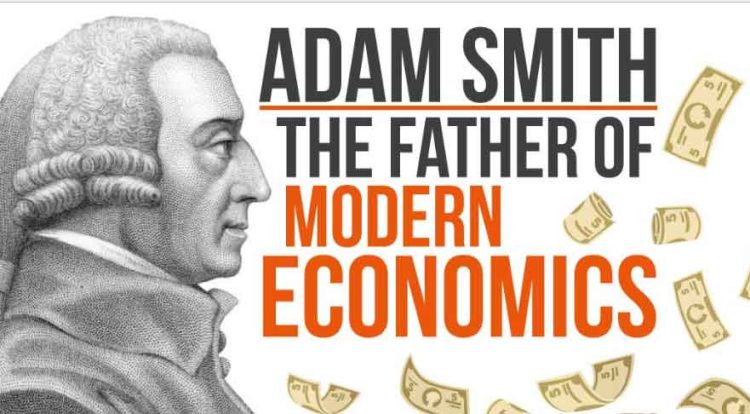
So you're probably sitting there wondering: who the heck is the father of modern economics? Well, grab your coffee, get comfy, and let me introduce you to the one and only Adam Smith — a Scottish philosopher who basically said, "You know what? I think I'll invent an entire way of thinking about money and the world." No big deal, right?
Now, before you start imagining some Wall Street suit with a fancy clipboard, picture this instead: a quiet dude from the 1700s, walking around Kirkcaldy, Scotland, thinking deep thoughts about trade, labor, and why your neighbor's lemonade stand might actually fuel the entire economy. Adam Smith published his magnum opus, The Wealth of Nations, in 1776 — and no, that wasn't the year of some random barbecue, it was the year America declared independence while Smith gave the world its financial blueprint. Overachievers, both of them.
So what exactly did Smith say? He talked about the famous "invisible hand" — and no, I don't mean a sneaky ghost touching market prices. What he meant was that when people go about their own self-interest, like selling pies or building houses, those choices naturally guide the economy, kind of like an accidental choreography of prosperity. Pretty poetic for a guy who studied commerce, huh?
Must Read
Smith wasn't entirely about free-for-all capitalism either. He actually cared a lot about fair wages and warned against businesses that used their power to squash competition. Honestly, if Adam Smith could see how some modern corporations behave today, I think he'd give a rather confused and disappointed side-eye. Your turn, economists of today.
/adam-smith-economics_final2-261ec50cfb04406585d7a298858eb4bb.png) Who Was Adam Smith? Why Is He Considered the Father of Economics?
Who Was Adam Smith? Why Is He Considered the Father of Economics?
Before Smith, most thinking about wealth centered on prices and gold hoarding. He said, "Hey, let's focus on production and trade instead." He introduced the concept of division of labor, explaining how a single person pin-making might be painfully slow, but a whole team of specialists? Boom — you've got thousands of pins flying out the door every day. That's not just economics; that's teamwork, baby.
He also pushed free trade, arguing that countries banning imports were basically shooting themselves in the foot. A foot that happens to be wearing a very expensive, locally made, government-subsidized shoe, apparently.
 UPSC Mains GS Paper 1 Syllabus 2026 PDF Download
But here's the really wonderful part — Smith, alongside David Ricardo and Karl Marx, built the foundation of an entire field that still shapes our lives every single day. From the price of your morning latte to how your city plans its budget, Smith's ideas ripple through everything. He's not just a dusty name in a textbook; he's the reason economics even exists as we know it.
So, the next time someone asks you who the father of modern economics is, you'll say Adam Smith with total confidence — maybe add a fun little pin-making reference for bonus points. Because economics, at its heart, is really about people helping each other, one honest exchange at a time. And that? That's a legacy worth celebrating. Now go out there and enjoy your invisible hand — and maybe buy yourself something nice. You've earned it. 😉

