Who Do The Russells Represent In The Gilded Age

Welcome to the glittering, cutthroat world of HBO’s The Gilded Age, where opulent ballrooms hide backroom deals and a new fortune can build a mansion overnight—if you can get...

Welcome to the glittering, cutthroat world of HBO’s The Gilded Age, where opulent ballrooms hide backroom deals and a new fortune can build a mansion overnight—if you can get an invitation to the right dinner party. At the heart of this drama stands the Russell family, whose rise from railroad gold to New York society’s inner circle is both thrilling and deeply revealing. So, who do the Russells actually represent? Unpacking this isn’t just fun for fans; it’s a helpful lens for understanding the real historical battle between old money and new money, and even our own modern obsessions with status and belonging. By the end of this article, you’ll see the Russells not as mere characters, but as a mirror to the forces that shaped modern America—and you’ll have practical tips for spotting similar dynamics in your own world.
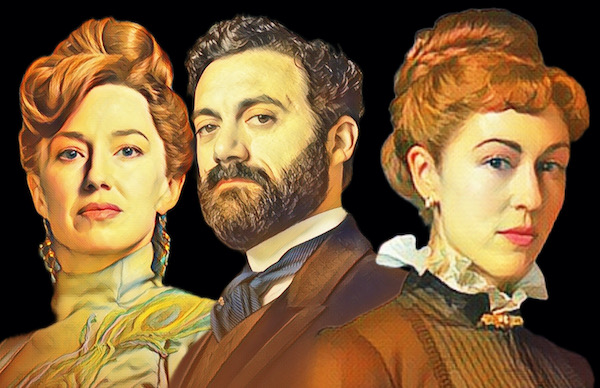
The Russells are a stand-in for the “Robber Barons” and industrial titans of the late 19th century. Think of real-life figures like Cornelius Vanderbilt, John D. Rockefeller, and Andrew Carnegie. George Russell, with his ruthless railroad empire, embodies the era’s belief that money buys everything—including social grace. His wife, Bertha, is the engine behind the family’s social climb, mirroring how women like Alva Vanderbilt orchestrated their families’ acceptance into high society. The key here? The Russells represent disruptive capitalism—a force that bulldozes old hierarchies with cash, but often lacks the polish of inherited aristocracy. For example, when Bertha throws a lavish ball, she doesn’t just want to dance; she wants to force the old-guard Astors, represented by the ferocious Mrs. Astor (a real person, by the way), to acknowledge her. This isn’t just drama—it’s a history lesson about how America’s wealthiest families transitioned from land-based fortunes to industrial ones.
But the Russells also represent the theater of social climbing—a game of signals, rituals, and relentless ambition. Bertha Russell, played with delicious ferocity by Carrie Coon, is the queen of this theater. She understands that in the Gilded Age, acceptance isn’t about money alone; it’s about orchestrating the right performance. Notice how she hires a French chef, installs a Louis XVI drawing room, and manipulates invitations to charity committees? These are not mere luxuries—they are strategic weapons. In one memorable scene, Bertha refuses to let her son marry for love unless the bride’s family brings social connections. This reflects a brutal truth: the Russells represent status as a transaction. They remind us that social capital is as real as gold, and that climbing the ladder often requires sacrificing authenticity. For today’s readers, this is a fun parallel to modern social media influencers or corporate executives who “curate” their image to ascend the ranks of their own worlds.
Must Read
Beyond wealth, the Russells represent the tension between old and new that defined the Gilded Age. The “Old Guard” (like the fictional van Rhijn and Astor families) valued lineage, discretion, and centuries-old European ancestry. The Russells, as “New Money,” valued innovation, visibility, and raw nerve. This clash isn’t just historical—it’s a perennial conflict we see today in debates about “legacy admissions” at universities or the friction between established industries and tech startups. For instance, when George Russell outbids the old families for a historic property or Bertha bulldozes a charity event to steal the spotlight, they are attacking the very idea that birthright matters more than earned power. The show invites us to ask: Who deserves to lead? Is it those who inherited the rules, or those bold enough to rewrite them? This question is as relevant in 2025 as it was in 1880.
 Harry Richardson - Actor
Now, for the practical advice you can take from this high-society soap opera. First, study the “Russell Method” for identifying power players in your own life. Notice who invests in visibility (like Bertha’s constant party-throwing) versus who uses subtle influence (like Aunt Agnes’s quiet backroom whispers). Second, when you’re navigating a competitive environment—be it a workplace, a club, or a neighborhood—ask yourself: Am I playing by the old rules or creating new ones? The Russells succeeded because they didn’t just mimic the old guard; they changed the game. George Russell, for example, leveraged his railroad fortune to fund charities that forced society to take notice. So, try this tip: Focus on providing unique value rather than just replicating what’s already accepted. If you want to break into a new circle, don’t just buy the right clothes—buy the right problem-solving skills.
Finally, the Russells represent the cost of relentless ambition. Beneath the silk and champagne, their marriage strains under the weight of social warfare, and their children, Larry and Gladys, become pawns in their parents’ power games. This is a cautionary tale for anyone chasing status: the climb can hollow out the very relationships you’re trying to impress. In our own age of hustle culture and curated perfection, the Russells remind us to balance ambition with authenticity. A fun exercise: Write down three things you’d do if you won a lottery like the Russells. Then ask yourself: Would those actions bring you closer to your true self, or just to a crowded ballroom of strangers? The Gilded Age shows us that the ultimate victory isn’t getting the right seat at the table—it’s being the person who builds a table worth sitting at. And that’s a lesson as priceless today as it was when the Russells first rolled their carriage up Fifth Avenue.