Where To Find The Issuing Authority On A Birth Certificate

Welcome to the surprisingly delightful world of birth certificates! You might think it’s just a piece of official paper sitting in a drawer, but it’s actually a golden ticket...

Welcome to the surprisingly delightful world of birth certificates! You might think it’s just a piece of official paper sitting in a drawer, but it’s actually a golden ticket to everything from getting your first passport to proving your identity for a new job. And the key that unlocks its secrets? Finding the issuing authority. Don’t let the bureaucratic name fool you—once you know where to look, you’ll feel like a detective cracking a case. This tiny detail is the gatekeeper to your legal documents, saving you hours of frustration and phone calls. Ready to turn a boring form into a fun treasure hunt? Let’s dive in!
So, what exactly is the issuing authority, and why does it matter? Think of it as the official seal of authenticity—the government body that stamped your birth into the record books. It’s not just a random stamp; it’s the answer to questions like, “Which state, county, or city processed your birth?” This little piece of info is essential for travel (hello, passport applications), school enrollments, and even proving your citizenship. The best part? Once you spot it, you’ll breeze through forms that stump other people. The advantage here is simple: you stop guessing and start winning at paperwork.
Now, let’s play “Where’s Waldo?” on your birth certificate. Imagine you’re holding a standard U.S. birth certificate—most look similar, but your state might have quirks. Start by scanning the top or bottom of the document. Often, the issuing authority is printed right near the header, like “State of California Department of Public Health—Vital Records” or “County of Cook, Illinois.” Look closely at the edges, especially around the official seal (that raised gold or embossed circle). The seal itself often names the authority, like “Registrar of Vital Statistics.” If your certificate is a short-form version (a wallet-sized card), the authority is usually listed in tiny print near the signature line. Pro tip: if your certificate says “Certified Copy” at the top, the issuing authority is almost always the agency that issued that copy, not necessarily the original place of birth.
Must Read
Creative idea: turn this into a game with a friend or family member! Grab two different birth certificates (with permission, of course) and see who can spot the issuing authority fastest. You’ll notice patterns: some certificates use a stamp that reads “Issued by the County Clerk,” while others have a fancy state crest. Look for words like “Department,” “Board,” “Bureau,” or “Office.” For international certificates, it gets even more interesting—they might say “Registrar General” (UK), “Civil Registry” (many European countries), or “Dirección General de Registro Civil” (Spanish-speaking nations). It’s like a tiny geography lesson! And if the document is old or worn, try holding it up to a light or taking a photo and zooming in—the magic of modern tech can reveal faded text.
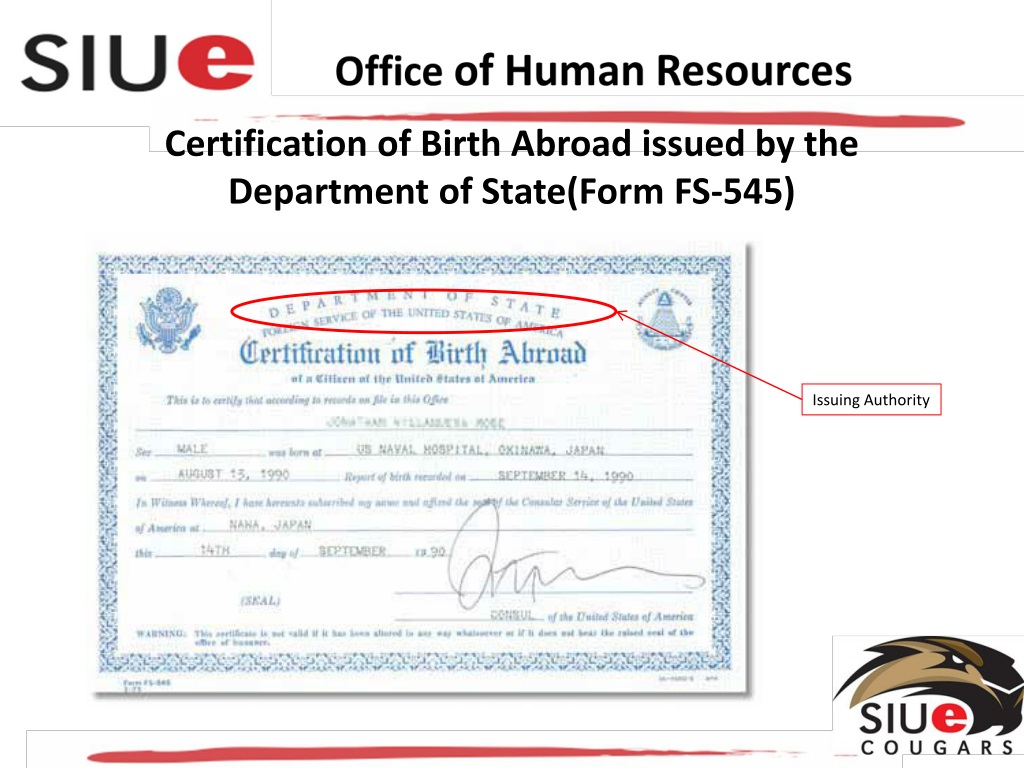 PPT - Form I-9 Completion Training PowerPoint Presentation, free
Here’s a practical tip most people miss: if you cannot find the issuing authority in the obvious places, check the back of the document. Yes, the back! Many states print extra information there, like a list of amendments or a stamp from the issuing office. Also, every birth certificate has a registration number and a date of issue—these are often right next to or below the authority name. Don’t confuse the authority with “Place of Birth” (that’s the hospital or location where you were born). The authority is the government entity, like “New York City Department of Health and Mental Hygiene.” If you’re still stuck, draw a mental line from the signature of the registrar or clerk—their title usually gives away the authority (e.g., “Registrar of Vital Statistics for the State of Texas”).
Another sneaky spot: the top right corner of many U.S. certificates. States like Florida and Michigan love to put a bold, pre-printed box there that reads “Issuing Authority” or “Certified by.” For military dependents or overseas births, the authority might say “U.S. Department of State” or “Embassy of the United States of America.” Always look for the official embossed seal—if it’s a raised circle with text inside, that text is your golden clue. Some older certificates (pre-2000s) have the authority typed in a small font near the bottom, almost hidden by the fold line. My personal advice? Never assume it’s missing—it’s usually there, just playing hide-and-seek.
 Do You Need Original Birth Certificate for Passport? Applications 2024
Now, what if you’ve looked everywhere and still can’t find it? Don’t panic! The issuing authority is often implied by the document’s design. For example, if your certificate is from “VitalChek” or a similar online service, the issuing authority is the state agency that provided the certified copy—check the letterhead of the envelope or the digital watermark. A fun trick: try googling the exact layout of your certificate (e.g., “New Jersey birth certificate format 2023”) and you’ll find sample images online that highlight where the authority goes. Remember: you can also call the Vital Records office in your birth state and ask—“What does my issuing authority say?” They’ll know exactly what it looks like because they print them every day.
To wrap up, finding the issuing authority is like learning the secret handshake of official documents. It’s a small detail that yields big rewards: faster applications, fewer rejected forms, and a cool party fact about your own paperwork. Next time you need to fill out a “Bureau of Consular Affairs” or “Registrar of Deeds” line, you’ll be the one smiling while others scramble. So grab that birth certificate, channel your inner Sherlock, and enjoy the satisfying click of spotting that elusive authority. It’s not just a stamp—it’s your passport to smooth sailing in the world of bureaucracy. Happy hunting!
