Where Does Prime Rib Come From

Okay, let’s talk about prime rib. You’ve seen it at holiday dinners or fancy steakhouses—a big, glorious slab of beef that looks like it belongs on a throne. But have you ever...

Okay, let’s talk about prime rib. You’ve seen it at holiday dinners or fancy steakhouses—a big, glorious slab of beef that looks like it belongs on a throne. But have you ever stopped mid-bite and wondered: where does this majestic cut actually come from? It’s a fair question, because it’s not just any random piece of meat. It’s the VIP of the cow, and its journey to your plate is pretty wild.
The cow’s backbone secret
Prime rib comes from a very specific part of the cow: the rib primal. Think of the cow’s body as a long, stretchy highway of muscles, and the rib section is like the luxury lane between the shoulder and the loin. It’s located along the upper back, right behind the neck, and it runs from rib number six to rib number twelve.
Why is that spot so special? Because those muscles don’t work very hard. The cow uses its legs and shoulders for walking and grazing, but the rib area just kind of hangs out, supporting the spine. Less movement means the meat stays tender, and tender is exactly what we want.
Must Read
So when you order prime rib, you’re basically eating the cow’s “lazy” muscles—and that’s a good thing. It’s the meat equivalent of a cozy couch potato, but in the best, most delicious way possible.
Not all ribs are created equal
Here’s where it gets a little tricky: prime rib is not the same as a rack of ribs you’d eat at a barbecue. Barbecue ribs come from the belly or the lower back, full of connective tissue and fat that needs long, slow cooking. Prime rib, on the other hand, is a roast—a big, boneless (or bone-in) hunk cut from the rib section.
Think of it like this: if the cow were a house, prime rib would be the master bedroom on the top floor, while pork ribs are the messy garage. Both are great, but they serve totally different vibes. Prime rib is the cut you save for anniversaries and New Year’s Eve, not a Tuesday night.
Also, the word “prime” doesn’t always mean it’s USDA Prime grade. It’s a name that stuck because the cut comes from the prime location on the animal. But if you can snag actual USDA Prime beef? You’ve hit the beef lottery.
Why is it so marbled and flavorful?
You’ve probably noticed that prime rib has beautiful streaks of white fat running through it. That’s called marbling, and it’s the secret sauce of flavor. Because the rib section has a bit more fat than other cuts (like lean sirloin), it stays juicy and rich when cooked.
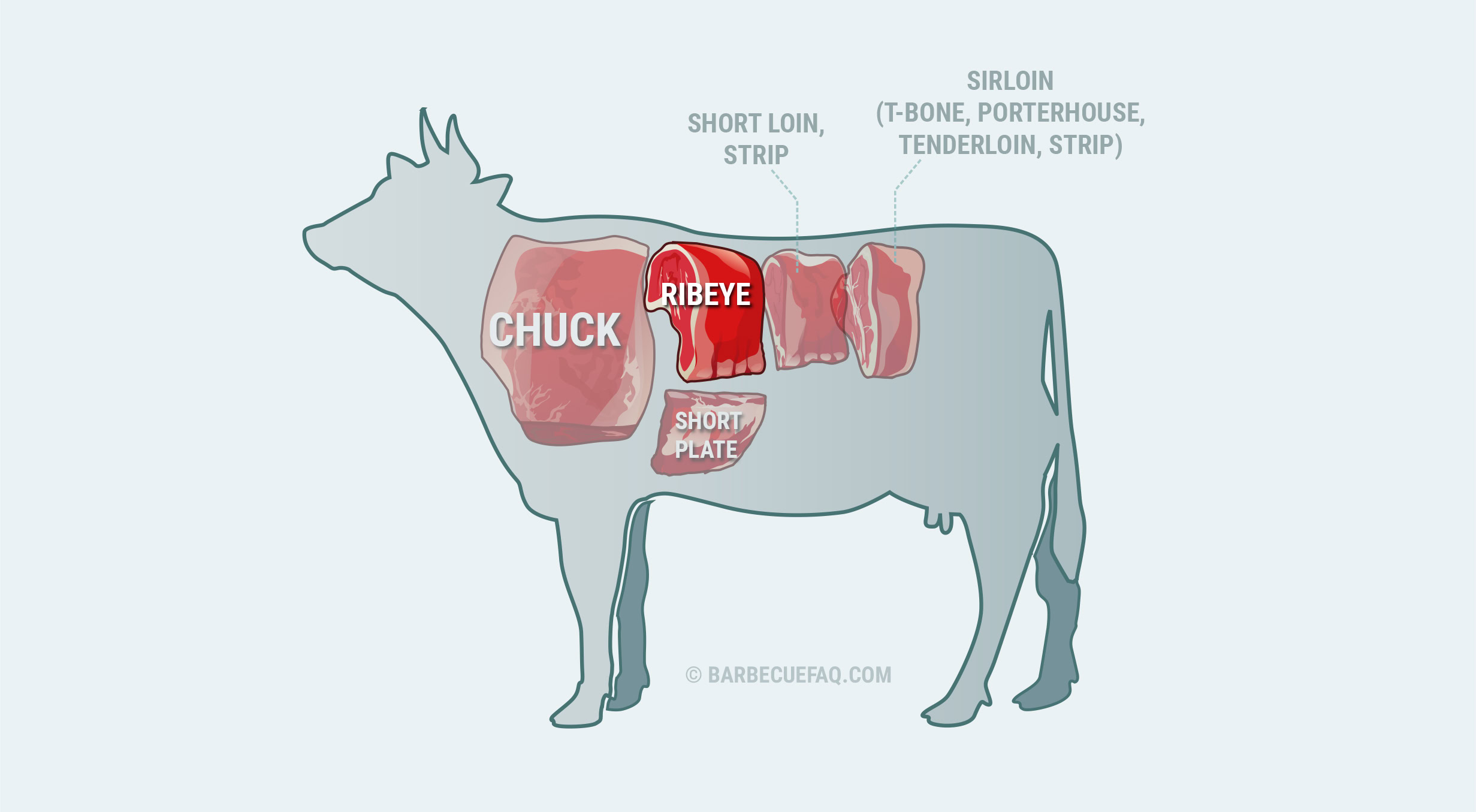 Prime Rib vs Ribeye: The Difference Explained - Barbecue FAQ
Imagine a steak that’s basically basting itself from the inside as it roasts. That’s prime rib. The fat melts into the meat, creating a buttery texture that makes you close your eyes and forget your own name. Who needs a gravy boat when the meat comes with its own sauce?
And because it’s a larger roast, you can cook it to a perfect medium-rare all the way through, then slice it thick like victory steaks. It’s forgiving, too—even if you overdo it a little, the marbling saves the day.
The butchery breakdown
Now, let’s get into the nitty-gritty: how does the butcher turn a cow into prime rib? When a cow is butchered, it’s split into large sections called primals. The rib primal is one of them, and it includes about seven ribs. From there, the butcher can trim it into a roast—either leaving the bones attached (that’s a “standing rib roast,” which looks epic) or removing the bones for a boneless version.
The bones actually add flavor, like a natural rack that holds in moisture. Plus, you get to gnaw on them afterward, which is a primal joy we all secretly love. Is there anything more satisfying than chewing on a rib bone like a happy caveman?
If you buy a whole prime rib roast, you might get seven to ten pounds of meat. That’s enough to feed a small army—or a very ambitious dinner party. But even a smaller cut, like a ribeye steak, is just a slice of that same magical section.
 Where Does Prime Rib Come From?
Where does the name come from?
Historically, the term “prime rib” started showing up in English cookbooks in the 1800s. It was a cut reserved for the wealthy, because it was the best part of the animal. The word “prime” originally meant “first” or “best quality,” and the rib was considered the king of the carcass.
Restaurants later latched onto the name because it sounds fancy—and let’s be honest, it is. Ordering prime rib feels like you’re in a black-and-white movie with a martini and a tuxedo. Who wouldn’t want that energy?
But the coolest part? The tradition hasn’t changed much. We still cook it the same way: low and slow, then a high-heat sear. It’s a recipe that’s been trusted for centuries, and it works like a charm.
Why should you care?
So, next time you see prime rib on a menu, you’ll know it’s not just meat—it’s a story. It’s the cow’s easygoing ribcage, the butcher’s careful hand, and a tradition of treating yourself to something special. It’s a cut that says, “Hey, you matter. Let’s celebrate this moment.”
And honestly? That’s pretty cool. So go ahead, order the prime rib. Ask for it medium-rare. Savor every buttery, marbled bite. You’ve earned it.
