Where Does Oil Really Come From

Alright, gather 'round, folks. I've got a tale to tell, a story that's been brewing for millions of years, and it's not about a prince or a dragon, but something far more valu...
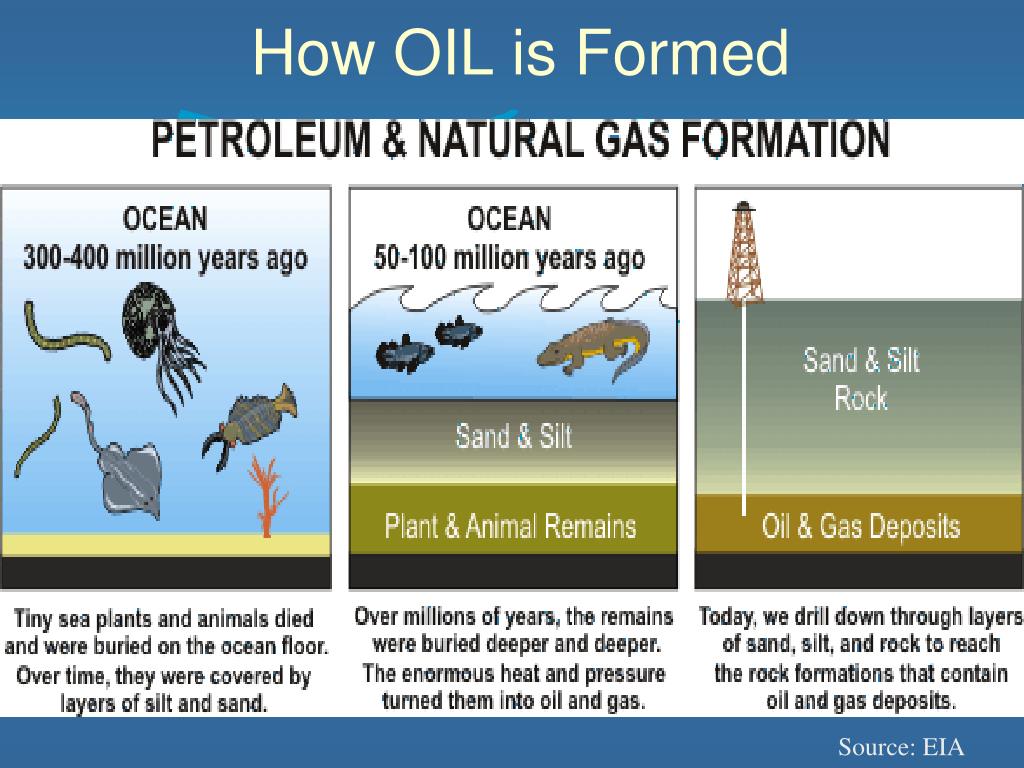
Alright, gather 'round, folks. I've got a tale to tell, a story that's been brewing for millions of years, and it's not about a prince or a dragon, but something far more valuable in our world today - oil. Now, don't go rolling your eyes, this is gonna be a hoot, I promise.
Once Upon a Time, in the Age of the Dinosaurs
Picture this: it's the Cretaceous period, dinosaurs are roaming the earth, and the only thing missing from this prehistoric party is a good old-fashioned barbecue. Well, that's where our story begins. You see, those dinos were munching on plants, chomping away, and then, plot twist, they died. A lot of them. Like, a whole lot.
Now, you might be thinking, "That's a bit morbid, mate. I came here for laughs, not a dinosaur funeral." Well, hold your horses, because here's where it gets interesting. Those dead dinos didn't just disappear into thin air. No, no, no. They sank to the bottom of the ocean, forming massive underwater graveyards. And that, my friends, is where our oil adventure begins.
Must Read
Enter: The Heat and the Pressure
Millions of years pass, and what do you think happens to all those dead dinos? They get squished. And I mean really, really squished. The weight of the water above them and the sediment pressing down from the sides creates pressure that's like the world's most intense hug. Meanwhile, the heat from the earth's core starts to cook them, like a slow-roasting dinosaur casserole in the world's largest oven.
And then, here's where the magic happens. That heat and pressure start to break down the organic material, turning it into a soupy, gooey mess. This goo, over time, starts to crystallize and harden, forming something we now know as kerogen. Think of it like a prehistoric fossilized fossil.
Hello, Mr. Oil
Now, kerogen is a tough nut to crack. It's like the world's most stubborn nut, refusing to give up its secrets easily. But here's where things get a little crazy. If you apply even more heat and pressure - yes, you heard it right, more - something amazing happens. The kerogen starts to break down, and out pops... oil! Can you believe it? All that time, all that pressure, and boom, liquid gold.
But wait, there's more! This oil, over time, starts to rise through the rocks, like a tiny, oily geyser. It finds cracks and crevices, and it's off to the races, making its way up towards the surface. And that, my friends, is how oil ends up in the places we drill today.
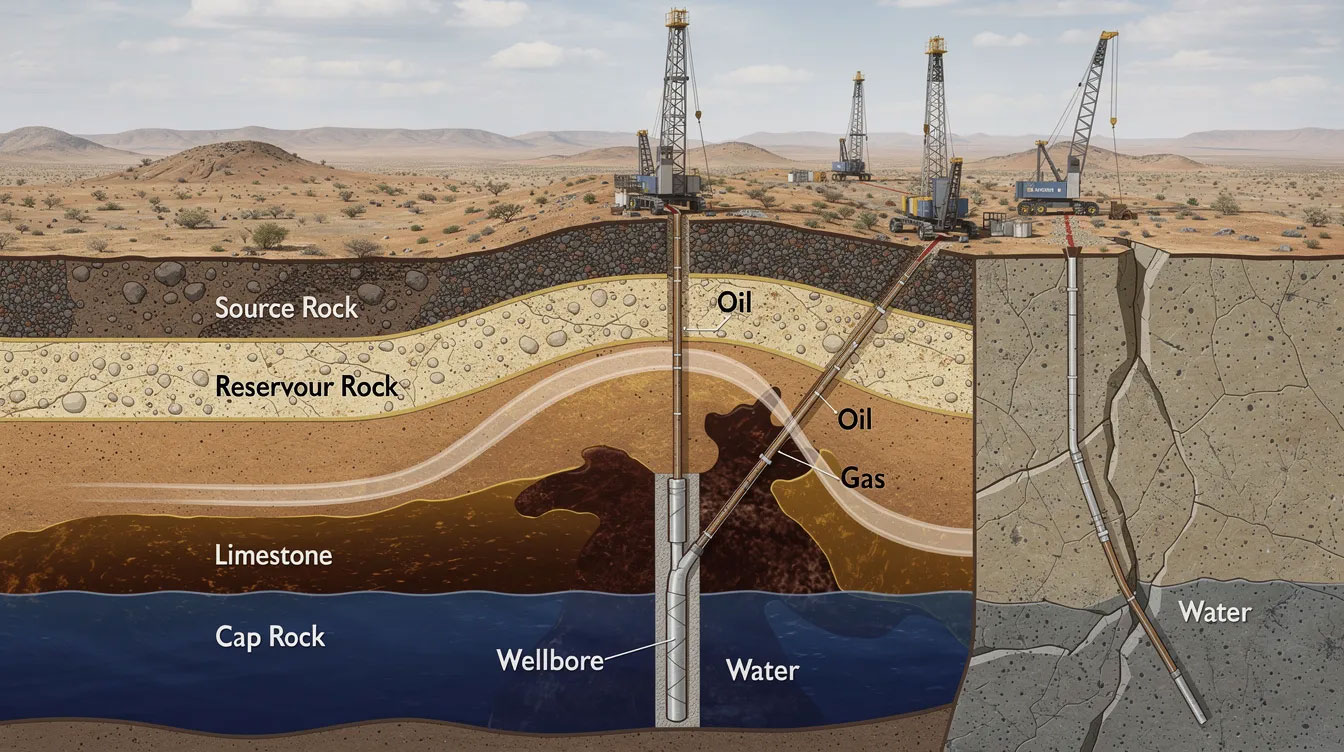 Where Does Oil Come From?
And That's Not All...
Now, you might be thinking, "That's all well and good, but what about coal and natural gas?" Well, hold onto your hats, because those have their own wild stories too. Coal is like the scrappy younger sibling of oil. It forms under less heat and pressure, making it a bit more common, but no less valuable. And natural gas? That's the light, fluffy cousin who likes to party. It forms from the lighter parts of the organic material, and it's the first to rise to the surface.
But here's where it gets really crazy. Some scientists believe that there might be oil and gas reserves on other planets and moons. I know, right? The universe is like one big, cosmic oil field. Isn't that something?
So, What's the Moral of the Story?
Well, folks, the next time you fill up your car or turn on your lights, remember the tale of the dinos and the heat and the pressure. It's a long, slow process, but it's one that's been happening for millions of years, right under our feet. And who knows? Maybe one day, we'll find oil on Mars or some other far-off planet. Until then, let's appreciate the stuff we've got here on Earth, and maybe, just maybe, think about finding some alternative energy sources too. After all, we don't want to run out of our prehistoric fuel just yet.
And there you have it, folks. The story of oil, from dinos to drilling. Wasn't that a hoot? Now, who's ready for some coffee? I'm parched after all that prehistoric storytelling.
