Where Did The Term Checkmate Originate

Ever played a game of chess? You know, that ancient board game where you try to outsmart your opponent by capturing their king? Well, have you ever wondered where the term "ch...
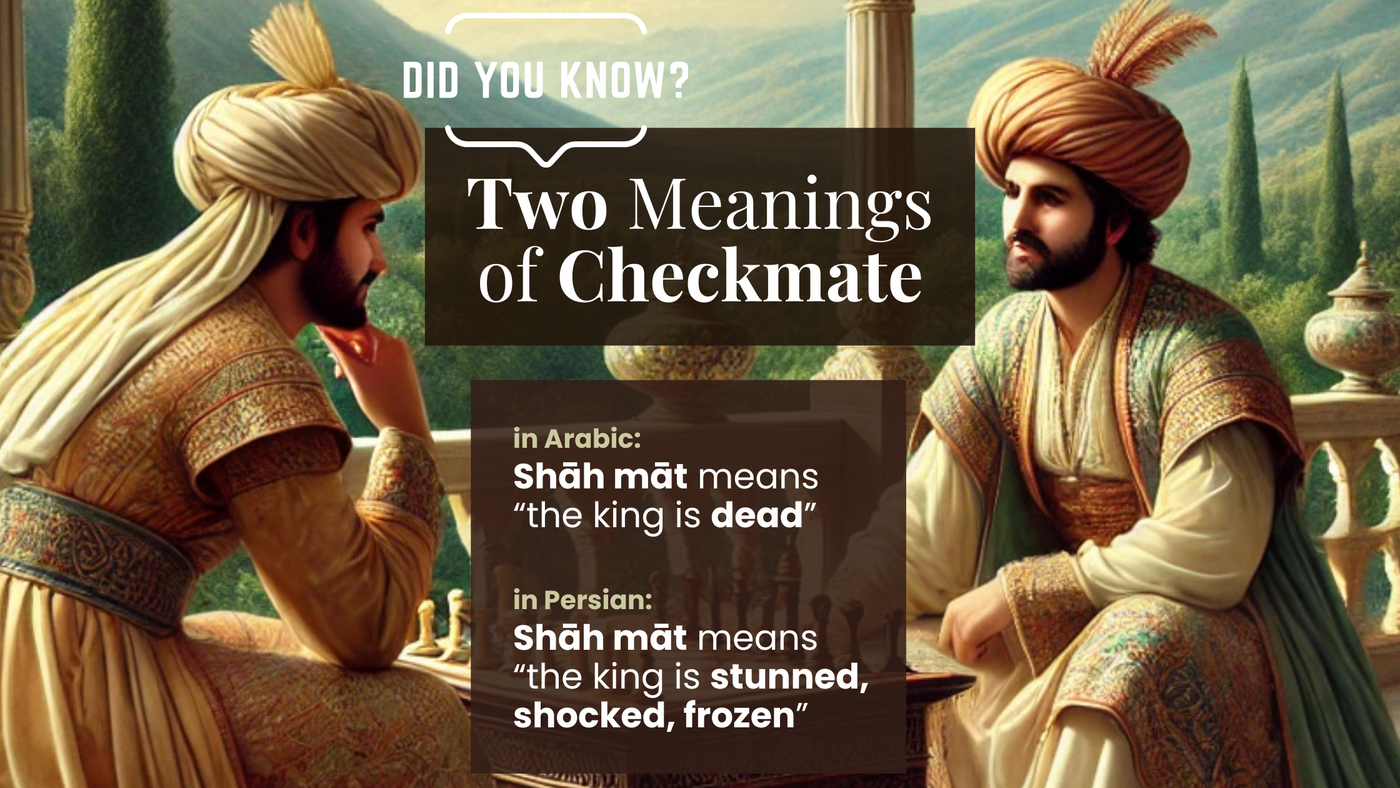
Ever played a game of chess? You know, that ancient board game where you try to outsmart your opponent by capturing their king? Well, have you ever wondered where the term "checkmate" comes from? Let's dive in, shall we?
From Persia with Love
Let's rewind back to the 16th century. The game we know as chess today was then called "chaturanga" in India, where it originated. But it wasn't always called that. In fact, it had a whole different name and a whole different look when it was born in Persia around the 6th century.
In Persia, this game was called "shatranj". It was played on a board with pieces that looked more like soldiers and horses than kings and queens. But here's where it gets interesting. The term "checkmate" actually comes from the Persian phrase "shāh māt".
Must Read
"The King is Dead!"
Now, "shāh" in Persian means "king", and "māt" means "dead". So, when you said "shāh māt" in a game of shatranj, you were essentially saying, "The king is dead!"
Pretty straightforward, right? But here's where things get a bit twisted. You see, in chess, the king isn't actually dead when you say "checkmate". He's just... well, trapped. Surrounded. Out of moves. It's a bit like being in a really awkward social situation - you can't move, you can't escape, and all eyes are on you. Awkward!
From Persia to Spain
Now, let's fast forward a bit. Shatranj made its way west, crossing borders and oceans until it reached Spain. The Moors brought the game with them when they invaded the Iberian Peninsula in the 8th century. And guess what? They brought the term "shāh māt" with them too.
But here's where things get a bit lost in translation. When the Moors introduced the game to the Spanish, they started calling it "axedrez". And "shāh māt" became "jaque mate". See the connection? "Jaque" is Spanish for "check", and "mate" is, well, "mate".
From Spain to England
Now, you might be thinking, "Okay, but how did it become 'checkmate' in English?" Well, that's thanks to the French. You see, when the game reached France, it was called "échecs". And when the French said "checkmate", it sounded more like "echec et mat".
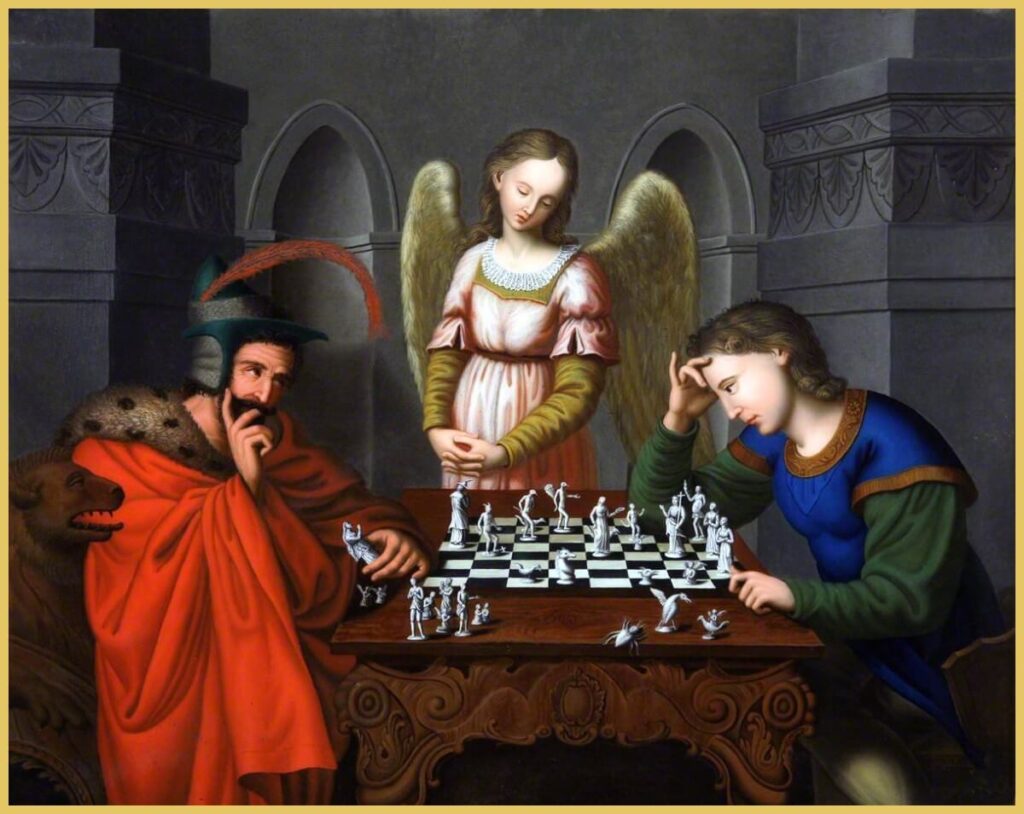 Is Checkmate Painting The Most Mysterious Artwork Ever Created?
When the game finally made its way to England, the term evolved again. "Echec et mat" became "checkmate". And just like that, a Persian phrase became an English word.
But Why "Check"?
You might be wondering, "Why 'check'? Why not just 'mate'?" Well, that's because in chess, you have to warn your opponent before you checkmate them. It's like giving them a heads-up, a chance to save their king. So, "checkmate" is essentially saying, "Your king is in danger, and this is the final move that will trap him."
Fun Facts!
Here are a few fun facts to wrap things up. Did you know that the world's fastest chess player is a computer? It's called "Deep Blue", and it can make 200 million moves per second. That's like playing 60,000 games of chess at once!
And here's another one. The longest game of chess ever recorded lasted for an incredible 208 moves. That's like playing a whole season of chess in one game! The players were Ivan Nikolic and Goran Arsovic, and they played in 1989. Now that's what you call a marathon game!
So, the next time you play a game of chess and say "checkmate", you can impress your friends with your newfound knowledge. You're welcome!
