When Should Tires Be Replaced For Safety?

Your tires are the only part of your car that actually touches the road. That’s a wild responsibility. They’re basically four rubber donuts holding your life together at highw...
Your tires are the only part of your car that actually touches the road. That’s a wild responsibility. They’re basically four rubber donuts holding your life together at highway speeds.
The Penny Test (It’s Not About Spare Change)
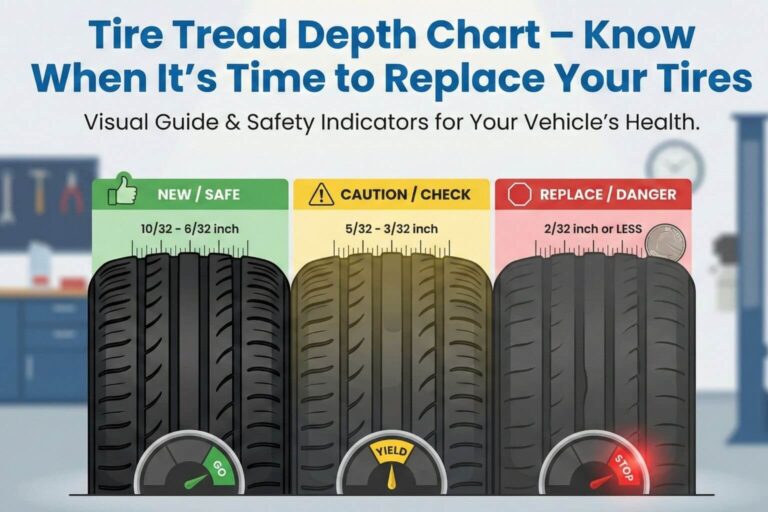
Grab a penny and stick it head-first into your tire’s tread. If you can see the top of Lincoln’s hair, your tread is too shallow. That means you’re driving on bald tires. Fun fact: a tire with 2/32 of an inch of tread is legally bald in most places—but a quarter-inch of water on the road can make you hydroplane at just 35 mph.
Don’t have a penny? Use a quarter. If Washington’s head is fully covered, you’re good. If not, it’s time to shop.
Must Read
The “Squeaky Wheel” Actually Means Danger
Do your tires squeal around corners? That’s not a fun warning—it’s a cry for help. Squealing means the rubber is too hard or too shallow to grip the pavement. It’s the tire equivalent of your smoke detector chirping at 3 AM.
Pro tip: Listen for a dull thumping sound, too. That might mean the internal belts are separating. Yes, your tire can literally fall apart while you’re driving. Fun, right?
The Age Game: Tires Have Expiration Dates
Even if you never drive, tires rot. Sunlight, ozone, and time turn rubber into a crusty mess. Check the sidewall for a four-digit code—like “3520.” That means week 35 of the year 2020.
Most experts say replace tires after six years, regardless of tread. After ten years, it’s a rolling death trap. Your favorite sneakers might last longer than your tires—and you don’t trust those on a rainy day either.
Here’s a quirky truth: Tires don’t die of old age in the garage. They die of boredom. Parking in direct sunlight speeds up the aging process by about 25%.
The “Nickel Test” for Winter Tires
Winter tires are special. They need deeper tread to bite into snow. Use a nickel instead of a penny. If you can see the top of the Parliament building on the nickel, your winter tires are past their prime.
 When Should Car Tires Be Replaced | Replace Tires
Winter rubber also hardens below 45°F, even if it looks fine. A three-year-old winter tire is often less grippy than a new all-season tire. That’s why Canadians replace winter tires every four years—even if the tread looks deep.
Think of snow tires like ballet shoes: they’re only good for a few seasons before they lose their point.
The “Bubble of Doom” and Other Sidewall Secrets
Look for bulges, cracks, or bubbles on the sidewall. A bubble means the internal structure is broken. That tire can blow out any second. It’s like a pimple on your car—except popping it costs you a rim and possibly a fender.
Also check for dry rot (tiny cracks). Dry rot is the tire’s version of wrinkles, but it won’t get better with moisturizer. Once you see it, the tire is done.
Vibration: Your Car’s Way of Complaining
If your steering wheel shakes at 60 mph, it’s not a massage feature. A vibration often means a broken belt inside the tire, or that the tire is out of balance. A bad belt can cause the entire tire to separate from its tread.
Ever see a strip of rubber on the highway? That’s a “road gator.” It came from someone’s tire that was about to blow. You don’t want to be that someone.
 When Should A Tire Be Replaced | Replace Tires
The “Too Many Patches” Rule
One puncture? Fine. Two? Maybe. Three or more? Replace it. Each patch weakens the tire’s structure. Also, never repair a puncture near the sidewall—tire shops won’t touch it because it’s unsafe.
And please, don’t use that “plug kit” from the auto parts store for anything but an emergency. A plug is like using a Band-Aid on a shark bite.
The Secret Indicator: The Tread Wear Bars
Look between the tread grooves. You’ll see tiny rubber bars about every two inches. When the tread is worn down to the same height as those bars, your tire is at the legal limit. Those bars are your “check engine light” for tires.
Most drivers ignore them until they feel the car slide in the rain. Don’t be that driver. Your tires cost way less than a hospital bill.
When in Doubt, Ask a Grease Monkey
You don’t need to be a mechanic to know a bad tire. But if you’re unsure, just ask a tire shop to check them. They’ll do it for free—and honestly, they love pointing out danger.
Your tires are the only thing between you and the asphalt. Treat them like the heroes they are. Replace them before they fail, not after. Because a blowout at 70 mph is never the start of a fun story.
