What's The Internal Temperature Of Cooked Pork

Okay, let’s talk about pork. You know, the “other white meat” that for decades we were terrified of turning into a leathery, salmonella-delivery system. I’m talking about that...

Okay, let’s talk about pork. You know, the “other white meat” that for decades we were terrified of turning into a leathery, salmonella-delivery system. I’m talking about that moment of panic: you’ve got the chop or the roast on the counter, and you have to ask the eternal, sweaty-palmed question: What’s the internal temperature of cooked pork, anyway?
The Old, Dry Rules (And Why They Were a Crime Against Humanity)
For our grandparents, pork came with one rule and one rule only: cook it until it’s a sad, gray piece of shoe leather. The government told them 160°F (71°C) was the law, or you’d die instantly from a tapeworm wearing a tiny cowboy hat. This was the era of “well-done” chops that required a chainsaw and a glass of water just to get through one bite.
But here’s the shocking, game-changing fact: that old rule was a lie born from a giant, paranoia-filled misunderstand. It turns out, the real enemy wasn’t just “pork,” but a specific parasite called Trichinella that was mostly nuked out of existence in commercial farming decades ago. Yes, your grandmother was cooking pork like it was a hostage negotiation.
Must Read
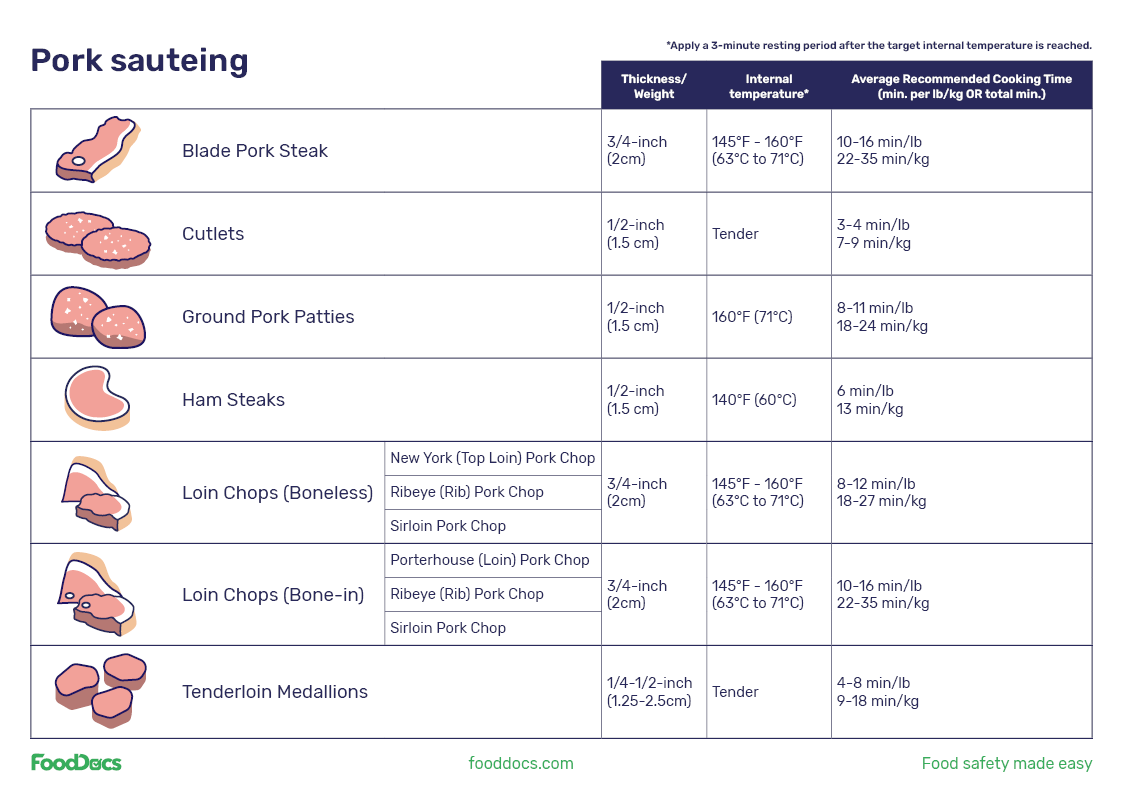
So, in 2011, the USDA did the culinary equivalent of turning on the lights and shouting, “Everybody relax!” They officially dropped the recommended temperature to 145°F (63°C), followed by a mandatory three-minute rest. Resting is not for the pig; it’s for the meat’s juices to stop panicking and redistribute themselves.
The Magic Number (And Why 145°F is Your New Best Friend)
At 145°F, something magical happens. The pink monster you were scared of turns into a beautifully blush pink. It’s not raw—it’s cooked. It’s safe. It’s juicy. It’s the pork version of a warm hug from a food scientist who really likes you.
But here’s where I have to get real with you: 145°F is a minimum. That number is for whole cuts like chops, tenderloin, and roasts. If you’re making ground pork (burgers, meatballs), sorry, you don’t get to be fancy. Ground pork has more surface area for bacteria to party on, so you still need to hit 160°F (71°C). That’s the price you pay for the convenience of 80/20.
And bacon? Oh, bacon is a rebel. Bacon is cured and smoked, so it’s technically already “safe” to eat raw—but please don’t. The USDA says cook bacon until it’s crispy, which is basically the “I don’t care about the number, just make it crispy” rule. Temperature is for wimps. Bacon is a feeling.
The Thermometer Is Your Sword (Or Your Plastic Knight)
You cannot guess the temperature by looking. I don’t care if you have “pork spidey-sense.” You cannot poke it and say, “Ah yes, this feels like 147°F.” No. You need a digital instant-read thermometer. It costs twelve bucks and it will save you from serving a hockey puck or a biohazard.
Here’s how you do it like a pro: stick the probe into the thickest part of the meat, avoiding bone (bone lies). Wait three seconds. When it beeps at 145°F, take the pork out, set it on a cutting board, and do not touch it for three full minutes. The temperature will climb another 5°F while it rests. That’s called “carryover cooking,” and it’s basically free heat magic.
 Pork Internal Temp: What's the Internal Temperature for Pork?
Let me share a surprising fact: if you take pork tenderloin off the heat at 140°F and let it rest, it will safely reach 145°F. You are essentially cooking your pork with the power of patience and a little bit of thermodynamics. You are a backyard physicist.
What About “Well-Done” People? (We Apologize for Their Taste Buds)
If you absolutely must have your pork at 160°F or higher, please know that science is on my side, not yours. Cooking pork past 150°F is when the muscle fibers start screaming and shrink-wrapping around your chew toy. You’ll get dry, stringy meat that tastes like a haiku about regret.
But hey, you do you. Just don’t blame the pig. Blame those decades of trichinosis fear-mongering. The modern pig is clean, the modern farm is regulated, and the modern cook has a thermometer. You have no excuse.
Here’s one last surprising fact to blow your mind: the internal temperature of a cooked pork chop at 145°F is actually close to the temperature of a medium-rare steak. The beef industry has been selling you pink meat for years without a single “eww.” It’s time pork got the same respect. Pork is the new steak.
The Final, Juicy Truth
So go forth. Buy a thermometer. Ignore your aunt who still cooks pork until it crumbles like drywall. Remember the three rules: 145°F for whole cuts, 160°F for ground, and “crispy” for bacon. Rest your meat for three minutes. That’s literally the only hard part.
And if someone at a barbecue says, “But it’s a little pink inside!” just smile, take a bite of your juicy, safe, delicious chop, and tell them: “That’s not pink. That’s flavor. And it’s exactly 145°F of it.” Then offer them a napkin for their dry, gray pork. They will need it.
