What's The Difference Between Sausage And Kielbasa

So you’re standing in the grocery store, staring at a pile of squiggly, pinkish tubes, and you think: “Sausage… kielbasa… aren’t they the same thing?” No, my friend, they are...
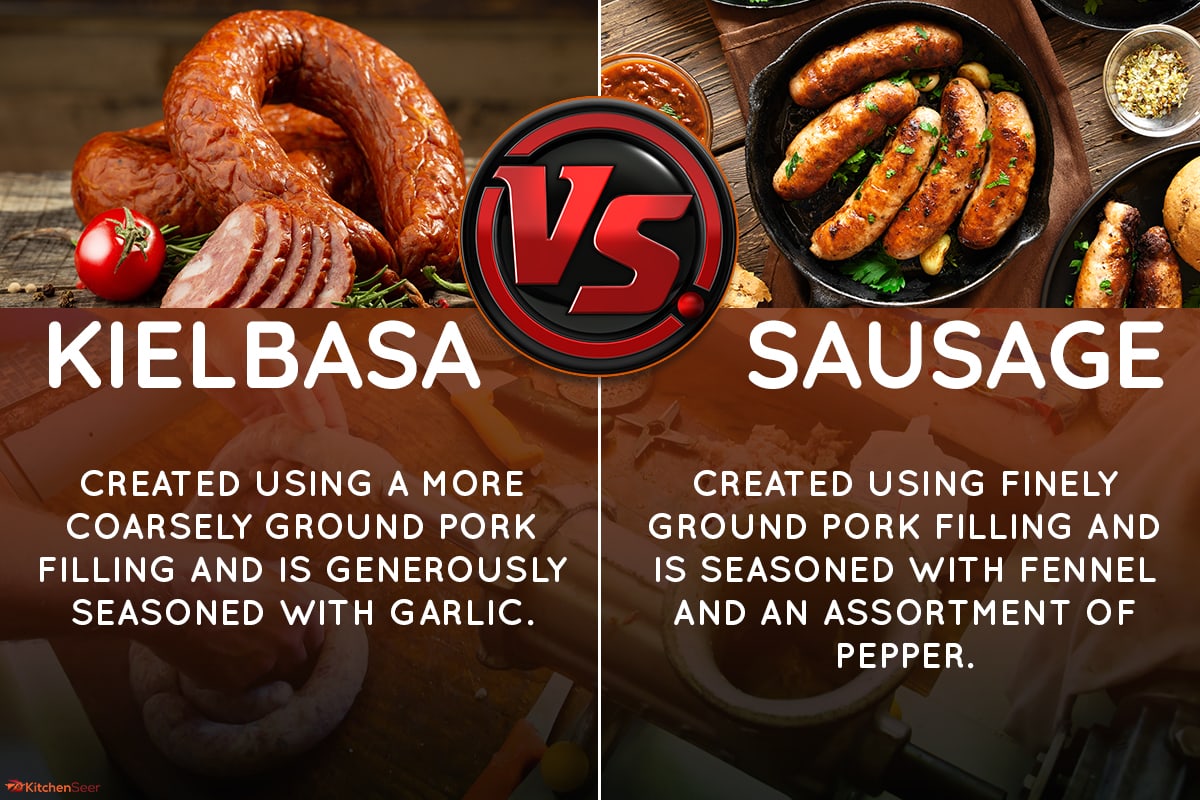
So you’re standing in the grocery store, staring at a pile of squiggly, pinkish tubes, and you think: “Sausage… kielbasa… aren’t they the same thing?” No, my friend, they are not. This is like asking if a cowboy is the same as a knight—they both ride things and look tough, but one jousts with lances, and the other wrestles cattle. Let’s unravel this meaty mystery before you accidentally serve bratwurst at a Polish wedding.
First, the Big Picture: Sausage Is a Category, Kielbasa Is a Star Player
Think of sausage as the entire sport of baseball. You’ve got hot dogs, Italian links, breakfast patties, chorizo—they’re all players in the game. Kielbasa is like Babe Ruth: a specific, legendary hitter from one team (Poland).
Technically, “kielbasa” just means “sausage” in Polish. But in English, it’s become shorthand for a particular style: a thick, garlicky, U-shaped smoked pork sausage that tastes like a hug from a Slavic grandmother. Don’t let the linguists hear you, or they’ll get very cross—and very hungry.
Must Read
The Identity Crisis: What Makes Kielbasa Special?
Kielbasa is smoked, which means it already has that campfire kiss of flavor. Most American breakfast sausages are raw and require a griddle intervention—kielbasa is already cooked, so you can eat it cold if you’re brave (or drunk, or both).
It’s also coarsely ground, so when you bite into it, you get satisfying little meat nubbins, not a mysterious paste. The spices are straightforward: garlic, marjoram, black pepper, and a whisper of allspice. No fennel seeds, no cayenne fireworks—just pure, savory confidence.
One surprising fact: authentic Polish kielbasa is often made with pork shoulder, not the cheap trimmings you find in generic hot dogs. That’s like using ribeye instead of mystery meat—but cheaper, because cows didn’t sign up for this party.
The Great Sausage Zoo: Where Everyone Else Fits
Italian sausage is raw and comes in sweet or hot varieties, with fennel seeds that taste like black licorice’s rebellious cousin. Never confuse it with kielbasa; you’ll end up with a grilled meatball that tastes like a garden fight.
Andouille is the Cajun king: smoked, spicy, and packed with cayenne and paprika. It’s kielbasa’s loud, swamp-dwelling relative who shows up to family reunions with a crawfish boil and a bag of beads.
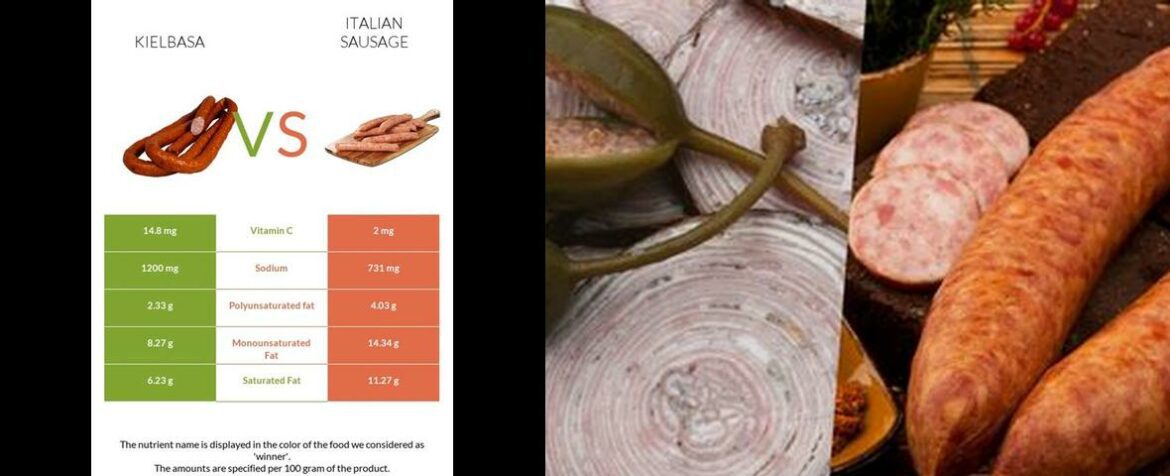 What Sets Kielbasa Apart from Smoked Sausage? Unraveling the Delicious
Breakfast sausage links are tiny and pale, designed to be devoured in two bites alongside pancakes. They have the structural integrity of a soggy napkin and the personality of a hotel lobby. Kielbasa scoffs at them from its throne of garlicky grandeur.
How to Cook Them (Without Causing International Incidents)
Kielbasa loves a slow simmer in beer or sauerkraut—it’s basically a spa day for cured meat. Slice it and pan-fry it until the edges get crispy and brown, like a good sunburn on a Polish vacation.
Italian sausage needs to be grilled hot and fast, or you’ll end up with a dried-out stick that resembles a leather dog chew. Never boil Italian sausage; that’s how you get sad, gray golf balls floating in water.
If you microwave a kielbasa, angels lose their wings. Don’t do it. I caught my neighbor microwaving kielbasa once, and I reported him to the Polish consulate. They sent a strongly worded letter. And a pierogi.
The Great Shape Debate
Kielbasa is famously curved into a big U-shape, like a horseshoe made of meat. This is because it’s stuffed into natural casings that are pretty long, and butchers just loop it to fit the package. American sausage links are straight, like a tiny army of meat soldiers standing at attention.
Fun fact: in Poland, kielbasa comes in so many shapes—rings, straight logs, even spirals—that calling one shape “correct” is like arguing over the best way to eat a potato. (The answer is all ways, but especially fried.)
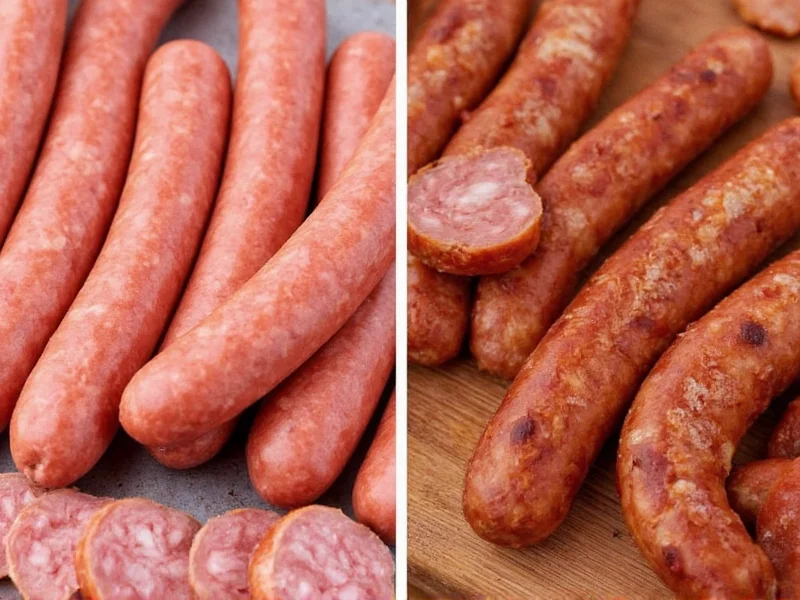 Kielbasa vs Smoked Sausage: Clear Differences Explained
The Social Hierarchy: When to Serve What
Kielbasa is the party guest you invite to a barbecue, a tailgate, or a casual New Year’s Eve. It’s friendly, forgiving, and goes great with mustard and a cold beer. Never show up with a delicate chicken apple sausage to a Polish wedding; you’ll be escorted out by a man named Bogdan.
Sweet Italian sausage is for pasta nights or a Sunday gravy simmer. Andouille is for gumbo or jambalaya, where it can flex on the other ingredients. And those sad little breakfast links? They belong next to scrambled eggs and a side of regret from eating three of them too fast.
Bombshell Truth: Some “Kielbasa” Is a Lie
Many grocery stores sell “kielbasa” that’s just a smoked hot dog in a fat suit. Real kielbasa has visible chunks of fat and a coarser texture; if it looks like a smooth, pink plastic tube, it’s an impostor.
Check the ingredients list. If you see words like “mechanically separated chicken” or “soy protein isolate,” you’ve bought a meat fraud. Burn it in effigy. Or just eat it and move on—but know that somewhere, a Polish grandma is shaking her head, and she’s somehow on the other side of the globe.
The Final Verdict
Is kielbasa a sausage? Yes, legally and culinarily. But is a sausage always a kielbasa? Absolutely not—that’s like saying every dog is a golden retriever. You wouldn’t call a chihuahua a retriever, would you? (If you would, please put down the salami and step away.)
Remember this: kielbasa is the confident, garlic-scented cousin who shows up with a whole roasted pig on a stick and demands you call it by its real name. All other sausages are just trying to be invited to the barbecue. Now go forth, buy the right tube, and treat it with the reverence it deserves. Just don’t microwave it. Ever.
