What's The Difference Between Leeks And Green Onions

There’s something genuinely satisfying about finally understanding a kitchen puzzle you’ve been side-eyeing for years. You know the one: you’re at the grocery store, reaching...

There’s something genuinely satisfying about finally understanding a kitchen puzzle you’ve been side-eyeing for years. You know the one: you’re at the grocery store, reaching for those tall, green stalks, and you freeze. Is that a leek or a green onion? It’s a small but practical mystery, and solving it feels like unlocking a secret level in your cooking life. Whether you’re a weekend gardener, a meal-prep enthusiast, or just someone who loves a good soup, knowing the difference saves you from a watery stir-fry or a rubbery broth. It’s a simple skill that makes your food taste better and your shopping trips smoother.
Let’s start with the most obvious clue: size and shape. Green onions—also called scallions—are slim, elegant, and about as thick as a pencil. Their bulb is barely swollen, and the white part smoothly transitions into hollow, green leaves. Leeks, on the other hand, are the gentle giants of the allium family. They’re thick, cylindrical, and can be as hefty as a toddler’s arm. The white and pale green base is solid, but the leaves are flat and fan out like a palm frond. If you’re ever unsure, just look at the bottom: a leek has a distinct, slightly bulbous root end, while a green onion’s root is more tuft-like.
The real magic, though, is in flavor and how you use them. Green onions are sharp and zesty when raw, with a clean onion kick that makes them perfect for sprinkling over tacos, salads, or ramen. Cooked, they mellow into a gentle sweetness. Leeks are the opposite: they’re subtle and sweet even when raw, with an earthy, almost buttery undertone. That’s why leeks are the star of classic potato-leek soup or a creamy braised side dish. A common mistake? Swapping them one-for-one in a recipe. Use a leek where you’d use a green onion’s raw crunch, and you’ll get a soggy, mild result. Use a green onion where leeks need to soften into silkiness, and you’ll miss that deep, savory backbone.
Must Read
Texture tells you everything about how to prep them. Green onions are a breeze: just trim the root, slice the white and green parts as needed, and you’re done. Leeks, however, are infamous for hiding dirt and grit between their tight layers. To clean them properly, slice the leek lengthwise, then run it under cold water while fanning the layers open like a book. This is not optional—skipping it means biting into sandy grime. Once prepped, think of leeks as a foundational vegetable, similar to onions or celery. Sauté them low and slow for a fragrant base in soups, stews, or quiches. Green onions are better as a last-minute finishing touch or a quick sauté.
Here’s a fun variation: you might encounter spring onions at a farmer’s market, which look like a green onion’s big brother—they have a more pronounced bulb. They’re actually immature bulb onions, not true scallions, and they fall somewhere between the leek and green onion in flavor. For everyday cooking, though, stick with the simple rule: if you want raw bite, grab green onions; if you want a mellow, saucy sweetness, reach for leeks. Your taste buds will thank you.
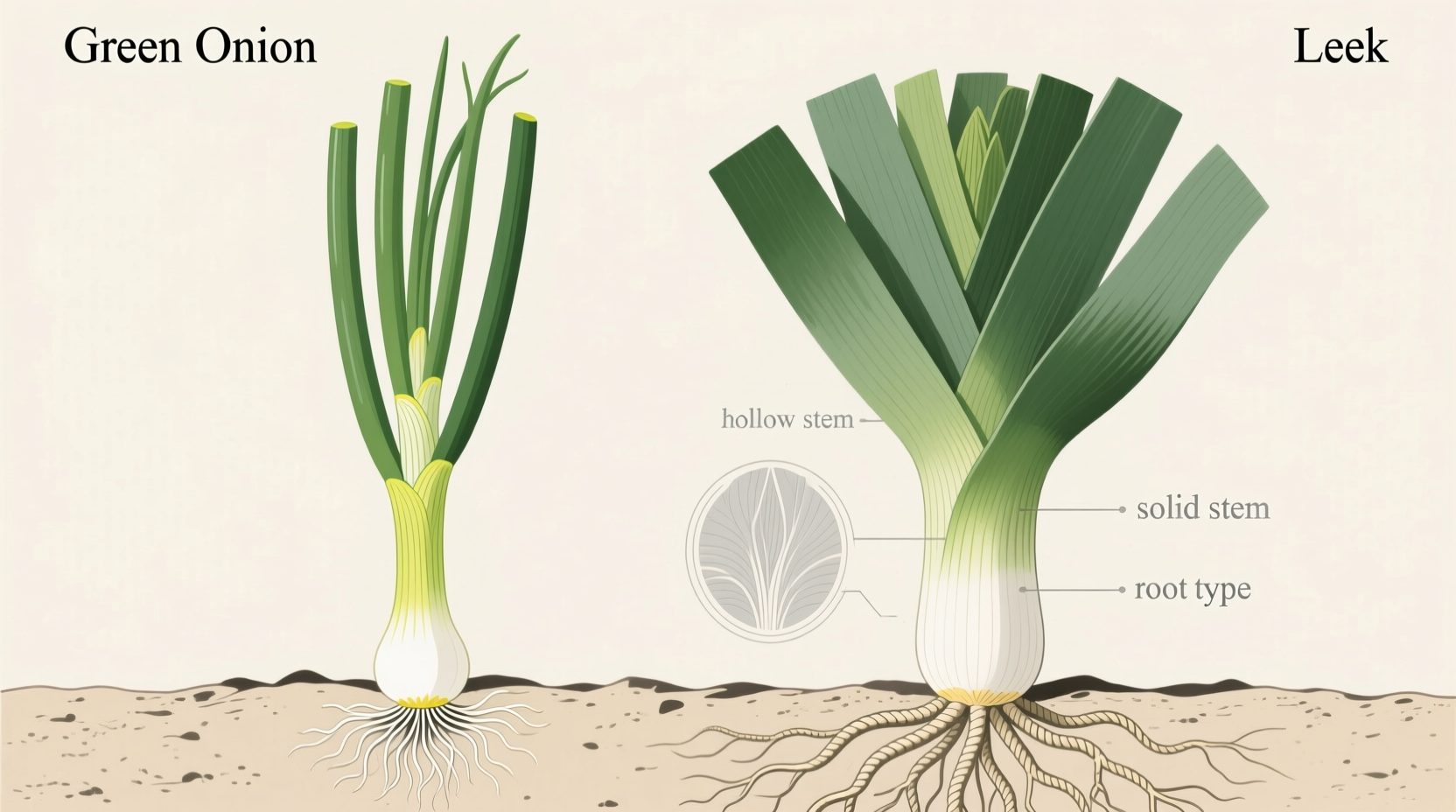 Green Onion vs Leek: Clear Differences Explained
To make the most of them, start with this easy swap: next time a recipe calls for onions in a delicate dish like fish or eggs, try using leeks instead for a softer, sweeter profile. Or, if you’re making a stir-fry and want extra crunch, bulk it up with green onions added in the last 30 seconds of cooking. Another actionable tip: store them differently. Green onions stay crisp in the fridge wrapped in a damp paper towel inside a bag. Leeks prefer a dry, open plastic bag and should be used within a week. Don’t wash leeks until you’re ready to cook, or they’ll turn into a slimy science experiment.
In the end, knowing your alliums isn’t about being a snob—it’s about getting more joy from simple ingredients. You’ll save money by buying the right one, waste less from spoiled substitutes, and impress family with soups that taste just right. So next time you’re in the produce aisle, give those leeks and green onions a confident nod. You’ve got this.
