What Temperature To Cook Chicken

Let’s be real for a second: cooking chicken at home can feel like navigating a minefield while blindfolded. One minute you’re dreaming of juicy, golden-brown perfection, and t...
Let’s be real for a second: cooking chicken at home can feel like navigating a minefield while blindfolded. One minute you’re dreaming of juicy, golden-brown perfection, and the next you’re serving up what looks suspiciously like a dried-out flip-flop (sorry, not sorry). But I’m here to be your chicken-whispering pal. We’re going to tackle the big question: what exact temperature do you need to hit so your chicken is safe, juicy, and the star of your dinner table? Grab a spatula and a deep breath—we’ve got this.
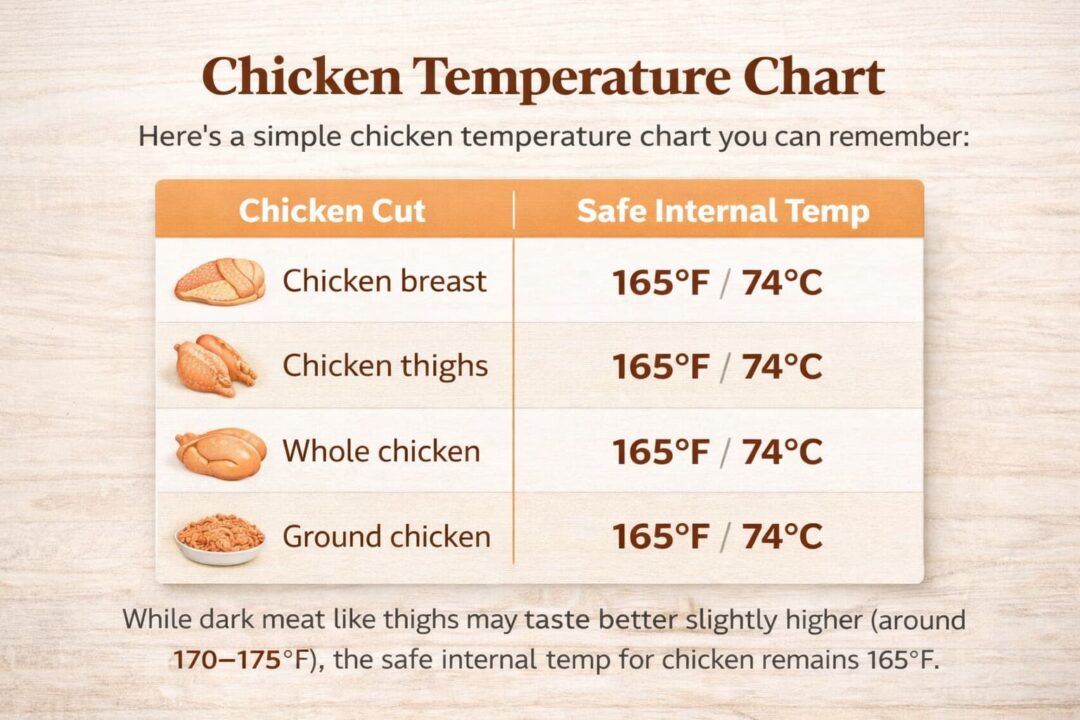
First, let’s kill the biggest myth right now: “It has to be 165°F everywhere, always.” That’s not exactly the whole story. While the USDA says 165°F is the magic number that instantly kills nasty bugs like salmonella, you don’t have to blast your bird until it resembles desert sand. Temperature is about time, too. You can hold chicken at a lower temp for a bit longer and still be perfectly safe—and way more tender. Think of it like a cozy spa day, not a scorching interrogation.
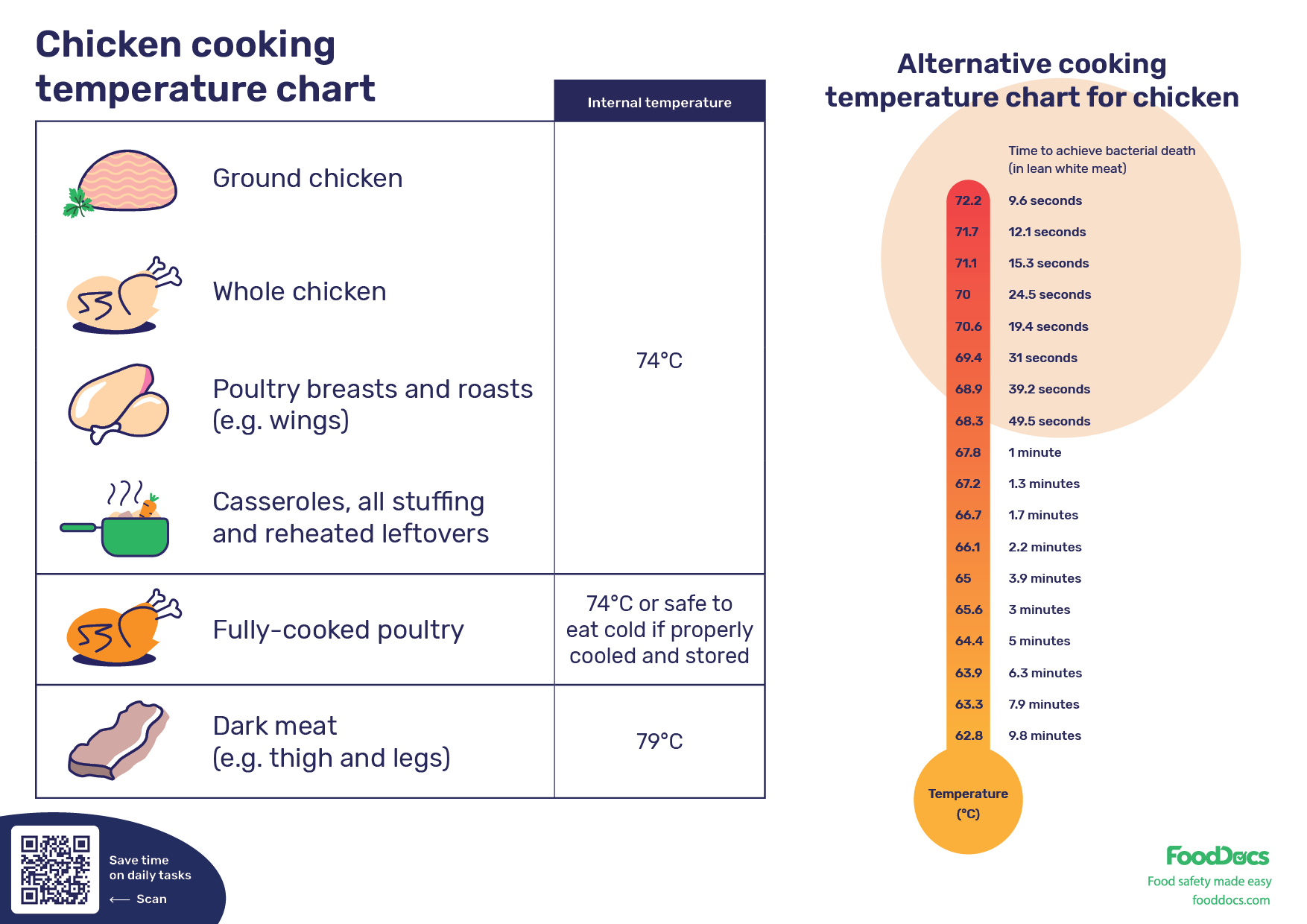
So, here’s your cheat sheet, my friend. For boneless, skinless chicken breasts (the diva of the poultry world), pull them off the heat at 155°F to 160°F. Let them rest under foil for five minutes; carry-over cooking will push them to that 165°F sweet spot without turning them into cardboard. For thighs, drumsticks, and wings—the dark-meat heroes—you want 175°F to 185°F. Why so high? Because their connective tissue melts into buttery goodness at those temps. Low and slow is your friend here. A whole bird? Target 165°F in the thickest part of the breast and 175°F in the thigh. Yes, it’s a split decision—like choosing between chocolate and vanilla. Do both.
Must Read
And please, for the love of all things crispy, invest in a good instant-read thermometer. Guessing, cutting into the meat to check, or using that weird pop-up timer from the store? That’s amateur hour. A quick, accurate digital probe costs less than a fancy latte and saves you from a lifetime of dry-chicken regrets. Stick it in the thickest part, away from bone. Trust the numbers, not your gut. Your gut is a liar when it’s hungry.
 Chicken Internal Temp: The Secret to Safe, Perfect Chicken - Foodiosity
Now, a little truth-bomb: brining (even a quick 30-minute saltwater soak) is the unsung hero of perfect texture. It helps the meat hold onto moisture like a clingy friend at a party. And always pat your chicken dry before cooking—wet skin equals soggy, sad results. Want golden, crispy skin? Dry it, season it, and cook it skin-side down in a cold pan that you then heat up. The gradual render gives you crackling magic. I’m not crying; it’s just the chicken fat smoke.
Here’s the beautiful takeaway: you don’t need a culinary degree or a secret handshake. You just need a little patience, a decent thermometer, and permission to stop being scared. Cooking chicken is not a test of your worth as a human. It’s just dinner. You’re allowed to mess up the first three times (or thirty). And on that magical night when you pull a perfectly juicy breast or a fall-off-the-bone thigh off the heat, you will feel like a kitchen wizard. So go ahead, preheat that oven, season that bird like you mean it, and know that 165°F isn’t a scary deadline—it’s a delicious invitation. You’ve got this. Now go make something that makes you smile.