What Temperature Should Salmon Be Cooked To

Alright, gather 'round, folks. I've got a tale to tell, a tale of salmon, thermometers, and the great temperature debate. You might think cooking salmon is as simple as throwi...

Alright, gather 'round, folks. I've got a tale to tell, a tale of salmon, thermometers, and the great temperature debate. You might think cooking salmon is as simple as throwing it on a grill and calling it a day, but oh no, we're not having any of that here. We're going to dive in, get our hands dirty, and figure out this temperature business once and for all.
First things first: Why the fuss about temperature?
Well, my friends, it's all about the science. You see, salmon is like Goldilocks' porridge - it's got to be just right. Too hot, too fast, and you'll end up with a dry, overcooked fish that's about as appealing as a used dish sponge. Too cold, too slow, and you're inviting bacteria to the party, which is about as fun as a root canal.
So, what's the magic number?
According to the USDA, salmon should be cooked to an internal temperature of 145°F (63°C). Now, I know what you're thinking: "But I like my salmon rare!" Well, hold onto your hats, because we're about to dive into the great temperature controversy.
Must Read
Team Rare: The Rebels
There's a group of salmon lovers out there who swear by the 'rare' method. They believe that cooking salmon to a lower temperature - around 120°F (49°C) - keeps it moist and tender, with a beautiful, translucent center. They're like the salmon version of the Paleo diet, shunning convention and embracing the 'wild' side of cooking.
But here's the thing, folks. While Team Rare might argue that their method is safer because the fish is cooked for a longer time, the USDA isn't playing around when it comes to food safety. They've done their homework, and they've found that cooking salmon to a lower temperature can increase the risk of foodborne illness. So, while you might be getting a delicious, rare treat, you're also playing a dangerous game of Russian roulette with your digestive system.
Team Medium: The Compromisers
Then there's Team Medium, the compromisers, the peacekeepers. They've found a happy medium - pun intended - by cooking their salmon to an internal temperature of around 130°F (54°C). They argue that this temperature keeps the fish moist and tender, while still being safe to eat.
Now, I've got to hand it to them, Team Medium has a point. Cooking salmon to this temperature does result in a beautifully cooked fish, with a slightly translucent center. But here's the kicker: the USDA still doesn't recommend this temperature, as it can still leave the fish undercooked in some areas.
So, what's a salmon lover to do?
Alright, folks, let's cut to the chase. If you're looking to cook salmon safely and deliciously, you've got to listen to the USDA. That means cooking your salmon to an internal temperature of 145°F (63°C). Now, I know what you're thinking: "But that's going to dry out my fish!" Not if you do it right, it won't.
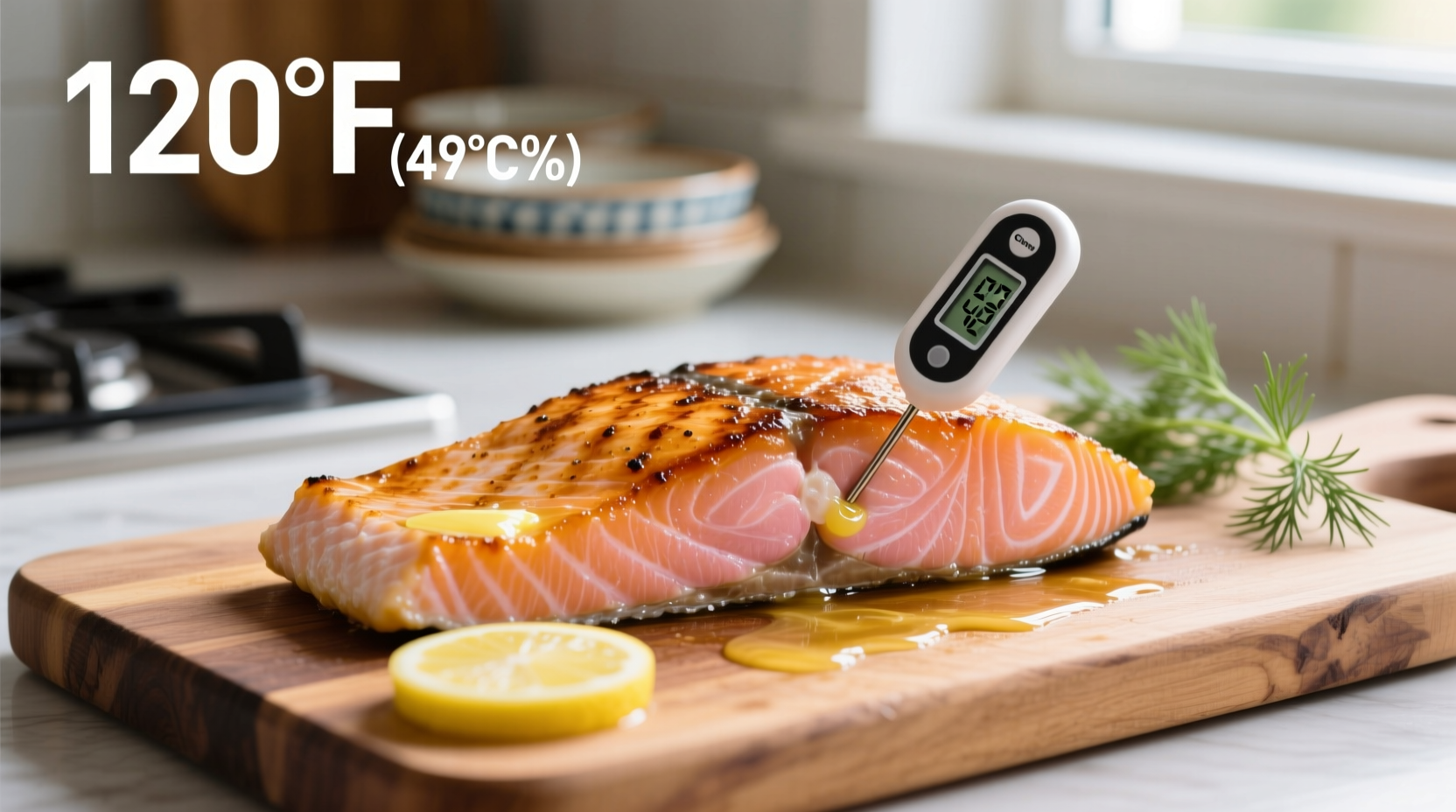 Salmon Cooking Temperature Guide: Perfect Doneness Every Time
Here's the secret: cook your salmon skin-side down on a hot pan for about 5-7 minutes, then flip it and cook it for another 2-5 minutes. This method helps to keep the fish moist and delicious, while still cooking it to a safe temperature. And if you're still not convinced, consider this: the USDA isn't in the business of ruining your dinner. They've done their research, and they know what they're talking about.
But wait, there's more!
Now, I know I've been talking a lot about temperature, but there's another factor at play here: thickness. You see, the thicker your salmon fillet, the longer it's going to take to cook. So, if you're cooking a thick piece of salmon, you might need to stick it in the oven after searing it on the stove to make sure it's cooked all the way through.
And here's a fun fact for you: did you know that salmon can actually continue to cook even after you've taken it off the heat? That's right, folks. It's like the salmon version of a slow cooker. So, if you're cooking your salmon in the oven, make sure to take it out when it's about 130°F (54°C), then let it rest for a few minutes. By the time it's ready to serve, it'll be cooked to perfection.
In conclusion...
Alright, folks, let's sum this all up. Cooking salmon to a safe temperature isn't just about following the rules - it's about keeping you and your loved ones healthy and happy. So, grab your thermometer, get your salmon on the heat, and let's enjoy some delicious, perfectly cooked fish. And who knows? You might just become a salmon connoisseur in the process.
Now, if you'll excuse me, all this talk of salmon has made me hungry. I think it's time for a little snack. Bon appétit!
