What Temperature Should Salmon Be Cooked At

Welcome, fellow food adventurer! Have you ever stared at a beautiful fillet of salmon in your kitchen, feeling a mix of excitement and fear? You’re not alone. The secret to un...

Welcome, fellow food adventurer! Have you ever stared at a beautiful fillet of salmon in your kitchen, feeling a mix of excitement and fear? You’re not alone. The secret to unlocking salmon’s true potential isn’t a fancy sauce or a complex marinade—it’s simply knowing the perfect temperature. This isn’t about boring kitchen science; it’s your golden ticket to a flaky, moist, and utterly delicious meal every single time. Forget dry, chalky fish. Mastering salmon temperature gives you the confidence to cook like a pro, impressing friends and family with minimal effort. The real advantage? You’ll never waste money on overcooked salmon again, turning a simple weeknight dinner into a restaurant-quality experience.
The purpose of this thermal quest is simple: to hit that sweet spot where the salmon’s proteins have just set, its natural fats have melted into buttery goodness, and the texture is a beautiful balance of tender and firm. Cooking by temperature, rather than time, is the only reliable method because ovens and fillet thickness vary wildly. Why guess and hope for the best when you can be precise? The advantage here is consistency. Whether you’re baking, pan-searing, or grilling, the target temperature remains your trusty guide. It transforms cooking from a stressful guessing game into a calm, controlled, and highly rewarding process. Think of it as your personal fish GPS, steering you straight to delicious.
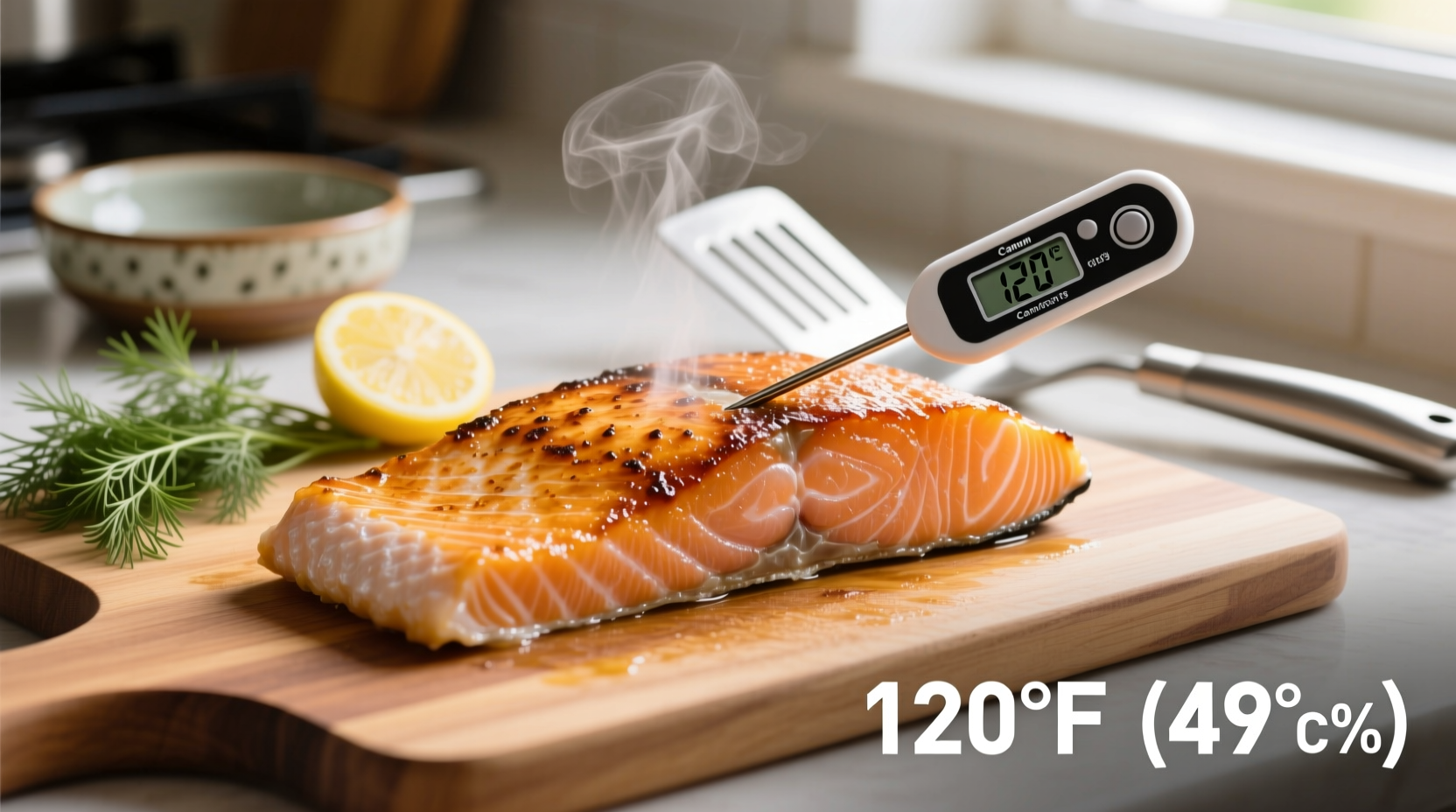
So, what is this magical number? For most people, the gold standard is 125°F (52°C) to 130°F (54°C) when measured at the thickest part of the fillet. This gives you that luscious, medium-doneness where the salmon is just cooked through, still translucent in the center, and flakes effortlessly with a fork. However, if you prefer a firmer, more traditional texture—the kind you’d find in a classic poached or grilled fillet—aim for 135°F (57°C) to 140°F (60°C). This is still wonderfully moist, but the flesh will be opaque and flake into distinct, clean pieces. Think of the lower range as silky sashimi-adjacent, and the higher range as a hearty, dinner-party staple. Both are correct; it’s all about your personal delight.
Must Read
Now, let’s get creative and connect this to your cooking methods. For a beautiful pan-sear, start with a hot skillet and a high-smoke-point oil. Sear skin-side down for 4–5 minutes, then flip. Immediately transfer the pan to a preheated 400°F (204°C) oven (or reduce stovetop heat to low) and cook until the center hits your target temp. This gives you crispy skin and a perfectly cooked interior. For grilling, use a two-zone fire. Sear over direct high heat for 2 minutes per side, then move to the cooler side, cover, and let the ambient heat gently push the internal temperature to a perfect 130°F. The smoke and char are the reward; the temperature ensures it’s not dry ash.
For a foolproof baking method, try the “low and slow” technique. Preheat your oven to 275°F (135°C). Place seasoned fillets on a lined baking sheet and bake until they reach 125°F–130°F. This gentle heat minimizes moisture loss, resulting in an incredibly buttery, almost custard-like texture. It’s nearly impossible to mess up! Or, for the ultimate in precision, learn sous vide salmon. Seal fillets in a bag with salt, pepper, and a knob of butter. Cook in a water bath at 125°F for 45-60 minutes. The result? A perfect, edge-to-edge medium doneness. A quick sear in a blazing hot pan for 30 seconds per side gives you a caramelized crust, while the inside remains a miraculous, tender pink.
:max_bytes(150000):strip_icc()/__opt__aboutcom__coeus__resources__content_migration__serious_eats__seriouseats.com__images__2016__08__20160826-sous-vide-salmon-temperature-composite-1ed132fa383e4b39b2035c12c6b71065.jpg) What Temp is Salmon Cooked To? A Guide to Get Perfectly Cooked Salmon
What Temp is Salmon Cooked To? A Guide to Get Perfectly Cooked Salmon
Here is your practical, no-nonsense advice. First, invest in an instant-read thermometer. It’s your single most important tool. Second, always remove salmon from the heat 5°F to 10°F (3°C to 5°C) below your target temperature because it will continue to cook from residual heat (carryover cooking). Third, let the salmon rest for 3–5 minutes before serving. This allows juices to redistribute, ensuring every bite is moist. Fourth, remember that wild salmon often cooks faster and is best at the lower end (125°F), while farmed salmon, with its higher fat content, can handle the upper range (135°F) without drying out. Finally, season generously but simply: salt, pepper, and a squeeze of lemon are all you need to let that perfect temperature shine.
Embrace the power of temperature, and you’ll unlock a new level of culinary freedom. No more dry fish, no more anxiety. You’ll know exactly when to pull it from the heat—with confidence and a smile. This knowledge is like a secret handshake among cooks, and now you’re part of the club. So preheat your oven, grab your thermometer, and get ready to experience salmon in its most glorious, perfectly cooked form. Every fillet will become a small victory, a delicious testament to the simple, powerful magic of knowing your numbers. Happy cooking!