What Temperature Should A Chicken Be When Cooked

Okay, let’s talk chicken. You’ve probably got a bird in the oven or a thigh sizzling in a pan, and that one question is buzzing around your brain like a persistent fly: What t...

Okay, let’s talk chicken. You’ve probably got a bird in the oven or a thigh sizzling in a pan, and that one question is buzzing around your brain like a persistent fly: What temperature should a chicken be when cooked? It’s the eternal kitchen mystery, right up there with why socks disappear in the laundry. But don’t worry, we’re going to crack this nut together, nice and slow.
The Magic Number Isn't Magic
165°F (74°C) is the golden ticket. That’s the internal temperature the USDA says is safe for poultry, and it’s the number you’ll see on every thermometer package. But here’s the cool part: it’s not some arbitrary limit set by a chicken-hating wizard. It’s the temperature where Salmonella and Campylobacter—the uninvited party crashers—get zapped into oblivion.
Think of it like this: chicken is a tiny, delicious fortress. At 165°F, you’ve successfully burned the moat and locked the gates. Anything below that, and those bacteria might still be doing a conga line in your dinner. So, 165°F is the safe zone. Simple, right?
Must Read
But Wait—What About Juicy Meat?
Here’s where the curiosity kicks in. You’ve probably heard chefs whisper about pulling chicken at 150°F or 155°F. Why would they risk the conga line? Because temperature isn’t just about safety—it’s about texture. Chicken breast, especially, gets dry and sad if you cook it all the way to 165°F. It’s like overcooking a steak to shoe leather. No thanks.
The secret is a little science trick called carryover cooking. When you yank the chicken off the heat at, say, 155°F, the internal temperature keeps rising for a few minutes. If you let it rest, it can cruise right up to 165°F without you doing a thing. That rest is your superpower. It’s like letting a hot bath cool down to the perfect soak.
The Juicy Cheat Sheet
So, do you need a different number for different parts? Yes, and it’s fascinating. A whole chicken is like a team of musicians—each section has its own rhythm. Dark meat (thighs and legs) actually sings at a higher note. It’s fine—even better—at 175°F to 185°F because the extra fat and connective tissue melt into ultimate tenderness. White meat? Keep it closer to 155°F to 160°F for that juicy, flaky vibe.
Breasts are the divas of the chicken world. They dry out fast, so pull them at 155°F and let them rest. Thighs are the laid-back bass player—they can handle the heat and get richer. Use a thermometer, not your eyes. You can’t tell if it’s done by looking at the color or juice; that’s old folk wisdom that often lies.
 What Temperature Should Boneless Chicken Breast Be? A Detailed Guide
Your Thermometer is a Best Friend
You need a good instant-read thermometer. This tool is your truth-teller. Stick it into the thickest part of the meat (avoiding bone, which heats faster). For a whole bird, check the inner thigh and the thickest part of the breast. It’s like taking the chicken’s pulse—but way more delicious.
Don’t you find it oddly satisfying? The moment the beep goes off at exactly 165°F, you feel like a scientist-chef hybrid. “Yes, I have conquered the Salmonella empire!” Plus, you’ll never serve a rubbery, overdone bird again. It’s a small investment for dinner-party glory.
The Fun Comparison Game
Cooking chicken to the right temperature is like making the perfect cup of coffee. 165°F is your boiling water baseline—safe and effective. But pulling it at 155°F is like letting the water cool a few degrees for a pour-over; you get the complex flavors without the bitterness. If you overshoot to 180°F, that’s burnt coffee—safe, but nobody’s happy.
Or compare it to Goldilocks. Too cold (below 150°F) is dangerous. Too hot (above 170°F for breast) is dry and sad. But 155°F to 165°F? That’s just right. And you get to be the one who decides.
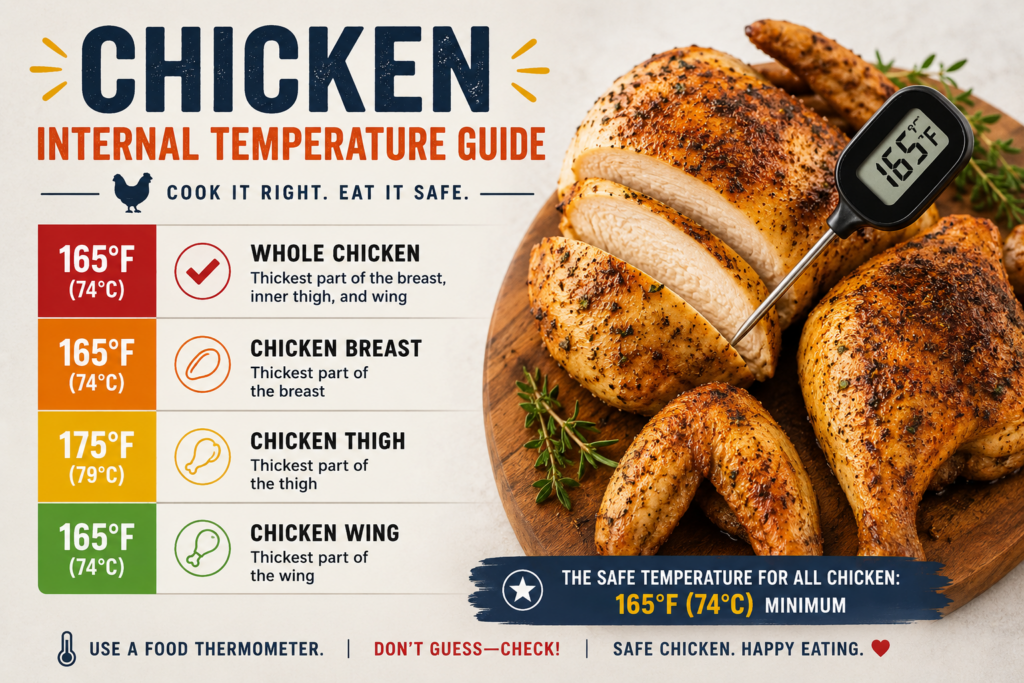 Chicken Internal Temperature Guide for Smoking (Safe Temps + Best
What About Leftovers or Stuffed Birds?
Leftovers are a whole new adventure. Reheat them to 165°F again, because bacteria love a second chance. If you’re stuffing a chicken, the stuffing inside must also hit 165°F. That’s non-negotiable. Think of the stuffing as a hidden guest—it needs the same temperature treatment as the host.
And please, never rely on the little plastic pop-up timer that comes with some birds. Those are as accurate as a broken clock. Trust your own digital thermometer. It’s cheap, it’s easy, and it makes you look like you know what you’re doing.
The Chill Takeaway
Here’s the bottom line, in plain English: 165°F is your safety net, but 155°F plus a rest is your juicy nirvana. Don’t be afraid to experiment. Cook that thigh to 180°F and taste the difference. Pull that breast at 157°F and marvel at the moisture. The thermometer is your guide, not your master.
So next time you’re staring at a sizzling pan of chicken, take a deep breath. You’ve got this. What temperature should a chicken be when cooked? The answer is: the one that keeps you safe and makes you smile. Happy cooking, curious friend.
