What Temperature Should A Chicken Be Cooked To

Let’s be honest: cooking chicken is a battlefield, and the enemy is dry, sad meat that tastes like disappointment. You want that golden, juicy bird, but one wrong move and you...
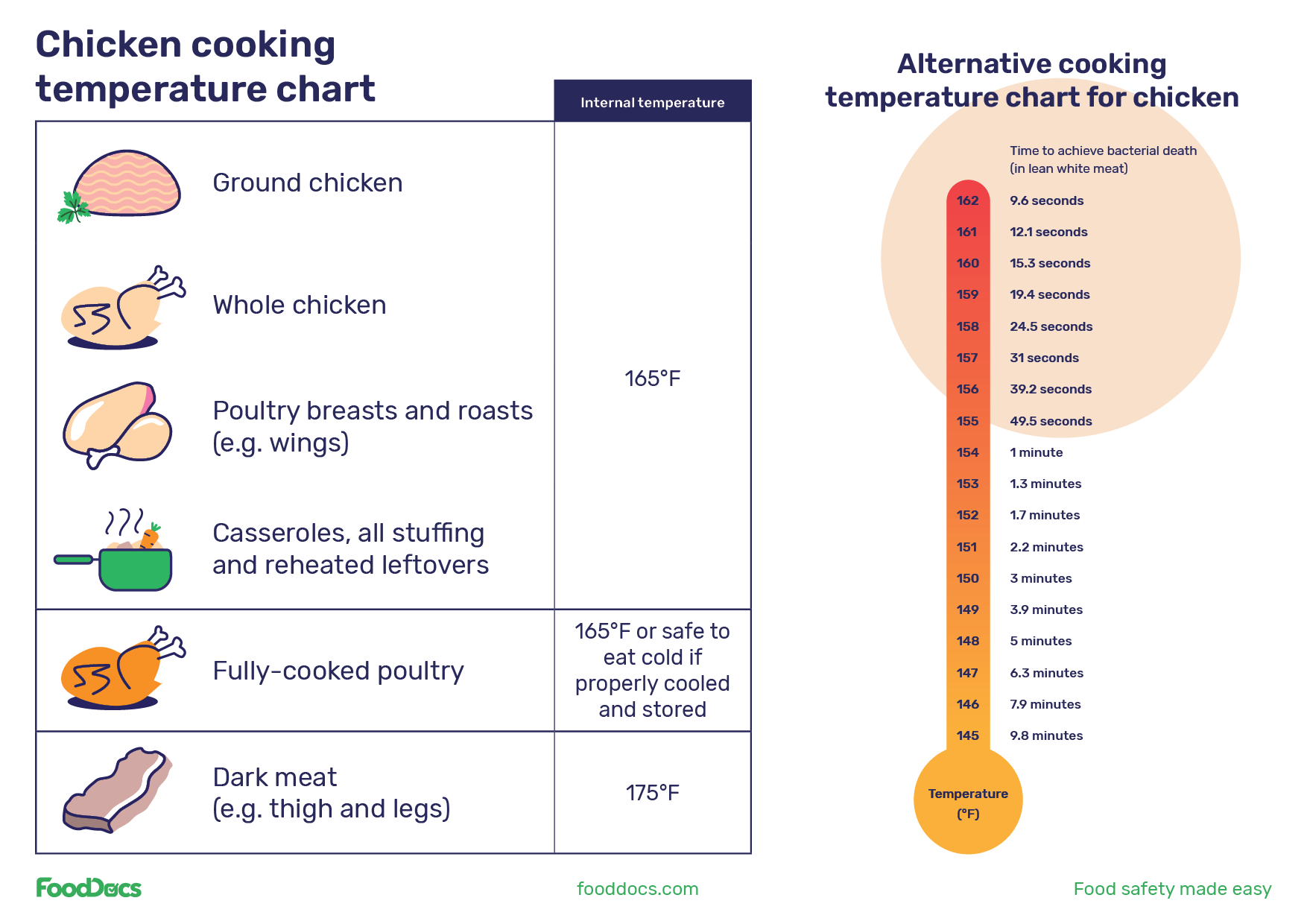
Let’s be honest: cooking chicken is a battlefield, and the enemy is dry, sad meat that tastes like disappointment. You want that golden, juicy bird, but one wrong move and you’re chewing on a poultry hockey puck. The single most important question in this war is: What temperature should a chicken be cooked to?
Here’s the official, non-negotiable answer from the food safety gods: 165°F (74°C) in the thickest part of the meat. That’s the magic number where the nasty bacteria, like Salmonella, throw in the towel and die. Think of it as the chicken’s “I’m done partying” temperature.
But wait—did you know that 165°F is just a safety floor, not a guarantee of deliciousness? You can totally nuke a breast to 165°F and still end up with something that tastes like a cardboard shoe. The real secret is time and temperature together.
Must Read
The Science of Not Ruining Your Dinner
Here’s a wild fact: chicken can be safe at lower temperatures if you hold it there long enough. For example, cooking a breast to 155°F and holding it for about a minute kills the same amount of bacteria as hitting 165°F instantly. It’s like the chicken gets a gentle spa treatment instead of a shock.
So why do most recipes scream “165°F”? Because it’s idiot-proof. If you just yank the bird out when your instant-read thermometer hits that number, you’re safe. But if you want juicy, tender chicken—not a dry, stringy mess—you have options.
For breasts, aim for 155–160°F and let them rest. The carryover cooking (that sneaky heat still inside) will push them up to 165°F while keeping the moisture locked in. Your taste buds will throw you a parade.
Dark Meat? Don’t Be a Coward
Thighs and legs are the unsung heroes of the chicken world. They have more fat and connective tissue, so they can—and should—be cooked higher. Take them to 175–185°F for that fall-off-the-bone, melt-in-your-mouth magic.
If you pull dark meat at 165°F, you’ll get chewy, slightly gross chicken. That collagen needs time to break down into gelatin. So don’t be afraid to let those thighs roast a little longer. They’ll thank you by being the best part of the meal.
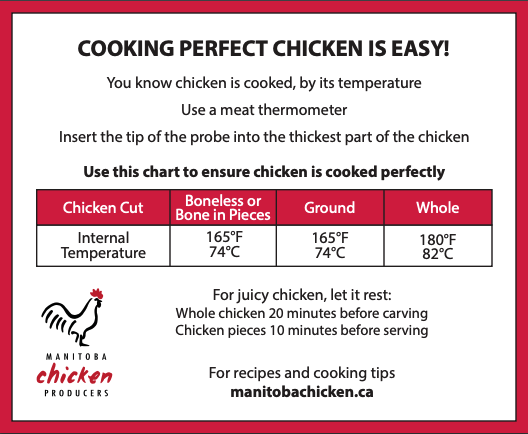 How to Properly Cook Chicken | Manitoba Chicken
Think of it this way: white meat is a delicate flower. Dark meat is a rugged lumberjack. Treat them differently, and everyone wins.
The One Tool You Can’t Fake
You need a good instant-read thermometer. Guessing by cutting into the chicken or checking for clear juices is a lie your ancestors told you. It’s 2025. Use the tool.
Probe the thickest part of the breast, avoiding the bone (because the bone is a liar and will give a fake reading). For whole birds, check the inner thigh and the wing joint. If you’re wrong by 10 degrees, you might serve a food poisoning buffet or a charcoal brick.
And please, don’t rely on those pop-up timers in store-bought turkeys. They’re about as accurate as a broken clock. Trust your digital thermometer like it’s your best friend who always tells you the truth, even when it hurts.
What About Leftovers and Reheating?
Leftover chicken is a gift from past-you to future-you. Reheat it to 165°F again if you’re worried, but know that reheating to 155°F is usually fine if you’re not pregnant or immunocompromised. The real enemy here is dryness.
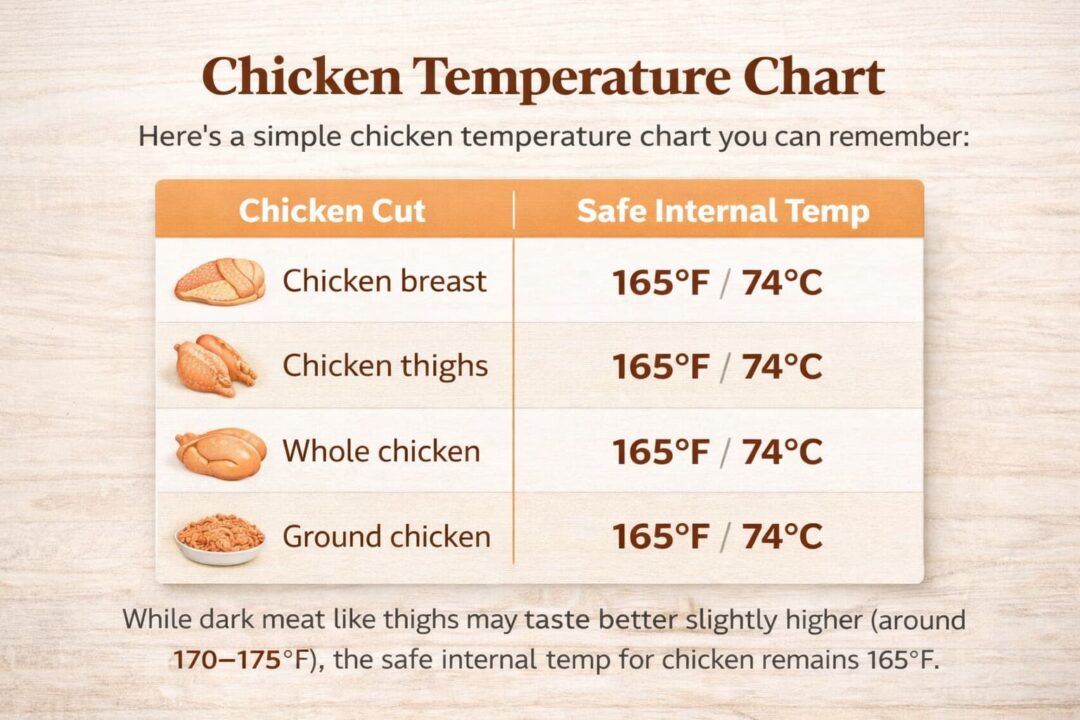 Chicken Internal Temp: The Secret to Safe, Perfect Chicken - Foodiosity
Add a splash of broth or water before microwaving, and cover it. This creates steam that rescues the meat from the desert. Your future self will thank you for not serving chicken jerky.
Also, never leave cooked chicken out for more than two hours (one hour if it’s hotter than 90°F outside). That’s just common sense, or as I call it, “not wanting to spend the night hugging the toilet.”
A Final, Juicy Truth
There’s a myth that you must cook chicken until it’s “white all the way through.” That’s false. Perfectly cooked chicken can have a slight pink blush near the bone, especially in thighs. It’s not blood; it’s myoglobin, a protein that stays pink even when fully cooked.
If you rely on color, you’ll overcook everything. Use the thermometer and ignore your eyes. Your eyes are drama queens. Science is the real hero here.
To wrap it up: cook white meat to 165°F (or 155°F with a rest). Cook dark meat to 175–185°F. Use a thermometer. And never, ever apologize for serving juicy chicken. You’re a kitchen warrior now. Go forth and roast.
And if you still screw it up? Order pizza. Some battles are not worth winning. But at least now you know the temperature. That’s half the war, soldier.
