What Temperature Does Chicken Need To Be Cooked To

Okay, let’s talk turkey—or chicken, actually. You’ve got a raw bird staring at you from the cutting board, and you’re sweating more than the poultry. The big question: What te...
Okay, let’s talk turkey—or chicken, actually. You’ve got a raw bird staring at you from the cutting board, and you’re sweating more than the poultry. The big question: What temperature does that thing need to hit before you can eat it without summoning the ghost of food poisoning past?
The Magic Number That Saves Your Gut
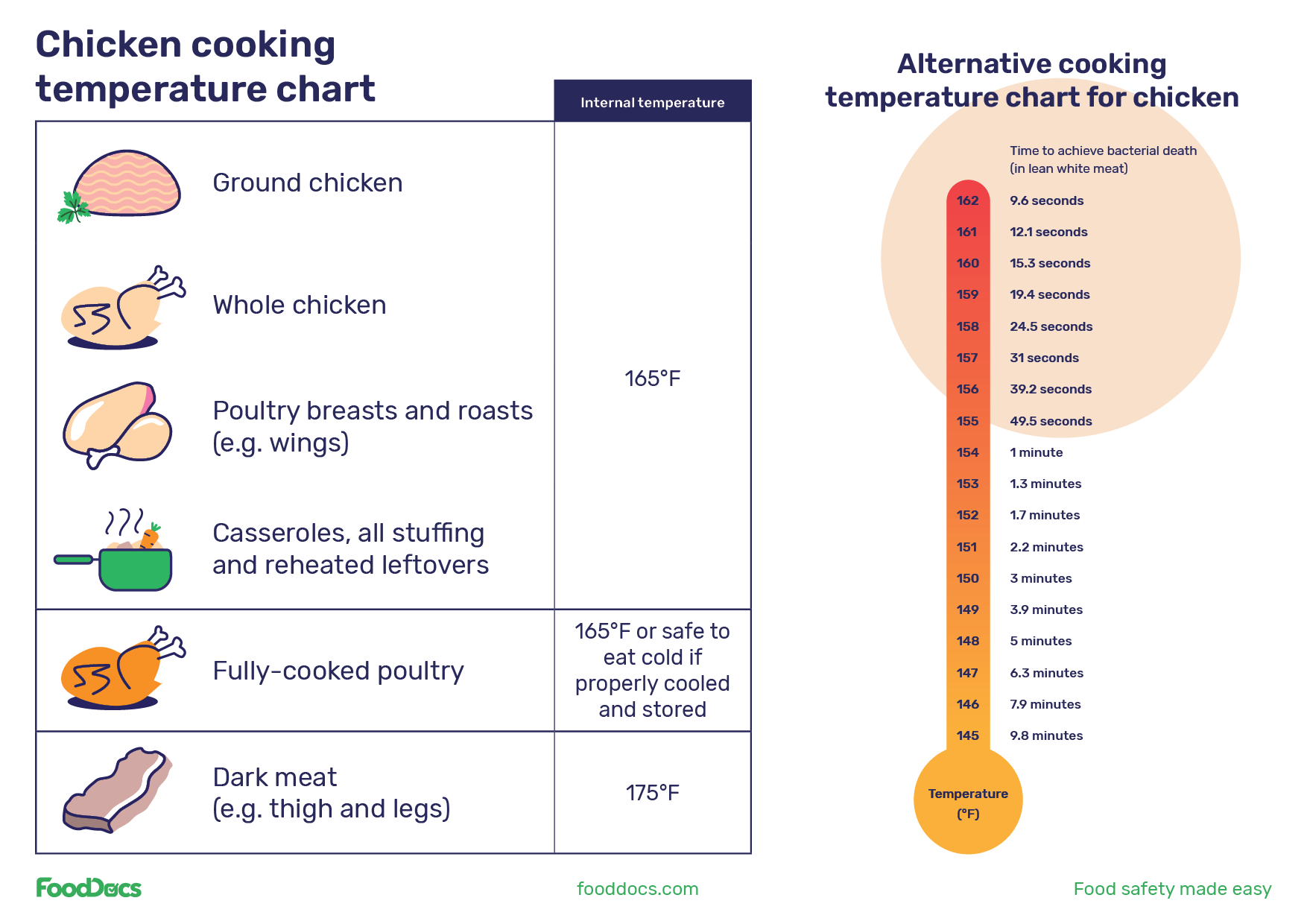
Here’s the short, glorious answer: 165°F (74°C). That’s it. That’s the golden ticket, the finish line, the moment your chicken goes from “danger zone” to “dinner zone.” The USDA didn’t just pull this number out of a hat—it’s the temperature where Salmonella and Campylobacter throw up their little bacterial hands and die.
Imagine 165°F as a spa day for your chicken—but instead of cucumber water, it’s a heat blast that obliterates every microscopic party crasher. Don’t eyeball it; don’t guess. That’s how you end up eating “chewy chicken surprise” and spending the night hugging your toilet.
Must Read
But Wait—What About Juicy Magic?
I know what you’re thinking: “Won’t 165°F turn my chicken into a leather shoe?” Fair point. Chicken breasts hit 165°F and sometimes feel like you’re chewing a dry sponge. Here’s the cheat code: you can pull it at 155°F if you hold it there for just under a minute. Science says so.
That’s called pasteurization time. At 155°F, bacteria die just as dead, but your meat stays plump and juicy like it went to finishing school. A good instant-read thermometer is your best friend—trust it more than your intuition or your uncle’s “I’ve been cooking chicken for 40 years” vibe.
The Dark Side of the Bird
Dark meat is a whole different animal—no pun intended. Thighs, legs, and wings? They love higher heat. Take them to 175°F or even 185°F, and they get tender, fatty, and almost buttery. White meat dries out; dark meat begs for a sauna.
Why? Because chicken thighs are oily drama queens—they need more heat to break down collagen and connective tissue. Pull them at 165°F and they’ll still be rubbery; let them sing at 180°F, and you’ll weep with joy. Also, never trust a chicken wing that isn’t crispy on the outside—that’s just sad poultry physics.
The Tools That Save Your Bacon (and Chicken)
You absolutely need a digital instant-read thermometer. Not a dial one, not a “poke it and guess” method. A digital one that beeps with smug accuracy. Stick it into the thickest part of the breast or thigh, avoiding the bone (bones lie).
Fun fact: About 1 in 6 Americans get food poisoning each year, and a huge chunk of that is undercooked chicken. Your thermometer costs less than three lattes and saves you from a 48-hour date with a bucket. Buy one. Do it.
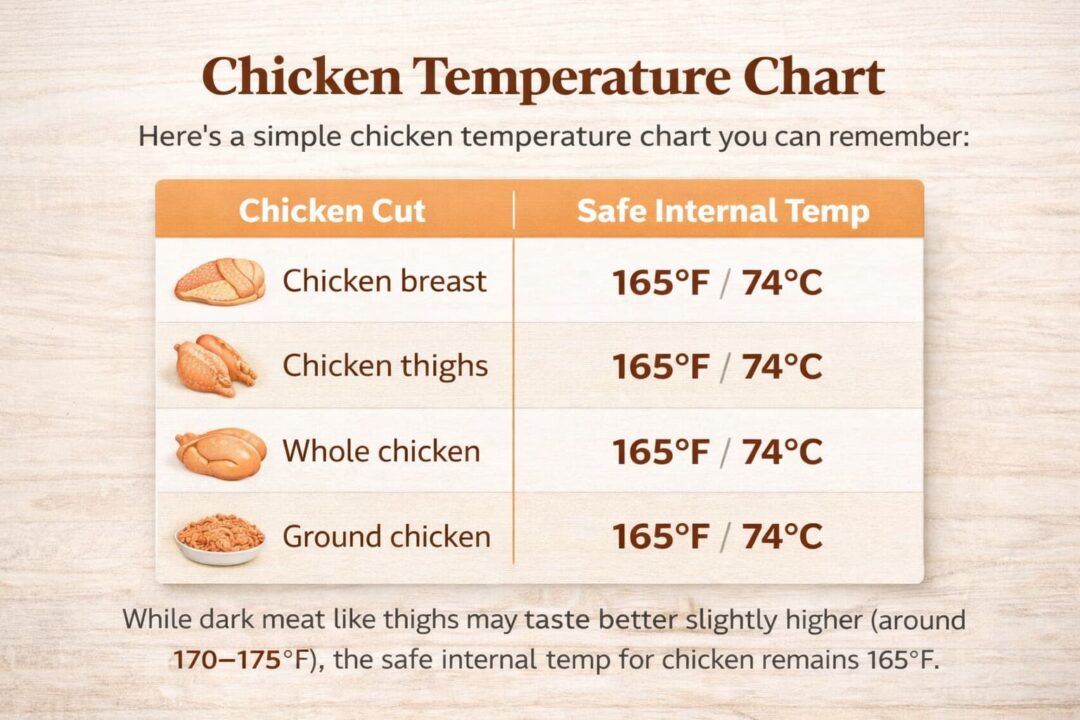 Chicken Internal Temp: The Secret to Safe, Perfect Chicken - Foodiosity
The Oven’s Dirty Secret
Your oven is a liar. It says it’s 350°F, but the hot spot near the back is 380°F and the front is a chilly 330°F. That’s why you use a thermometer—because ovens are like that friend who swears they’ll be there in five minutes and shows up an hour late.
Also, rest your chicken for at least five minutes after cooking. The temperature climbs about 5°F while it rests (called “carryover cooking”). So if you pull it at 160°F, it’ll coast right up to 165°F like a lazy bird on a slide. More juicy, less risk.
The Microwave Traitor
Never, ever microwave raw chicken to “thaw and start cooking” at the same time. That’s how you get half-cooked, half-frozen chicken—a crime against both taste and safety. Thaw it in the fridge (overnight) or in cold water (bagged, 30 minutes). Your microwave is for popcorn, not poultry negotiations.
And leftovers? Reheat them to 165°F again. Yes, even if it was perfectly cooked the first time. Bacteria are like bad exes—they come back if you’re not thorough.
The Final, Hilarious Truth
So, in summary: 165°F is the law, but 155°F for a minute is the loophole. Dark meat wants to party hotter. Invest in a thermometer, ignore your oven’s lies, and never trust a wing that isn’t crispy. Your stomach will thank you, and your dinner guests won’t need to call an ambulance.
Now go forth and cook—but for the love of all things clucky, use that thermometer. Your chicken deserves a dignified death, not a reincarnation as a biohazard.
