What Temp Does Chicken Have To Be At

So, you’re staring at a raw chicken breast on your cutting board. Maybe the package says “cook thoroughly,” but your brain is asking, what temperature does chicken actually ha...
So, you’re staring at a raw chicken breast on your cutting board. Maybe the package says “cook thoroughly,” but your brain is asking, what temperature does chicken actually have to be at? It’s a fair question, and honestly, it’s one of those kitchen mysteries that feels way more complicated than it needs to be. Let’s chill out and break it down together.
The Magic Number: 165°F
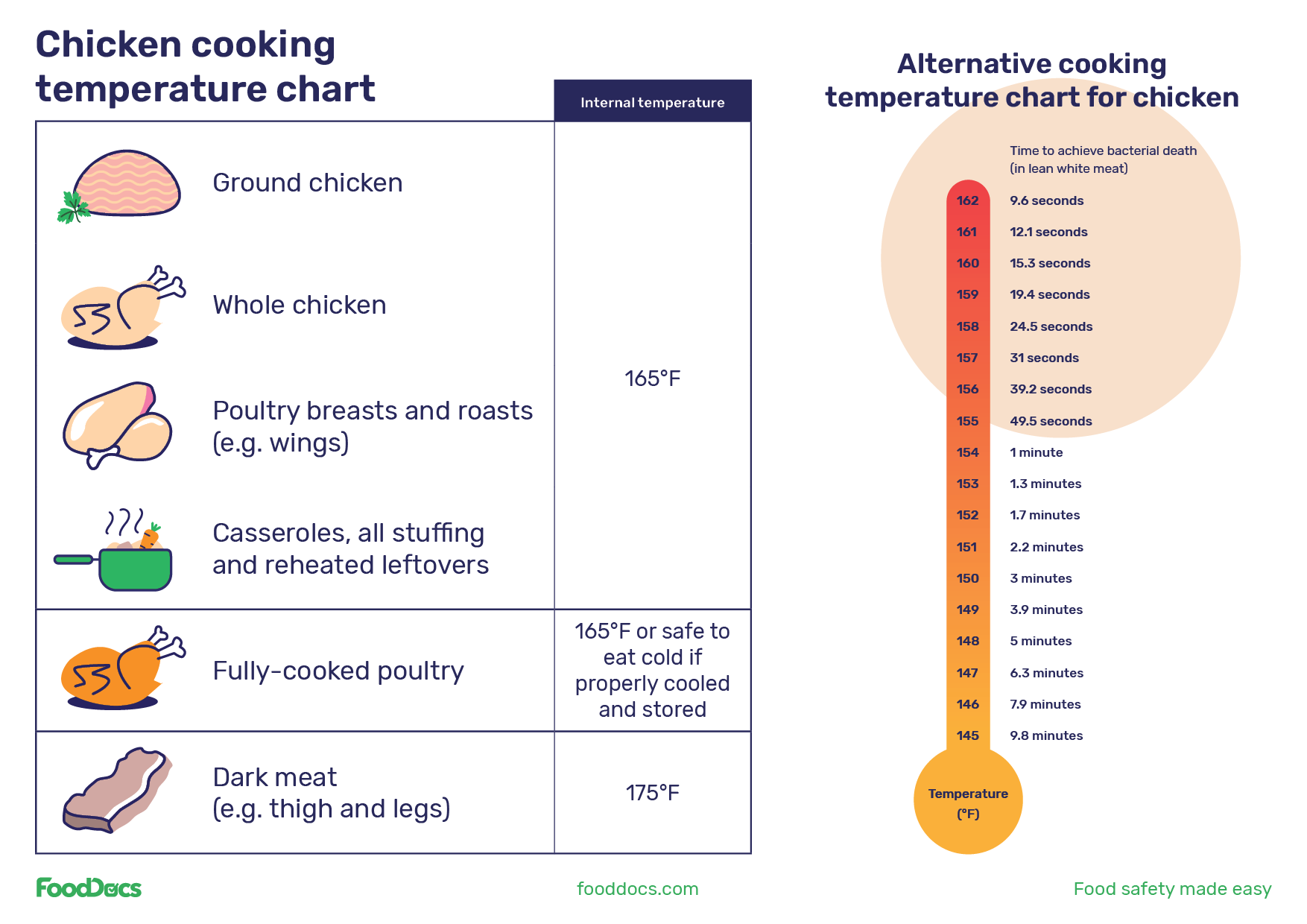
Here’s the short, happy answer: 165°F (or about 74°C) is the gold standard. That’s the internal temperature your chicken needs to reach to be safe for eating, according to the folks at the USDA. It’s not arbitrary—it’s the point where the bad bacteria, like salmonella, get zapped into oblivion.
Think of it like the chicken’s own personal safety zone. Once that little meat thermometer hits 165°F in the thickest part, you can relax. It’s like a high-five from science telling you, “This bird is ready.”
Must Read
But Wait, Why That Number?
You might wonder, why 165 and not 160 or 170? That’s where the cool science comes in. The USDA figured out that holding chicken at 165°F for just 15 seconds is enough to kill harmful germs instantly. It’s a balance: hot enough to be safe, but not so hot that your dinner turns into a hockey puck.
If you think of bacteria as tiny house guests, 165°F is the moment you politely but firmly ask them to leave. Any lower, and they might overstay their welcome. Higher than that? You’re just bullying the chicken into being tough.
It’s Not Just About Safety—It’s About Texture
Here’s where it gets really interesting. Temperature doesn’t just protect your stomach; it shapes how the chicken feels in your mouth. At 165°F, the proteins tighten up just enough to be tender but not rubbery. Go to 175°F and you’re entering “chewy shoe leather” territory.
A fun comparison: think of a hot bath versus a boiling pot. Chicken at 165°F is like a relaxing soak—firm, juicy, and pleasant. Chicken at 180°F is like being dunked in lava—dry, stringy, and sad. Temperature is your texture translator.
The Thermostat Is Your Best Friend
Don’t trust your eyes or a timer. Chicken can look golden and beautiful on the outside while staying dangerously pink inside. You need a meat thermometer—it’s the hero of this story. Stick it into the thickest part of the breast or thigh, away from bone.
If you don’t have one, stop everything and get a digital one. They cost less than a fancy coffee, and they’ll save you from dry, sad dinners—or worse, a bad case of food poisoning. Why guess when you can know?
A Little Grace for Dark Meat
Now, let’s be real: not all chicken parts are the same. A chicken breast is lean and delicate. But a thigh or drumstick? They’re like the cool, fatty cousins. Dark meat actually prefers a slightly higher temp—around 175°F to 180°F. That extra heat breaks down the connective tissues and makes it super succulent.
So, while white meat hits 165°F and you cheer, dark meat needs a few more degrees to become fall-off-the-bone magic. It’s not a mistake; it’s a fun little personality quirk of the chicken.
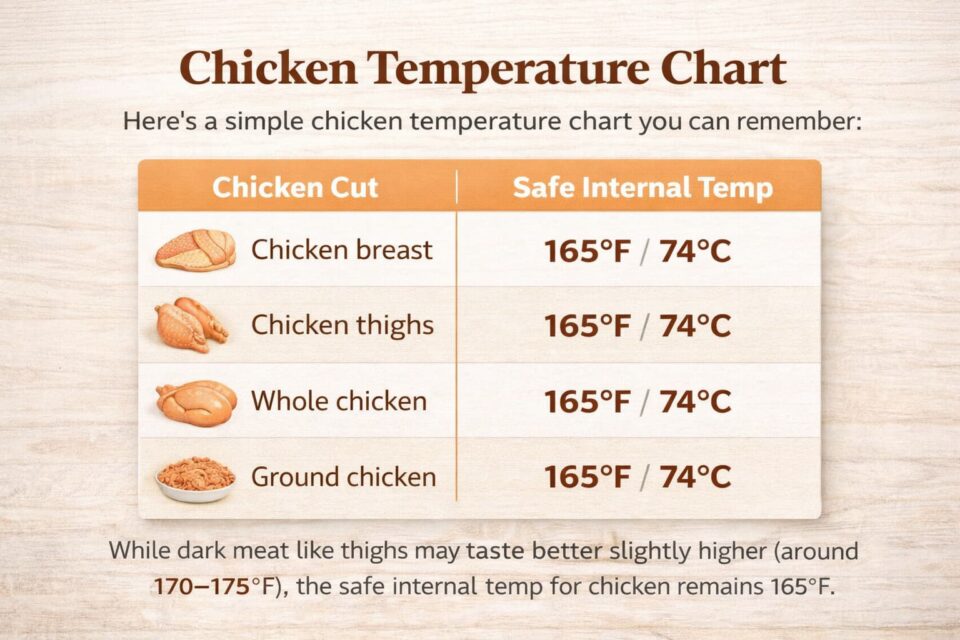 Chicken Internal Temp: The Secret to Safe, Perfect Chicken - Foodiosity
The Law of “Carryover Cooking”
Here’s a sneaky fact that feels like a cool party trick: chicken keeps cooking even after you take it off the heat. When you pull a breast off the grill at 163°F, its internal temperature will climb to 165°F during the resting period. This is called “carryover cooking.”
If you wait until it hits 165°F on the grill, it might spike to 170°F by the time you plate it—and that’s when dryness sneaks in. So pull it off about 5°F early and let it rest for five minutes. Think of it as the chicken’s little victory lap before dinner.
Weird but True: Time + Heat = Safety
Okay, here’s where it gets a tiny bit mind-blowing. 165°F isn’t the only safe point. You can actually cook chicken at a lower temperature—like 150°F—if you hold it there longer. The USDA has a chart for this. For example, keeping chicken at 155°F for 50 seconds kills the same amount of bacteria as 165°F.
Why isn’t this more common? Because it’s fussy and exact, and most home cooks don’t want to babysit a chicken breast with a timer. But it’s fascinating to know that temperature is a relationship, not just a fixed number. Heat + time = safety.
Don’t Freak Out About Pink
You slice into your perfectly cooked thigh, and—gasp—it’s a little pink near the bone. Does that mean it’s raw? Not always. Color can lie. A safe chicken can still have pink tones due to the bird’s diet, age, or myoglobin (a protein in the meat).
The thermometer is the truth-teller. If the digital readout says 165°F (or 175°F for thighs), you’re golden—even if it looks a little blush. Trust the tool, not your eyes, and you’ll be a happier cook.
Final Pro Tip: Rest Your Bird
After you hit that target temperature, let the chicken sit for at least three to five minutes before cutting. This allows the juices to redistribute, so they don’t run out onto your cutting board like a sad little river. You want those juices to stay inside where they belong.
Consider it the chicken’s deep breath after a hot workout. A rested bird is a juicy bird. And isn’t that what we all want at the dinner table?
So next time you’re staring at a raw chicken, remember: 165°F is your friend. It’s a simple, reliable milestone that keeps you safe and your taste buds happy. And now you’ve got the cool backstory to impress your friends at the next barbecue. Happy cooking!
