What State Produces The Most Cherries

Let’s talk cherries. Not the kind in a cocktail. I mean the real deal—juicy, ruby-red, and begging to be eaten by the fistful. One question burns brighter than a summer sun: w...
Let’s talk cherries. Not the kind in a cocktail. I mean the real deal—juicy, ruby-red, and begging to be eaten by the fistful. One question burns brighter than a summer sun: what state produces the most cherries? You might guess California. You might dream of Oregon. But the answer is a frosty, surprising champion.
The Big, Cold Winner
The title belongs to Michigan. Yes, the Mitten State. It’s not just for cars and lakes. Michigan grows about 75% of all the tart cherries in the United States. That’s a cherry avalanche.
Why a cold place? Cherries are dramatic. They thrive in bitter winters and cool springs. Michigan’s climate is a cherry’s perfect mood swing. Most of the magic happens near Traverse City. They call it the “Cherry Capital of the World.” No one argues.
Must Read
Tart vs. Sweet: A Fruit Feud
Now, let’s get juicy with the stats. Michigan rules the tart cherry throne. Think pies, jams, and dried snacks. But what about sweet cherries? The ones you eat fresh from a paper bag? That’s a different crown.
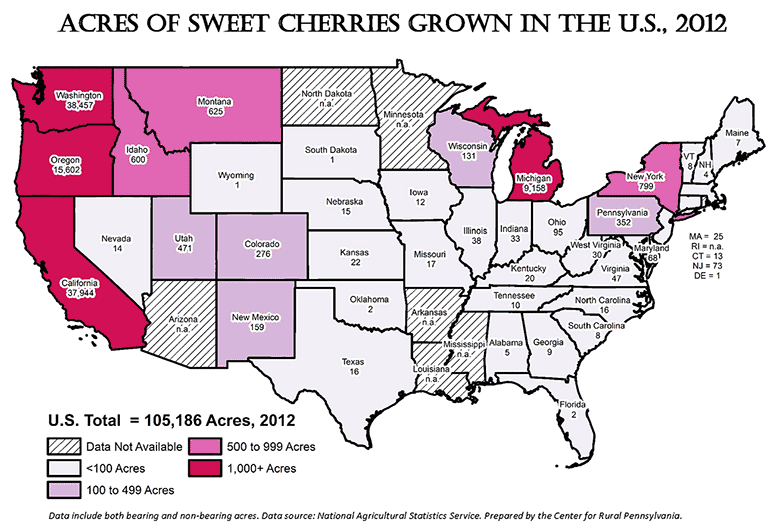
Washington state is the sweet cherry king. It produces about 60% of the nation’s sweet cherries. California and Oregon scramble for the leftovers. So, Michiganders, don’t flex too hard. Washington has the candy aisle.
If you want a cherry war, ask a Washington farmer about Michigan. They’ll laugh. Then they’ll eat a Rainier cherry. It’s a thing.
Funny Little Truths
Here’s a weird fact: cherries are a stone fruit. That pit inside is a rock-hard seed. Birds love it. Kids spit them in contests. There’s actually a National Cherry Pit Spitting Championship in Michigan. The record? A pit hurled over 93 feet. That’s longer than a school bus.
Another quirky detail: cherry trees are delicate divas. They hate rain during harvest. Rain makes them split and rot. Michigan farmers pray for dry Julys like it’s a religion. One bad storm, and the whole crop weeps.
Also, most U.S. cherries are grown on family farms. Many have been around for over a century. Your cherry pie might come from a fifth-generation orchard. That’s legacy.
Why This Matters (More Than You Think)
Let’s be real: cherries are not just snacks. They’re tiny symbols of patience. A cherry tree takes four to seven years to produce fruit. Seven years! That’s longer than a presidential term. You plant a sapling, and you’re waiting. Hoping. Dreaming of pies.
 Which US State Produces The Most Tart Cherries?
And the economy? Cherry farming is a big deal. Michigan’s tart cherry industry is worth over $80 million annually. Washington’s sweet cherry crop tops $400 million. That’s enough cash to buy a lot of ice cream toppings.
But the best part? You get to eat the results. Every cherry is a tiny, tangy victory of agriculture. Plus, they’re packed with antioxidants. So it’s healthy. Sort of.
The Secret Contender: Utah?
Okay, let’s flip the script. A few people whisper about Utah. It has a massive cherry festival in Brigham City. But Utah is a distant third. Sorry, Beehive State, you don’t come close.
New York, Pennsylvania, and Wisconsin also grow cherries. They’re like the opening acts at a concert. Respectable, but not headliners. Michigan and Washington are the main event.
Even Alaska tries. They have cherries, but they’re small and sour. It’s cute, but not competitive. Stick to fishing, Alaska.
The Takeaway
So, what state produces the most cherries? If you mean all cherries combined, the answer is Washington. They have sweet ones by the truckload. But if you’re talking tart—the sour, pie-perfect kind—Michigan wins by a landslide.
Want to impress friends at a party? Drop this: “Michigan grows three-quarters of America’s tart cherries. Washington is the sweet king. They both deserve a cherry on top.” Everyone will nod knowingly. You’ll look like a fruit genius.
Next time you eat a cherry, pause. Think of the cold lakes, the dry summers, the farmers who waited seven years. That’s a lot of drama for a tiny fruit. But boy, is it worth it. Now go grab a bowl. You’re craving one. I know it.
