What Should Your Battery Voltage Be

Ever stared at a battery and felt a tiny panic? You’re not alone. That little cylinder holds the key to your favorite gadget’s soul. But what voltage should it actually be? T...
Ever stared at a battery and felt a tiny panic? You’re not alone. That little cylinder holds the key to your favorite gadget’s soul. But what voltage should it actually be?
The Shocking Truth About Numbers
Most people think a battery is either “dead” or “alive.” False! It’s a drama queen with a sliding scale. A fully charged, standard AA battery sits around 1.5 volts. Below 1.3 volts, it’s basically whimpering for retirement.
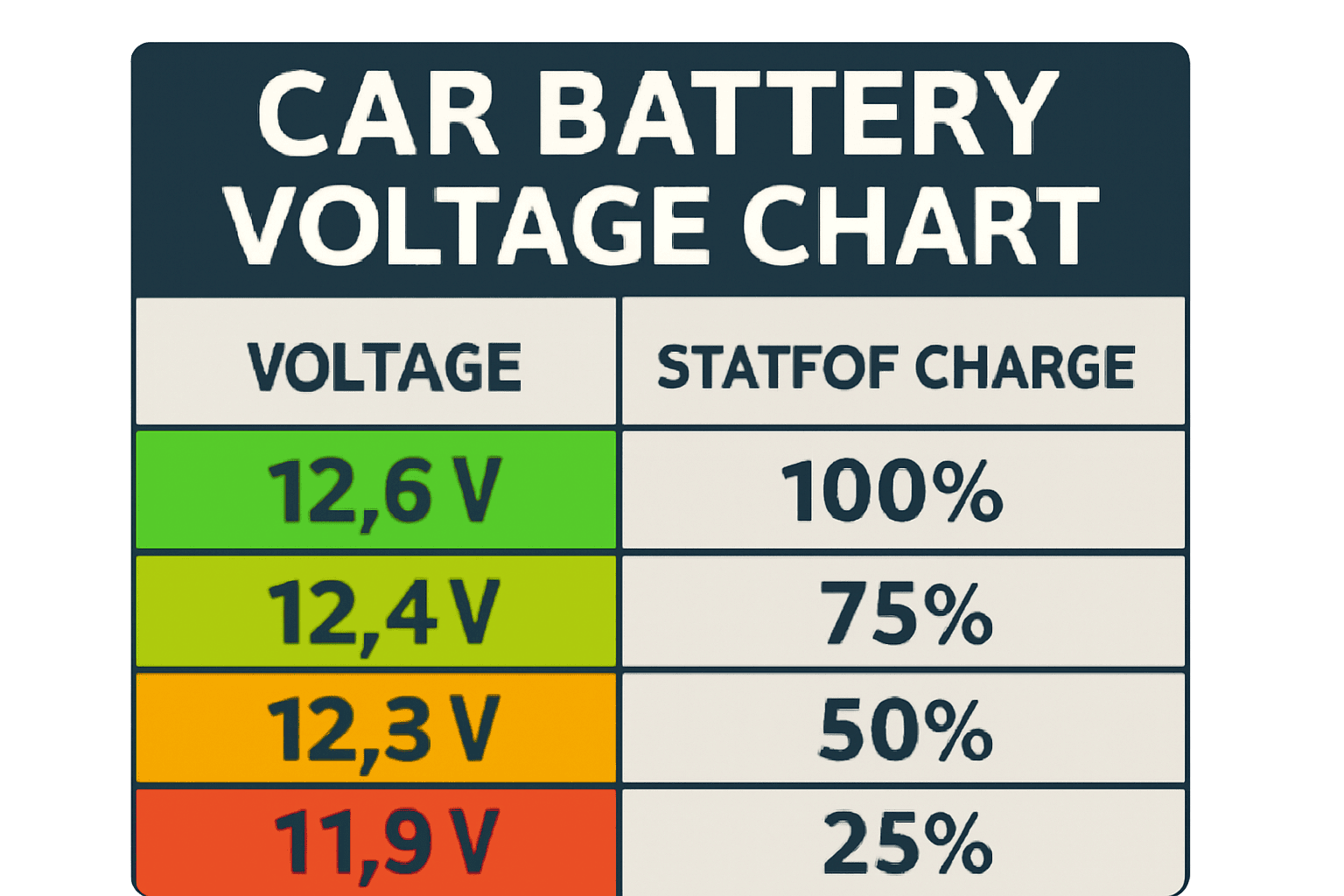
Your car battery? That’s a different beast. A healthy 12-volt car battery reads 12.6 volts or higher when resting. Anything below 12.4 volts and your car starts sighing like a teenager asked to do chores.
Must Read
Why Your Phone Lies to You
Your smartphone battery is a liar. It shows 100% when it’s actually around 4.2 volts. By the time it hits 1%, it’s at roughly 3.0 volts—and panicking.
Fun fact: lithium-ion batteries hate extremes. They prefer a cozy 3.7 volts average. That’s why devices stop charging at 4.2V—to avoid a tiny fireball in your pocket.
Pro tip: Never drain a lithium battery to zero. It’s like forcing a marathon runner to sprint a marathon backwards.
The Battery Voltage Cheat Sheet
Alkaline (AA, AAA, C, D): New is 1.5V. Dead is 1.0V. In between? Useless for TV remotes, but perfect for a slow clock. Yes, clocks run on spite and low voltage.
Rechargeable NiMH (AA, AAA): They peak at 1.2 volts, not 1.5. That’s why your wireless mouse might get grumpy. It expects the old 1.5V party, but gets a polite whisper.
Car batteries: Resting voltage needs to be 12.6V. At 12.0V, it’s not dead—just deeply disappointed. At 11.8V, it’s crying into its jumper cables.
 What Should Battery Voltage Be When Car Is Off
Quirky Details That Will Impress No One at Parties
A single D battery can power a flashlight for 20 hours. But two D batteries in series? That’s 3.0 volts—enough to make a toy car think it’s a racehorse. Voltage adds up in series. Current doesn’t. That’s physics being weird.
Old-school 9V batteries? They look like a brick but contain six tiny 1.5V cells stacked. Each cell is the size of your pinky finger. It’s electrical Jenga.
Your smoke detector uses a 9V battery because it needs a high voltage to scream. At 7.2 volts, it chirps that annoying “change me” beep. That chirp is a voltage cry for help.
The “Zombie Voltage” Phenomenon
Ever threw away a “dead” battery, and it still powers a cheap LED toy? That’s zombie voltage. The battery has 1.1 volts left—not enough for your blender, but plenty for a flickering vampire.
Multimeters are fun here. Touch one to a “dead” battery and it reads 1.2 volts. Put it in a device, and the voltage drops to 0.8 volts under load. That’s the battery saying, “I can talk the talk, but I cannot walk.”
Bottom line: voltage is potential. Current is the actual flow. A battery can have voltage but zero guts. Like a motivational poster in a sad office.
 What Should Car Battery Voltage Read: Essential Guide - CarAwareness
How to Check Without Losing Your Mind
Get a multimeter. They cost $10. Touch the red probe to the positive (+) end and black to negative (-). Read the number. That’s your battery’s truth serum.
For car batteries, test it after sitting off for an hour. A surface charge can fake a reading. Let it rest. 12.7V is perfect. 12.4V is okay. 12.0V is a red flag on a date.
If you test a lithium-ion pack (like a laptop battery) and it reads below 3.0 volts per cell, it’s unsafe. Recycle it. Do not kiss it goodbye. Just let it go.
Why This Is Actually Fun
Voltage is the universe’s way of teasing entropy. It’s a tiny organized chaos waiting to happen. A 1.5V battery can’t shock you, but it can power a laser pointer that annoys your cat. That’s voltage with attitude.
Next time you change a remote battery, grab a multimeter. Test the old one. It’s like reading a quick obituary. “Here lies 1.35 volts. It served bravely. It will be missed.”
So go forth, test your world. Know your volts. Not because you need to, but because your gadgets deserve a friend who understands their emotional capacity. And yes, that pun was intended.
