What Should The Internal Temperature Of A Lasagna Be

Let's be honest: the only real argument at a dinner party isn't about politics or who ate the last slice of garlic bread. It's about the lasagna. Is it done? Is it a soupy bri...
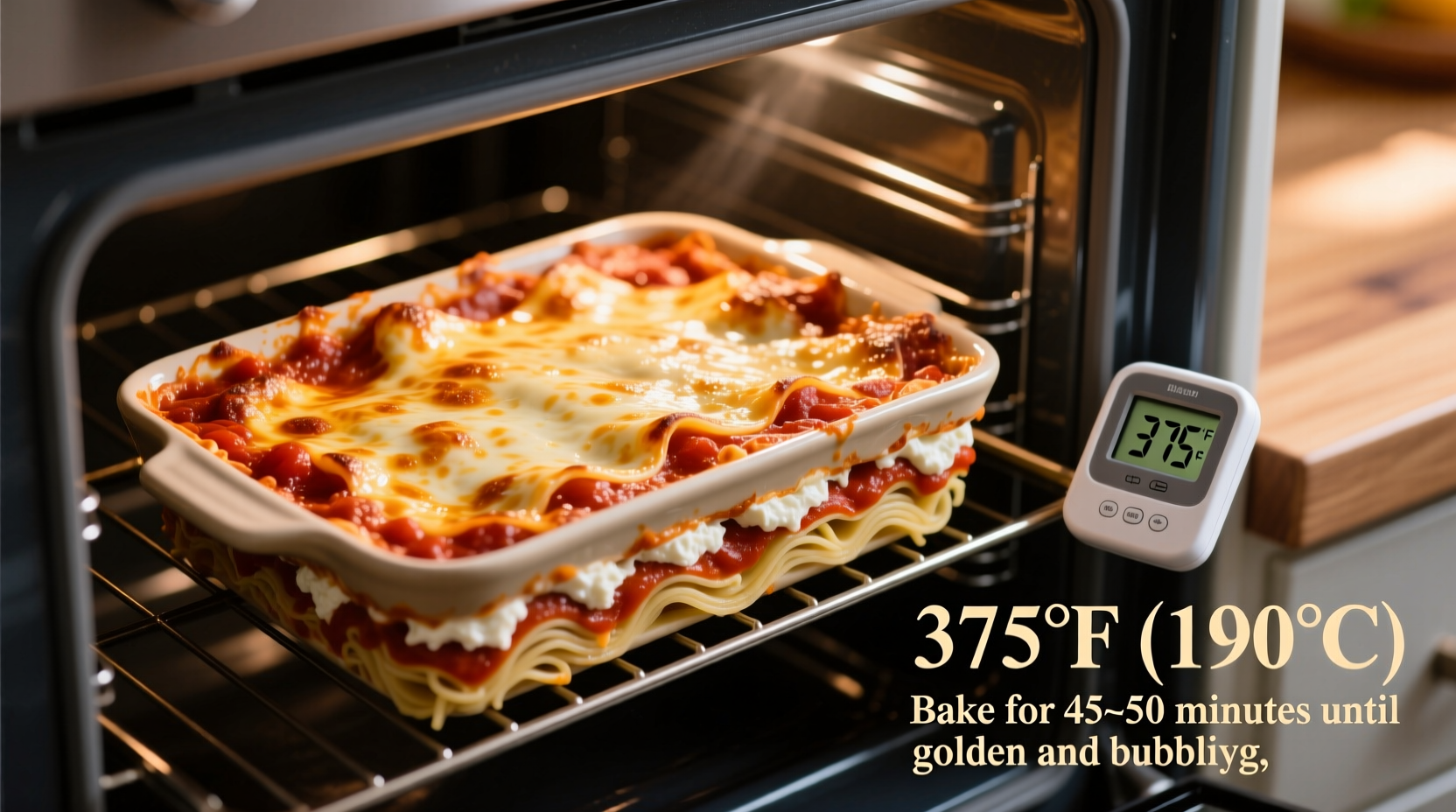
Let's be honest: the only real argument at a dinner party isn't about politics or who ate the last slice of garlic bread. It's about the lasagna. Is it done? Is it a soupy brick or a dry desert? The fate of your entire reputation rests on one tiny, magical number: 165°F (74°C). That's the internal temperature your lasagna must hit to be safe and glorious. Anything less is a gamble for the brave (or the reckless).
The Great Science of Cheese and Meat
You might think lasagna is just layers of pasta pretending to be a casserole. But it's actually a complex heat transfer problem disguised as dinner. The ricotta, the mozzarella, the ground beef—they all harbor tiny bacteria that love a lukewarm party. You need 165°F to crash that party and send those microbes to a very hot, very final place.
Think of it like a hot tub for your ingredients. If the water isn't hot enough, everyone is just soggy and uncomfortable. But at 165°F? That’s a sauna that kills everything except the flavor. I call it the "Goldilocks zone of food safety," and it’s non-negotiable.
Must Read
Where Do You Even Stick the Thermometer?
Ah, the million-dollar question. You don't just stab the lasagna like a crime scene investigator at a pasta murder. You need to hit the dead center, deep into the thickest, most stubborn part of the casserole. Imagine you’re trying to find the very soul of the dish—it’s hiding between the third and fourth layer.
Avoid the edges. The edges are liars. They’ll be bubbling and brown, looking all confident, while the middle is still a cold, sad lagoon of ricotta. Insert your probe at a 45-degree angle and push it all the way to the middle. Then wait ten seconds like you’re listening for a secret from the oven.
Surprising Fact #1: The "Carryover Cooking" Conspiracy
Here’s where things get weird. Even after you pull the lasagna from the oven, it keeps cooking. That’s right, the internal temperature can rise another 5 to 10 degrees while it sits on the counter. This is called "carryover cooking," and it’s the only time you get bonus heat without trying.
So if you pull it out at 160°F, don't panic. Give it a ten-minute rest, and it might climb right up to 165°F. But don't bank on this miracle every time. Always aim for 165°F in the oven first. The carryover is a gift, not a guarantee, like finding a forgotten twenty-dollar bill in your winter coat.
The Moisture Catastrophe
What happens if you overcook it? You get a sad, dried-out lasagna that looks like it survived a drought. The cheese turns into leather, and the noodles become fossilized. It’s a tragedy that will haunt your dinner table for weeks.
 Food Safety: Conditions for Bacterial Growth & Prevention
On the other hand, if you pull it at 150°F, you risk a cold, milky center that tastes like a dairy regret. The perfect lasagna is a tightrope walk between a disaster and a masterpiece. Your thermometer is the balancing pole, and 165°F is the middle of the wire.
Surprising Fact #2: The "Fridge Lasagna" Trick
Did you know that reheating a cold lasagna from the fridge to safe temperature is actually harder than baking a fresh one? The cold center acts like an iceberg, refusing to thaw. If your leftovers sit at 140°F for too long, bacteria start a second party. So when you reheat, go slow and low, or nuke it like a warhead until it’s screaming hot.
I once ate a cold piece of lasagna at 3 AM. I’m not proud of it. But I lived to tell the tale, which is more than I can say for the bacteria I scoffed at. Don’t be me. Use the thermometer.
The Final Verdict
So, here’s your cheat sheet: 165°F in the center, always. Insert the probe deep, wait, and trust the numbers over your eyes. Your eyes will lie to you—they’ll say "looks bubbly!" while your stomach says "why is this cold?!"
In the end, a perfectly cooked lasagna is more than just dinner. It’s a scientific triumph, a testament to patience, and a warm hug for your soul. And if you serve it at exactly the right temperature, you’ll be a hero. If not, well, there’s always takeout pizza. But you won’t need it. You’ve got a thermometer, and you’re unstoppable.
