What Oils Have The Highest Smoke Point

One of the most enjoyable topics for both seasoned cooks and kitchen newcomers is discovering which oils can handle high heat without breaking down. The smoke point of an oil...

One of the most enjoyable topics for both seasoned cooks and kitchen newcomers is discovering which oils can handle high heat without breaking down. The smoke point of an oil — the temperature at which it begins to burn and release smoke — matters more than you might think. Using the wrong oil for a searing-hot pan can destroy flavor, create unpleasant fumes, and even reduce the nutritional value of your food. Understanding smoke points brings a practical confidence to everyday cooking, and it benefits everyone from home chefs to professional restaurant cooks.
The main purpose of knowing an oil's smoke point is to match the right fat to the right technique. When you deep-fry, pan-sear, or stir-fry at high temperatures, you need an oil that stays stable and won't turn acrid. On the other hand, delicate tasks like drizzling over a green salad or finishing a piece of fish call for oils with low smoke points that preserve their rich, nuanced flavors. Getting this pairing right reduces food waste, keeps your kitchen air clean, and ensures every dish tastes exactly as the chef intended.
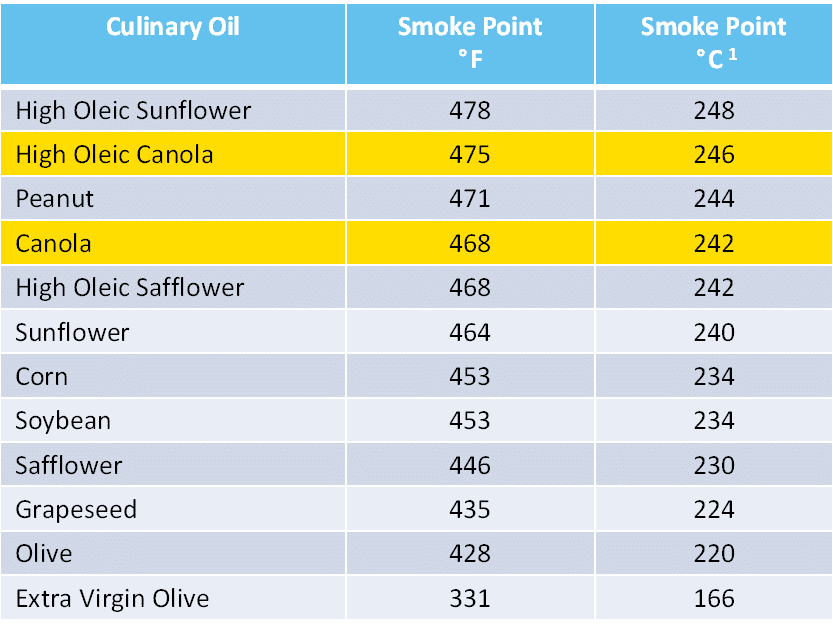
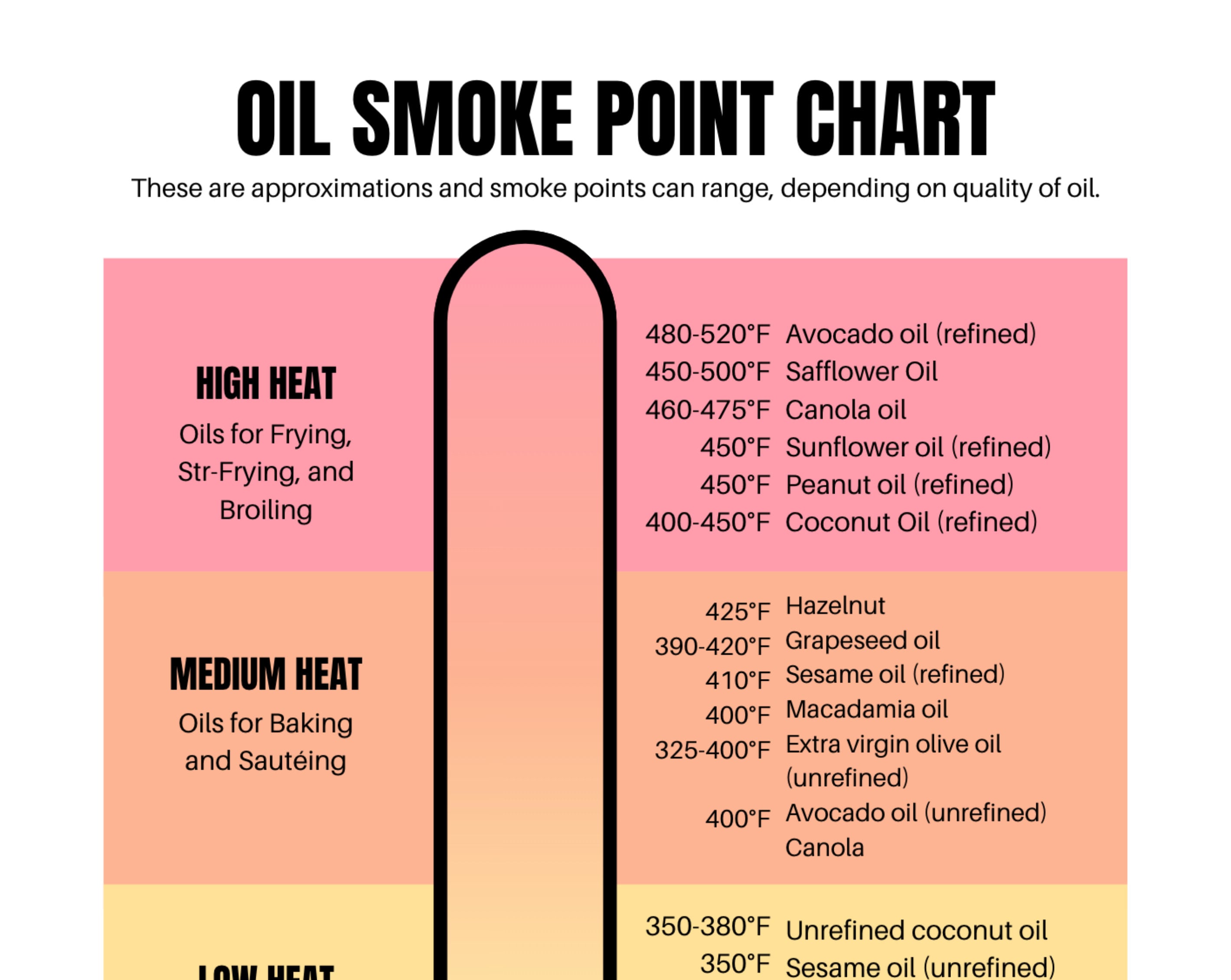
So which oils sit at the top of the smoke-point chart? Several familiar names earn that distinction. Avocado oil is a fan favorite, reaching smoke points of around 520°F (270°C), making it incredibly versatile for searing and grilling. Rice bran oil hovers near 490°F, while walnut oil and a few refined neutral options like light olive oil (not extra-virgin) and refined sunflower oil also perform well above 400°F. Even safflower oil — especially the high-oleic variety — can push past 500°F, rivaling avocado oil for high-heat supremacy.
Must Read
It's worth noting that refinements play a big role. Refined versions of oils consistently outperform their unrefined counterparts because the processing removes impurities that lower smoke points. Extra-virgin olive oil, for example, burns around 375°F, while refined light olive oil handles up to 465°F. Cooking enthusiasts often stock both: a pump bottle of extra-virgin for flavor-forward applications, and a bottle of high-smoke-point oil kept near the stove for searing, roasting, and frying.
 Rapeseed Oil Smoke Point
Here are a few simple, actionable tips to make the most of this knowledge. First, keep a high-smoke-point oil like avocado or refined rice bran oil within arm's reach of your stovetop for everyday high-heat tasks. Second, keep your delicate, low-smoke-point oils — such as walnut, sesame, or unrefined olive oil — for dressings, dips, and low-heat sautés where flavor shines. Third, always watch your pan; if you see wisps of smoke early, lower the heat immediately to prevent the oil from degrading.
Finally, consider rotating your high-heat oils to add variety to your meals. Avocado oil gives a buttery richness perfect for vegetables, while refined sunflower oil offers a light, neutral canvas for battered foods. Mixing these into your routine keeps cooking both practical and interesting. With a small shelf of the right oils at your fingertips, you transform routine meals into confident, well-executed dishes every time you cook.