What Is Vodkas Freezing Point

There’s something oddly satisfying about pulling a bottle of vodka from the freezer, watching it pour like thick, silky syrup into a chilled glass. It’s a party trick that nev...
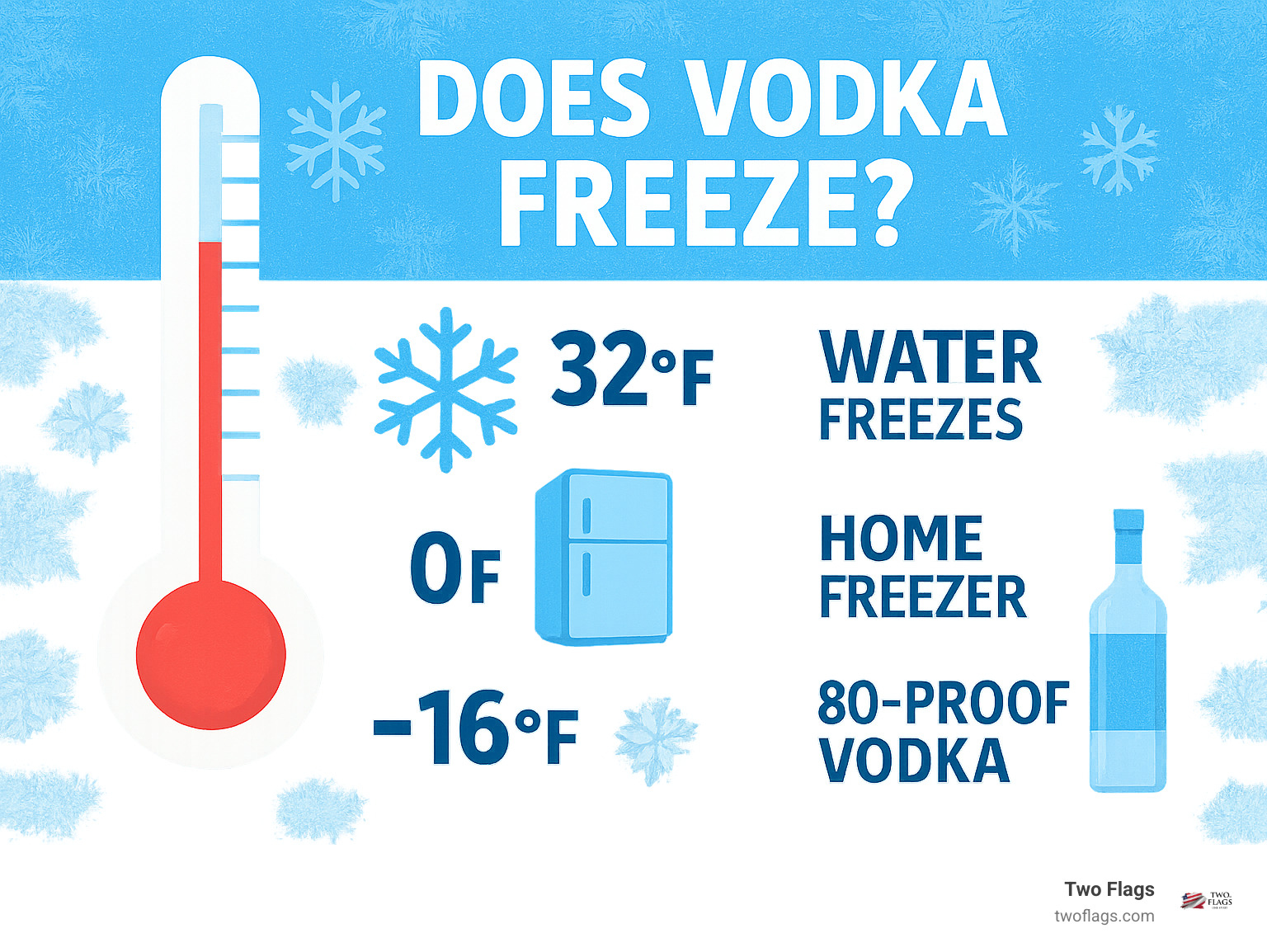
There’s something oddly satisfying about pulling a bottle of vodka from the freezer, watching it pour like thick, silky syrup into a chilled glass. It’s a party trick that never gets old, and it’s also a perfect excuse to explore a surprisingly practical bit of science: vodka’s freezing point. Unlike water, which freezes into a solid block at 32°F (0°C), vodka stays liquid long after your ice cubes have turned to slush. This isn’t just a cool fact—it’s the reason your martinis stay perfectly crisp without getting watered down, and why you can keep a bottle in the freezer without worrying about cracking the glass. It’s a small, everyday pleasure that mixes a little chemistry with a lot of convenience.
The main purpose of understanding this freezing point is control. Vodka is a mixture of ethanol (alcohol) and water, and pure ethanol freezes at a bone-cold -173°F (-114°C). Because your average vodka is around 40% alcohol by volume (80 proof), its freezing point hovers near -16°F (-27°C). Most home freezers sit at a balmy 0°F (-18°C), so a standard vodka bottle stays conveniently pourable. This means you can always have a cold, smooth base for cocktails without needing to shake it with ice and then strain. The benefit for a busy host? No more watery drinks, and one less step during party prep.
Different vodkas behave a little differently, and that’s where the fun begins. A high-proof vodka, say 100 proof (50% alcohol), has an even lower freezing point—around -22°F (-30°C)—so it stays extra fluid in the freezer. On the flip side, a lower-proof or flavored vodka might start to get slushy if your freezer runs particularly cold, thanks to those added sugars or lower alcohol content. This is why you’ll sometimes see a bottle of vanilla or citrus vodka with that satisfyingly thick, syrupy texture just before it freezes solid—it’s a visual cue that you’ve hit the sweet spot of temperature. Recognizing these variations means you can choose your vodka wisely based on how you want to serve it.
Must Read
For the home bartender, this knowledge is pure gold. Imagine you’re making a Negroni or a straight-up vodka shot for guests. Keeping the bottle in the freezer means your drink is instantly icy cold without dilution. For something like a Bloody Mary, a freezer-cold vodka adds a bracing chill. The practical tip here is simple: store your standard 80-proof vodka in the freezer indefinitely. It won’t freeze, and the cold temperature actually masks any harsh notes, making it smoother to sip. Just remember to check the proof on the label—if it’s below 80 proof, it might turn into a slushy mess, so reserve those for mixing with room-temperature ingredients.
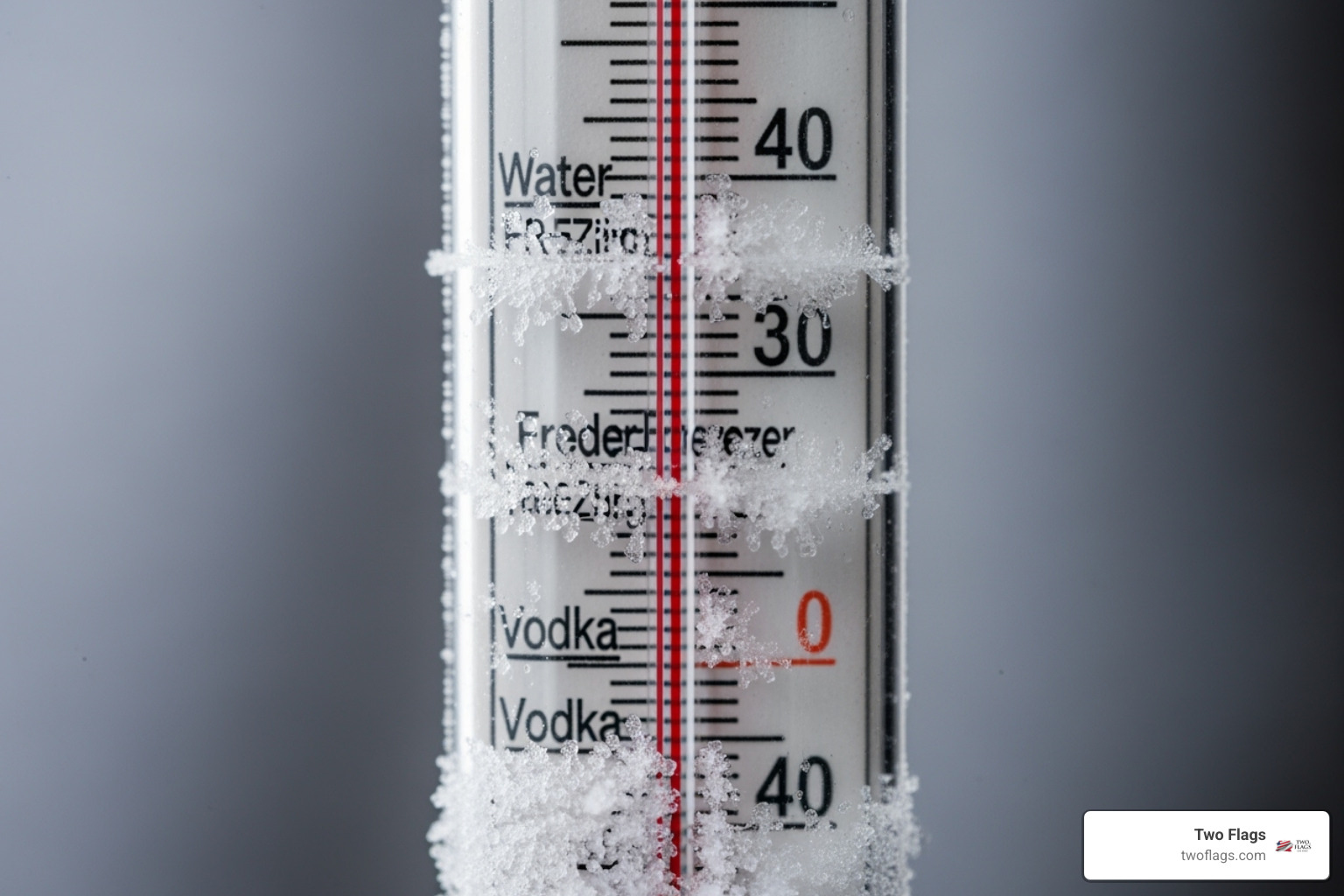 The Cold Hard Facts: Will Your Vodka Bottle Burst in the Freezer?
If you want to get the most out of this, start with a simple test. Fill a small glass with your favorite vodka and pop it in the coldest part of your freezer (usually the back). After two hours, pull it out and see if it has that syrupy viscosity—that’s your sweet spot for neat drinking. For a party, use a separate bottle for freezing to avoid temperature changes from opening and closing the door. And if you’re feeling adventurous, try adding a few frozen berries to a glass of freezer-chilled vodka—they act as natural “ice cubes” that won’t water it down. Remember, the whole point is effortless enjoyment: cold vodka that stays true to its spirit, with no slushy surprises.
So next time you reach for that frosty bottle, you’ll know why it works so well. It’s not magic—it’s a simple physics party trick that makes your life easier and your cocktails better. Whether you’re a weekend host or a solo sipper, understanding vodka’s freezing point is a tiny piece of knowledge that pays off in big, frosty dividends. Cheers to that.

