What Is The Temp For Pork To Be Done

Welcome, fellow food adventurer! You’ve come to the right place if the mere thought of pulling a perfectly juicy pork chop or a tender, succulent roast out of the oven makes y...

Welcome, fellow food adventurer! You’ve come to the right place if the mere thought of pulling a perfectly juicy pork chop or a tender, succulent roast out of the oven makes your mouth water. Let’s be honest: one of the most terrifying moments in the kitchen is the instant cut into a pork chop, only to find it dry and chalky—or worse, worryingly pink and undercooked. But fear not! Unlocking the secret of the perfect internal temperature for pork isn’t just a scientific chore; it’s your golden ticket to consistently amazing meals. Knowing the exact temp for pork turns anxiety into confidence, transforms bland meat into a flavor sensation, and honestly, makes you look like a rockstar at the dinner table. The best part? It’s surprisingly easy to master, and once you do, you’ll never second-guess yourself again.
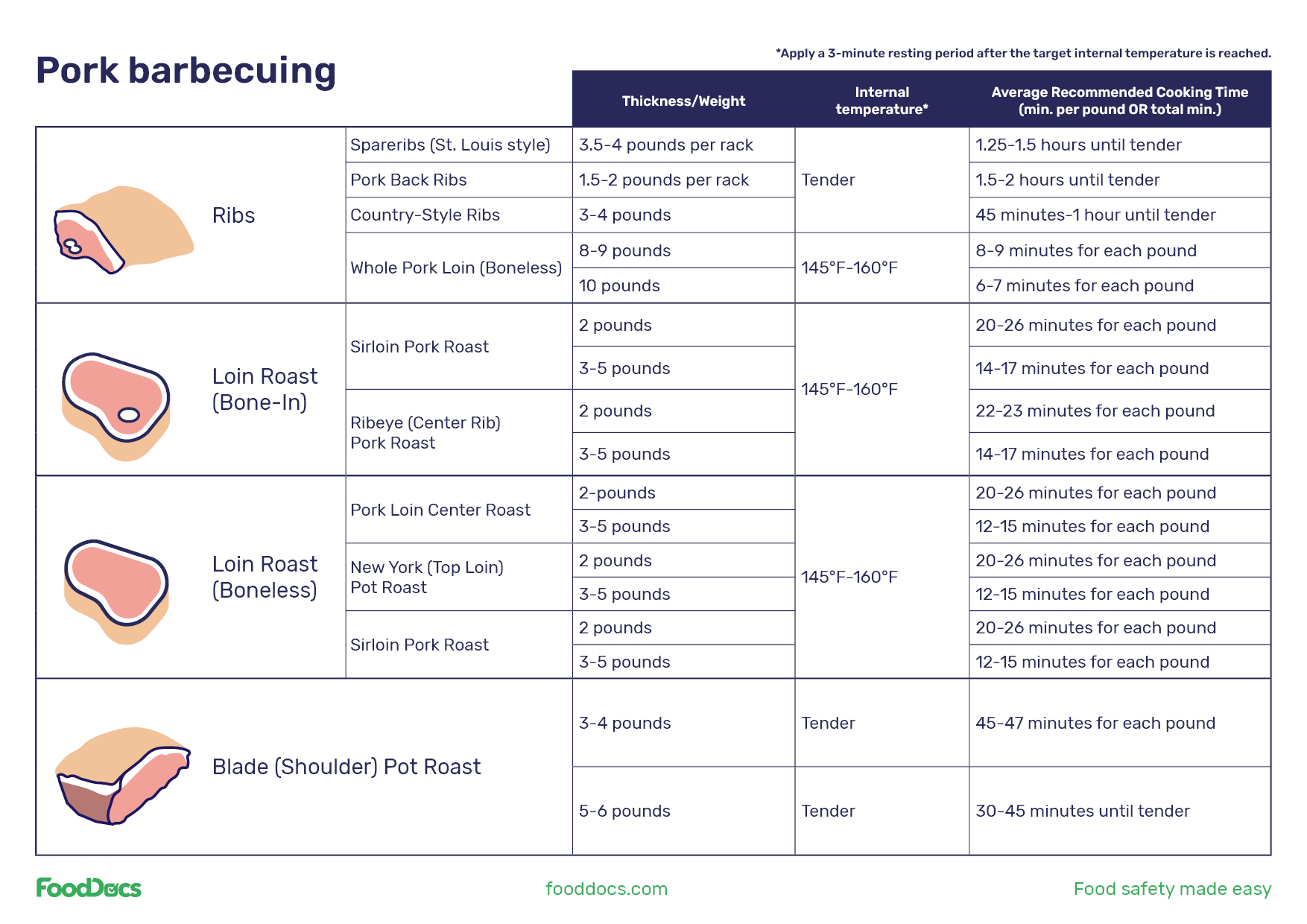
So, what’s the magic number? For decades, the rule was to cook pork until it reached a dry, sad 160°F (71°C) inside—a safety precaution from a time when trichinosis was a real threat. But modern farming, coupled with updated food safety guidelines, has written a much happier story. Today, the United States Department of Agriculture (USDA) officially recommends cooking whole cuts of pork (like chops, roasts, and tenderloin) to a minimum internal temperature of 145°F (63°C), followed by a three-minute rest. Yes, you read that right! 145°F is the sweet spot. This temperature is safe—it kills any harmful bacteria—yet leaves the meat wonderfully pink, moist, and bursting with flavor. Think of it as the difference between a dry, gray sweater and a soft, cozy one. That three-minute rest is crucial because it allows the juices to redistribute, ensuring every bite is perfect. No more punishing your pork!
Now, let’s make this practical with some mouthwatering examples. Imagine you’re grilling thick, bone-in pork chops on a summer evening. You sear them to a gorgeous golden crust, then use an instant-read thermometer in the thickest part of the chop, away from the bone. When it hits 145°F, you pull them off the heat. Let them rest for three minutes. The result? A chop that is slightly rosy in the center, unbelievably tender, and almost like a premium cut of steak. Or picture a classic pork tenderloin roast. You rub it with garlic, rosemary, and olive oil, then roast it. When your thermometer reads 145°F, you might panic because the center looks a little pink. Don’t! That’s the pink of perfection. Slice it against the grain, and you’ll have a dinner that rivals any fine restaurant.
Must Read
Of course, there are some important caveats to keep in mind, like the difference between whole cuts and ground meats. Ground pork is a different story. Because grinding exposes more surface area to bacteria, it must be cooked through to an internal temperature of 160°F (71°C). This ensures any potential pathogens are fully destroyed. So, for pork burgers, meatballs, or sausage patties, you’re looking for a well-done no-pink-zone. Similarly, leftover pork dishes or casseroles should be reheated to 165°F (74°C) for safety. But for that glorious Sunday roast or those weeknight chops? Stick with 145°F. And remember, always use a reliable instant-read thermometer—it’s the single best investment you can make for your pork game. An oven probe thermometer that stays in the meat as it cooks is even better; it lets you watch the number climb without even opening the door!
Here’s a creative tip for the adventurous cook: consider a reverse sear. Instead of searing first, you slow-roast the pork in a low oven (like 250°F) until it reaches about 135°F to 140°F internally. Then, you take it out and sear it in a screaming-hot cast-iron skillet for just 60-90 seconds per side. The carryover cooking will bring it up to that perfect 145°F while you rest it. This method gives you an incredibly even, juicy interior with a crust that’s like a crunchy brown sugar shell. It’s a chef’s secret that makes you look like a pro. Another fun idea: for a pork crown roast, you can use the same 145°F rule, but baste it with a mixture of honey and apple cider vinegar in the last 15 minutes. The combination of the sweet glaze hitting the hot meat at 145°F creates a caramelized, sticky finish that is pure magic.
 BBQ Pork Temperature Chart | Free Tools by Xenia
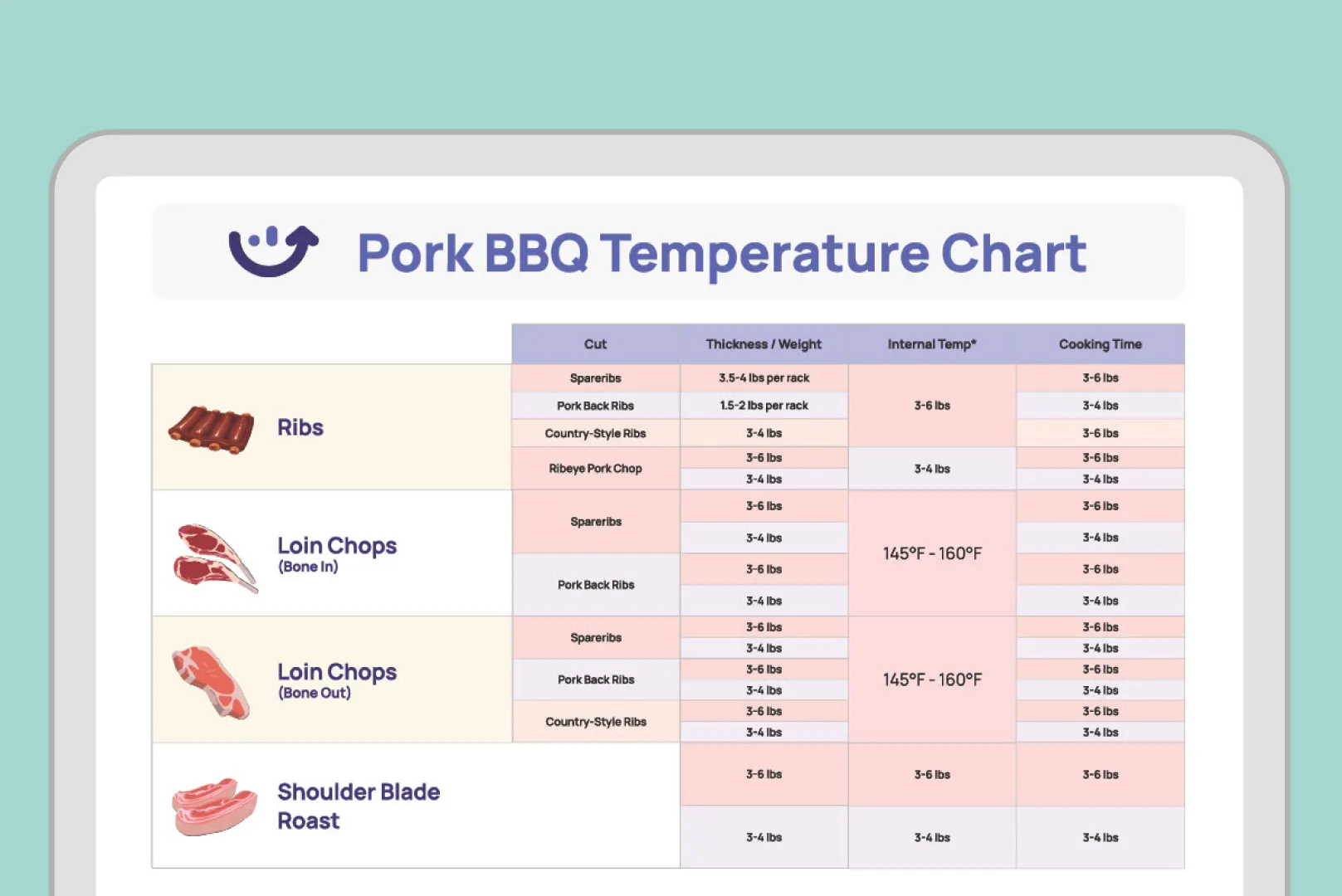
Here’s your cheat sheet for next time: Pork Chops & Tenderloin: 145°F (63°C). Pork Roasts (like loin or shoulder): 145°F for medium (pink and juicy), or up to 195°F for pulled pork. Ground Pork: 160°F (71°C). And don’t forget the rest time—it’s not optional! During the three to five minutes the pork rests on a cutting board (loosely covered with foil), the internal temperature will rise by another 5-10°F (this is called carryover cooking). So if you pull it at 145°F, it might climb to 150°F, which is still perfectly safe and moist. If you wait until the meat reads 160°F in the oven, carryover will push it to 170°F, and you’re back in dry-pork territory. Trust the process, trust your thermometer, and trust that 145°F is your new best friend.
In closing, remember that cooking pork to the right temperature is less about rigid fear and more about embracing the delicious possibilities. It’s a simple, empowering skill that saves money (no more wasted, dry roasts!) and impresses everyone who sits at your table. The next time you fire up the grill, preheat the oven, or dust off your slow cooker, think of that perfect 145°F as a promise of a fantastic meal. Practice it a couple of times, and soon you won’t even need to think—your hand will just know when to pull the probe out. So go ahead, buy that gorgeous pork loin, set your thermometer, and prepare for the most flavorful, tender pork of your life. You’ve got this, and your taste buds are about to throw a parade.