What Is The Safe Temperature For Chicken

There are few culinary pleasures quite as universal as a perfectly cooked chicken. Whether it’s the golden, crispy skin of a roast chicken that promises a comforting Sunday di...
There are few culinary pleasures quite as universal as a perfectly cooked chicken. Whether it’s the golden, crispy skin of a roast chicken that promises a comforting Sunday dinner, the tender strips of grilled chicken that elevate a summer salad, or the savory depth it adds to a slow-simmered soup, chicken is a staple in kitchens around the world. Its versatility, affordability, and lean protein profile make it a beloved ingredient for busy weeknights and celebratory feasts alike. Yet, behind every juicy, flavorful bite is a crucial safety consideration that can turn a delightful meal into a risky one if ignored: temperature.
The primary purpose of knowing the safe temperature for chicken is to eliminate harmful pathogens, most notably Salmonella and Campylobacter. These bacteria are commonly found on raw poultry and can cause severe food poisoning, leading to symptoms like stomach cramps, fever, and vomiting. The key benefit of reaching the correct internal temperature is peace of mind. It allows you and your family to enjoy chicken without fear, knowing that the food is not just delicious but also scientifically safe. This knowledge transforms cooking from a gamble into a confident, repeatable skill.
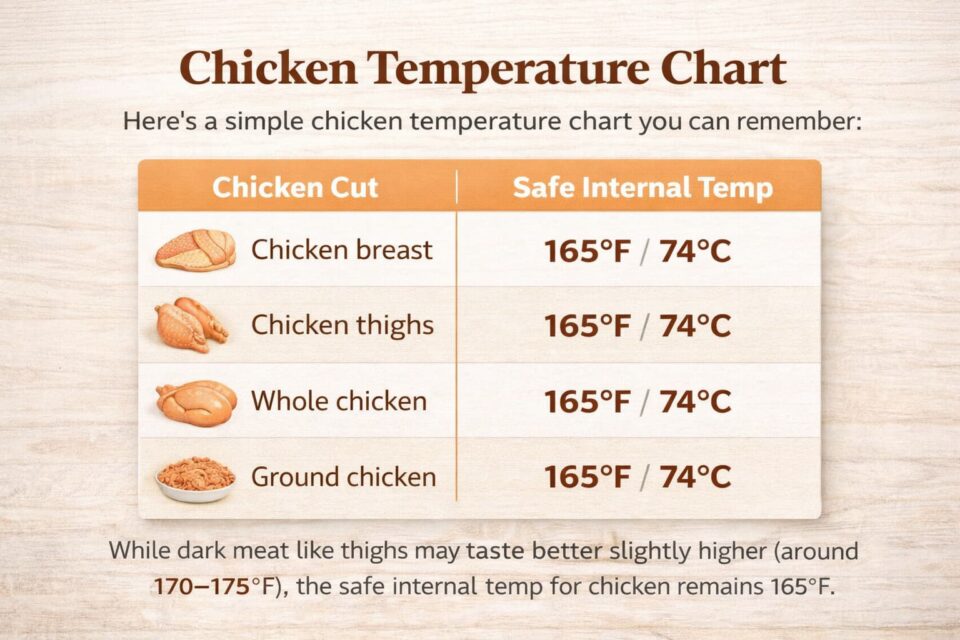
To put this into a real-world scenario, imagine you’re preparing a batch of chicken wings for a game-day party. You’ve brined them, coated them in a spicy rub, and fried them to a rich golden brown. The outside looks perfect, but the only way to guarantee safety is a digital instant-read thermometer. Without it, you might guess based on color or time, which is unreliable. For a whole roasted chicken, the stakes are even higher. You might check the thigh’s temperature near the bone—the slowest part to cook—and find it’s only 160°F (71°C). While close, that’s not enough. The gold standard for all chicken, including breasts, thighs, wings, and ground chicken, is an internal temperature of 165°F (74°C), as recommended by the USDA.
Must Read
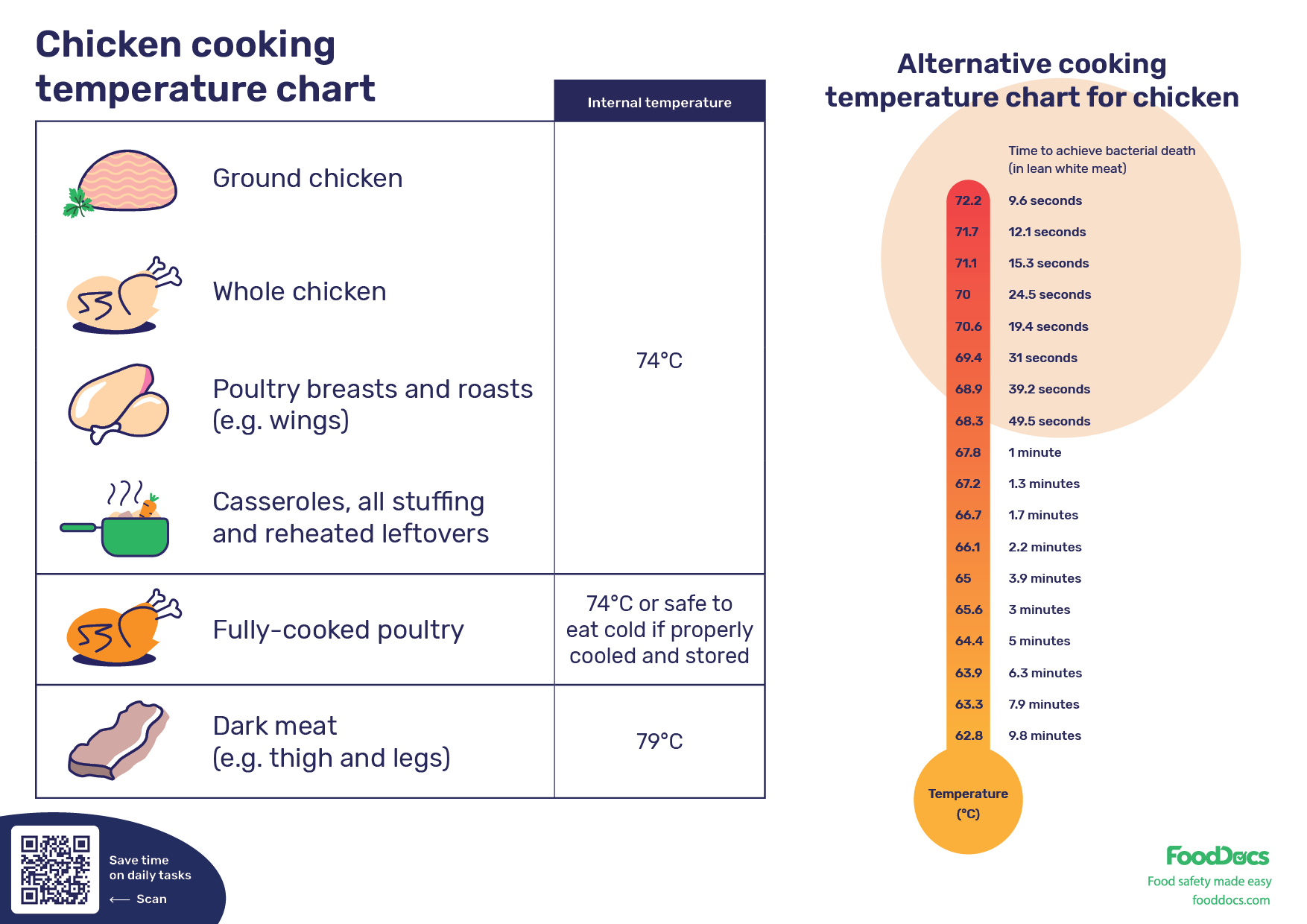
Why 165°F? At this temperature, the heat is sufficient to kill the bacteria in less than one second. This is a critical threshold that accounts for the thermal lag in the meat’s densest sections. Cooking to this point ensures that even if the surface or thinner parts reach that temperature first, the core is equally safe. It’s not about drying out the meat—modern cooking methods like brining, using a reliable thermometer, and letting the meat rest (where the temperature can rise by 5–10°F) can keep chicken juicy while hitting the safety mark. For example, taking chicken breasts off the grill at 160°F and letting them rest covered will allow carryover cooking to bring them safely to 165°F.
For those who love cooking, a simple tip for exploring this topic at home is to calibrate your thermometer. An off-by-five-degree error can be the difference between safe and undercooked. Place the probe in a glass of ice water—it should read 32°F (0°C). If it doesn’t, adjust it (or replace it). Another tip: always check the thickest part of the meat, avoiding bone, which conducts heat differently. For ground chicken, which can hide bacteria throughout because the meat is blended, the rule is even stricter—cook it thoroughly to 165°F with no exceptions. Finally, remember that color is not a reliable indicator. Juices that run clear or a white interior can sometimes still harbor bacteria. Trust only the thermometer.
 What is the Proper Cooking Temperature for Barbecue Chicken?
The broader benefit of mastering the safe temperature for chicken extends beyond a single meal. It builds culinary confidence that encourages you to experiment with different recipes, from Peruvian pollo a la brasa to Thai basil stir-fry. You’ll no longer worry about undercooking a whole bird for a holiday gathering or overcooking it out of fear. This knowledge also reduces food waste—a common problem when people throw away chicken that looks “questionable” but is actually safe, or, conversely, when they eat slightly undercooked chicken that makes them ill. Understanding the science of temperature turns you into a more efficient, resourceful cook.
In everyday life, this safety standard means you can batch-cook chicken for the week with confidence. On a busy Monday, you can quickly reheat that cooked chicken to 165°F and know it’s ready to eat. For parents packing lunches, it eliminates the anxiety of sending a child to school with chicken that might not have been properly cooked. And for the occasional host, it ensures that a backyard barbecue or a potluck dish won’t leave guests feeling unwell later. In essence, the safe temperature for chicken is a simple, empowering tool that transforms a common ingredient from a source of potential risk into a consistent source of joy and nourishment.
To explore this further, start by investing in a good instant-read thermometer—it’s the single most impactful kitchen tool you can buy. Next, try a simple experiment: cook two identical chicken breasts, one by timer and one by temperature, and taste the difference. You will often find the temperature-checked one is more tender and juicy because you avoided overcooking. Finally, share this knowledge with friends and family. As you become the person who knows exactly when the chicken is safe, you’ll find your cooking becomes more relaxed, your meals more consistently delicious, and your kitchen a place of certainty rather than guesswork.
