What Is The Relationship Between Natural Abundance And Stability In Chemistry

Welcome to the surprisingly fun world of chemistry, where natural abundance and stability are like best friends who always hang out together. If you’ve ever wondered why gold...

Welcome to the surprisingly fun world of chemistry, where natural abundance and stability are like best friends who always hang out together. If you’ve ever wondered why gold is rare and rocks are everywhere, or why some elements disappear while others stick around for billions of years, you’re in the right place. Understanding this relationship not only explains the periodic table's secret social life but also helps you make sense of everything from the air you breathe to the batteries in your gadgets. The advantage? You’ll start seeing the universe as a giant game of survival of the fittest—where atoms play by rules that are both elegant and utterly logical.
At its core, the link is simple: stable isotopes are naturally abundant, while unstable ones are rare or nonexistent. Think of stability as a measure of an atom's core—its nucleus. If the nucleus is happy and balanced, it sticks around. If it’s agitated—like a toddler on a sugar rush—it decays, transforming into something else. In nature, elements like oxygen, carbon-12, and iron are rock stars because their nuclei are perfectly balanced. They’ve been around since the Big Bang or are constantly recycled by stars. Meanwhile, elements like technetium or promethium are so unstable that they vanish almost instantly, making them virtually nonexistent in Earth’s crust. This is why your gold necklace is precious: its nucleus is incredibly stable, so it never decays into other elements.
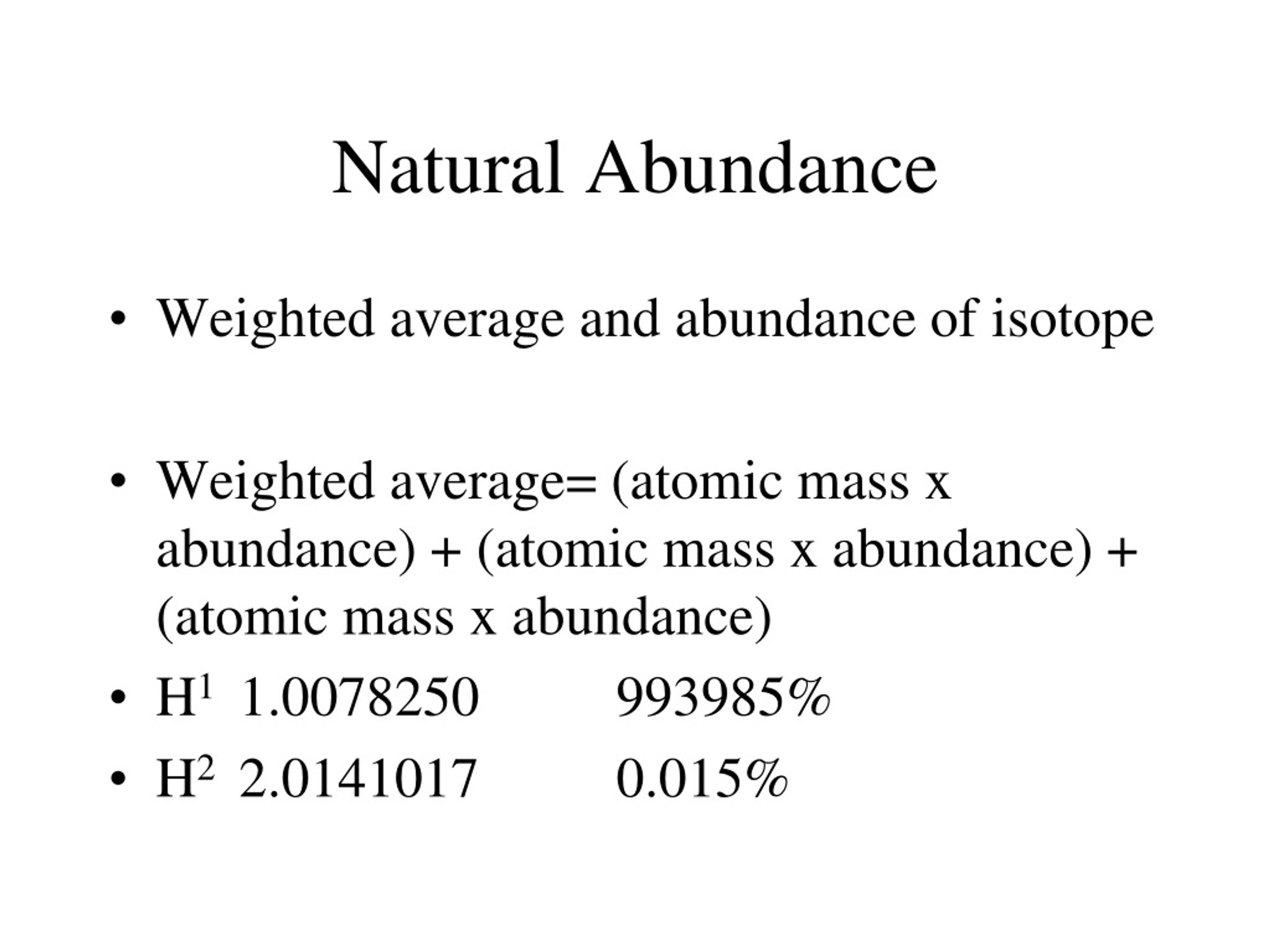
Let’s get creative with a kitchen analogy. Imagine you’re baking cookies. Stable atoms are like the trusty sugar you use every day—they never spoil. Unstable atoms are like a bag of flour with a mysterious expiry date. Some flour might mold after a week, while others last forever. The flour that rots quickly (like radioactive uranium-235) is rare, and you’d never store it in your pantry for long. In nature, the longer an isotope lasts, the more of it we find. For example, carbon-12 is stable and makes up 98.9% of all carbon. Carbon-14, which decays radioactively over thousands of years, is a mere trace—it’s constantly being made in the atmosphere, but it can’t pile up. The same goes for uranium: uranium-238 (stable enough) is 99.3% abundant, while the more unstable uranium-235 is only 0.7%. The takeaway: abundance is nature’s way of voting for stability.
Must Read
Now, here’s a twist that feels like a magic trick: the decay itself creates new stable atoms. When unstable elements like uranium or thorium break down, they slowly turn into stable lead. Over billions of years, this process has enriched Earth’s crust with lead. This is why geologists use the ratio of uranium to lead to date rocks. It’s also why you’re sitting in a chair made from atoms that were once explosive! The practical lesson? Nothing in chemistry is wasted. Even the most unstable elements follow a path toward stability, contributing to the natural abundance of the “safer” elements we rely on. In a way, instability is just a bridge to a more permanent state—like a caterpillar turning into a butterfly, but with atomic numbers.
So, how can you try this at home (safely, of course)? Start with the periodic table. Look at the “isotope abundance” data for any element. You’ll notice that elements with magic numbers of protons or neutrons (like 2, 8, 20, 50, 82, 126) are super abundant. For instance, calcium has 20 protons—magic number—and it’s the fifth most abundant element in the human body. Next, play around with a free online nuclear stability chart. Hover over isotopes like beryllium-8 (which decays in a blink) versus beryllium-9 (stable). Notice how the stable ones cluster around the line of stability. Think of this line as a “peace treaty” between protons and neutrons—too many or too few, and the nucleus gets cranky. A fun tip: memorize the four most abundant elements in the universe (hydrogen, helium, oxygen, carbon)—they are all remarkably stable, which is why they make up 99% of visible matter.
 What Is The Relationship Between Natural Abundance And Stability
Here’s a pro tip for budding chemists: destabilize something to see stability in action. Ever wonder why bananas are slightly radioactive? They contain potassium-40, a naturally unstable isotope. But don’t worry—the stable potassium-39 is far more abundant. The key insight? Stability isn’t binary—it’s a spectrum. Some isotopes are “stable” for billions of years, while others last milliseconds. By checking the half-life of an isotope, you can predict its abundance. If a half-life is minutes, it’s a fleeting guest; if it’s billions of years, it’s a permanent resident. For example, bismuth-209 was long thought stable, but we now know its half-life is 20 billion billion years—making it functionally stable. Label it a “frequent flyer” in the cosmic club.
Finally, remember that this relationship powers our modern world. Nuclear reactors rely on the balance between stable and unstable uranium. Medical imaging uses technetium-99m—a deliberately created unstable isotope that decays quickly, allowing safe scans inside your body. Even your smartphone’s lithium battery works because lithium-7 (stable) is abundant, while lithium-6 (less stable) is rare. The next time you hold a rock or watch a fireworks display, think about the atomic drama behind it: every atom you see chose stability over time. Master this concept, and you’ll see chemistry as a story of persistence—where the most abundant are simply the toughest. So go ahead, impress your friends by explaining why gold doesn’t rust: its stability is so perfect that it refuses to change. That’s the real treasure.