What Is The Ratio Of Basmati Rice To Water

Okay, let’s be honest for a second: have you ever stared at a bag of basmati rice like it was a cryptic crossword clue? You know it wants to be fluffy, fragrant, and as elegan...
Okay, let’s be honest for a second: have you ever stared at a bag of basmati rice like it was a cryptic crossword clue? You know it wants to be fluffy, fragrant, and as elegant as a Bollywood star, but the water-to-rice ratio feels like a secret handshake you were never taught. We’ve all been there. So grab a cup of tea (or chai, if you’re feeling fancy), because we’re about to crack the code together. And trust me, it’s much simpler than your last relationship status update.
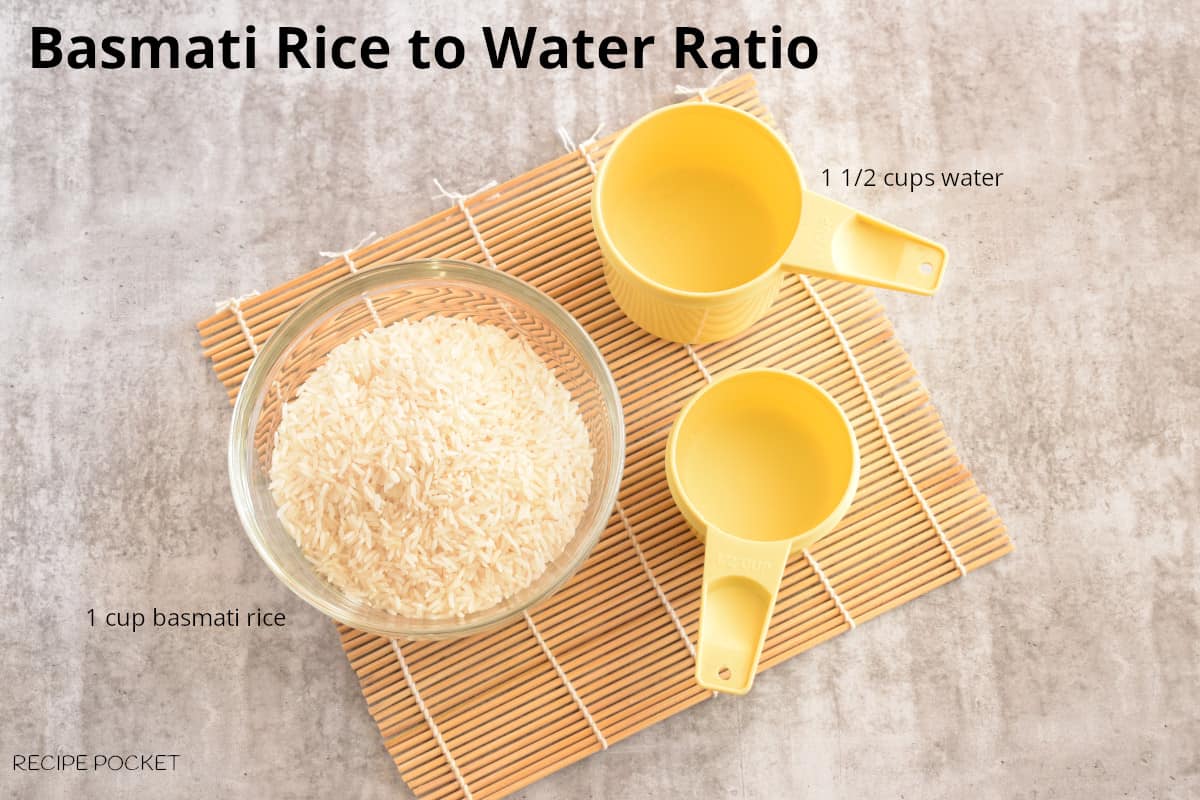
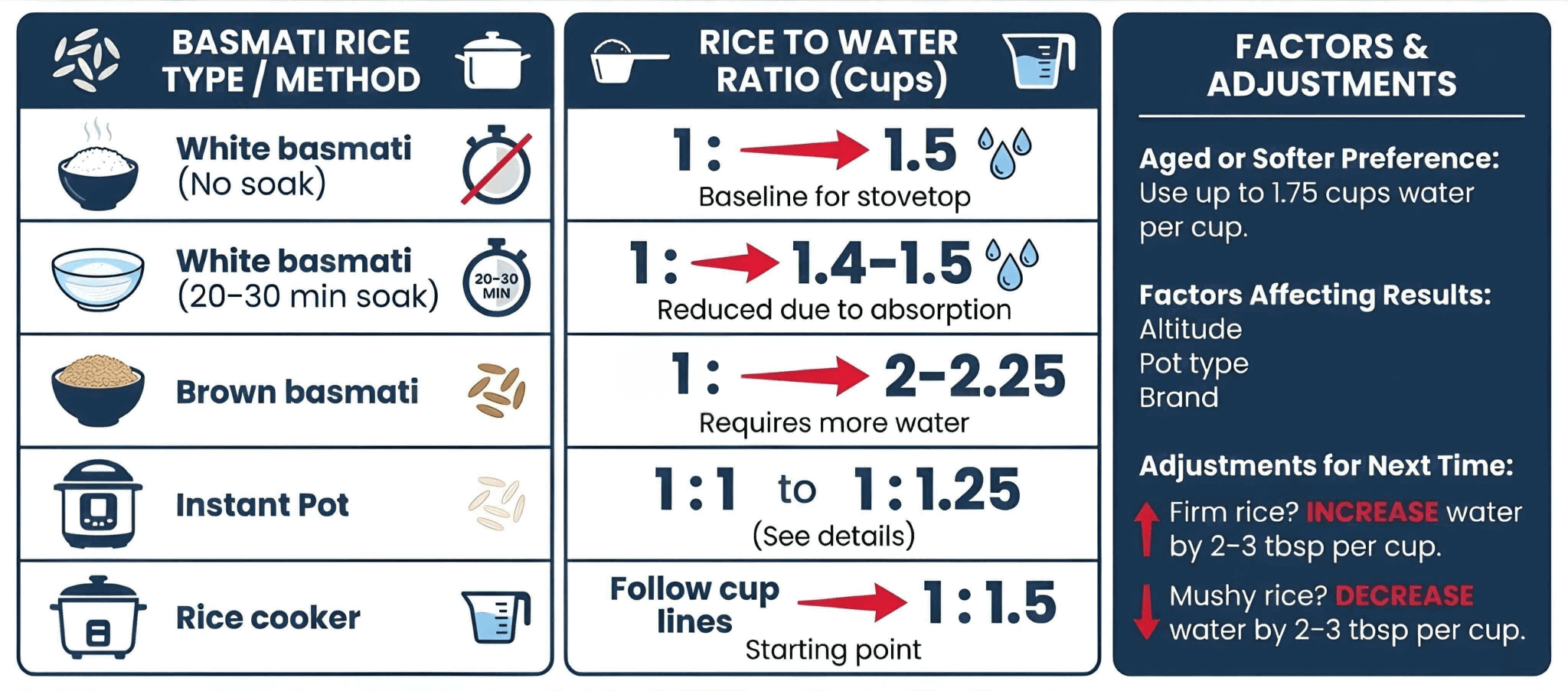
The golden rule, the one you can tattoo on your measuring cup, is 1 cup of basmati rice to 1.5 cups of water. Yes, that’s it. But—and here’s where the magic happens—this isn’t just about numbers. This is a vibe. Basmati is a long-grain aristocrat; it doesn’t want a soupy hug. It wants a steam bath. More water turns it into clumpy, sad porridge (we’ve all wept into that bowl). Less water gives you gravel, perfect for a garden path, not your dinner plate. So the ratio of 1:1.5 is your non-negotiable best friend.
Now, let’s talk about the soak. Oh, the soak. This is the part where your rice becomes a diva, and we love her for it. Rinse the rice until the water runs clear (apologizing for the starch, please), then soak it in cold water for at least 30 minutes. Why? Because that parched grain has been holding its breath in a pantry for months. Soaking lets it rehydrate evenly, so when it hits the heat, it expands into those lovely, separate, fluffy clouds—not a sticky blob. (Skipping this step is like wearing socks with sandals. Technically allowed, but why would you?)
Must Read
After soaking, drain it. Then, for the actual cooking: put your soaked rice in a pot with the 1.5 parts fresh water, a pinch of salt, and maybe a drizzle of ghee or oil if you’re feeling posh. Bring it to a boil, then immediately turn the heat down to low, cover with a tight lid, and let it simmer for 12–15 minutes. Do not, I repeat, do not lift that lid to “check on it.” It’s like opening the oven while a soufflé is rising—you’ll just ruin the drama. Trust the steam. After the time’s up, turn off the heat and let it sit, covered, for another 5–10 minutes. That’s the “quiet cool-down” where the rice fluffs itself up and becomes a masterpiece.
But what if you’re cooking for a crowd? Double the recipe: 2 cups of rice, 3 cups of water. Easy math, no PhD required. And if you’re using a rice cooker? Use the same ratio, but swear by it—rice cookers are forgiving, but they’re not miracle workers. Also, remember: every stove is a little different, so if your first batch comes out slightly sticky, add a splash less water next time. Cooking is a conversation, not a dictatorship.
 How To Cook Basmati Rice Rice To Water Ratio
One last pearl: don’t be fooled by “instant” or “quick-cook” basmati. That stuff is the sorcerer’s apprentice of the rice world—it’s already been parboiled and dried weirdly, and the ratio is totally different (usually 1:1). Stick with the traditional grain. It’s worth the extra 30 minutes of soaking, which you can spend binge-watching the next episode of your favorite show. Multitasking win!
So there you have it: 1 cup basmati, 1.5 cups water, a 30-minute soak, and a whole lot of trust. You are now the proud owner of rice that’s lighter than your conscience after finally vacuuming the living room. Go forth, cook, and remember: perfect rice is not about perfection—it’s about giving a humble grain the respect it deserves. And when you lift that lid and see those glistening, separate grains, know that you did that. You created deliciousness out of water and patience. That’s basically alchemy. And you, my friend, are a kitchen magician. Now, go eat. You’ve earned it. And maybe throw in some cumin seeds next time? Just a thought. 😉