What Is The Fluid Mosaic Model

Hey there, curious cat! Ever wondered what keeps your cells from turning into a big, gooey mess? Well, buckle up, 'cause we're diving into the world of the Fluid Mosaic Model....
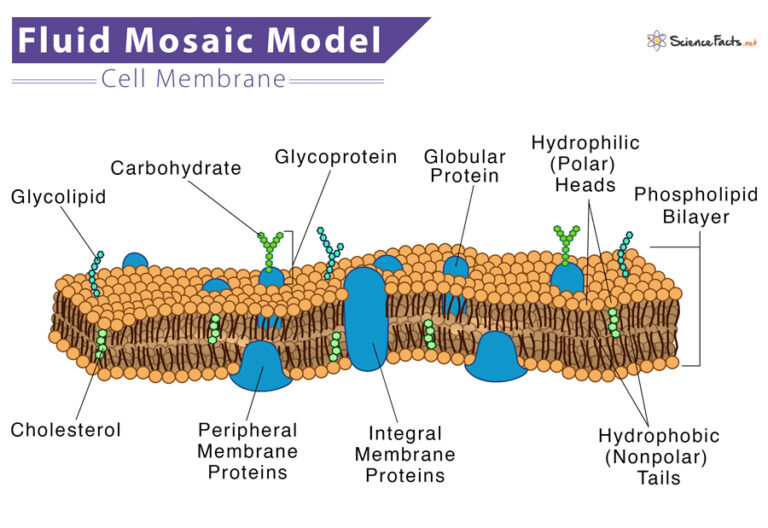
Hey there, curious cat! Ever wondered what keeps your cells from turning into a big, gooey mess? Well, buckle up, 'cause we're diving into the world of the Fluid Mosaic Model. It's like the ultimate party planner for your cells, making sure everyone's in the right place at the right time.
So, what's this Fluid Mosaic Model all about?
Imagine you're at a crowded concert. You've got your rockstar cells (like neurons, muscle cells, and so on) up on stage, doing their thing. But you can't have them bumping into each other and causing a riot, right? That's where the Fluid Mosaic Model comes in. It's like the bouncer at the door, keeping everything in order.
The model was first proposed by S.J. Singer and Garth Nicolson in 1972, and it's been the life of the party ever since. It's all about how the cell membrane, that thin layer around your cells, is structured. Think of it as a fluid mosaic because, well, it's fluid (duh) and it's got a bunch of different things (molecules, proteins, lipids) all mixed together, like a mosaic.
Must Read
Let's break it down, shall we?
First up, we've got our phospholipid bilayer. These are like the dance floor, the main event. They're made up of two layers of phospholipids, with their fatty bits facing each other and their water-loving bits facing out. It's like they're all holding hands, forming a barrier that keeps the cell's insides in and the outsides out.
Now, sprinkle in some proteins. These are like the partygoers, each with their own unique role. Some are like bouncers, regulating what goes in and out of the cell. Others are like DJs, helping with communication between cells. And some are just there to have a good time, giving the membrane its structure and strength.
And finally, we've got our carbohydrates. They're like the bartenders, sticking out from the membrane and helping cells recognize each other. They're also a tasty snack for some cells, so they've got that going for them too.
But why's it called 'fluid'?
Great question! You'd think with all these proteins and carbohydrates sticking out, the membrane would be as stiff as a board. But no, it's fluid, baby! That's because the phospholipids can move around, sliding past each other like they're at a fancy dance party. This gives the membrane its flexibility, letting it change shape and do its thing.
And that, my friend, is why it's called the Fluid Mosaic Model. It's like the ultimate cell party, with everyone moving around, having a good time, and keeping things in order. Isn't biology just the best?
So, what's the big deal about this model?
Well, for starters, it helps us understand how cells communicate with each other. You know, like when your muscle cells tell your brain you've been working out too hard, and you need to take a break. It also explains how cells can change their shape and move around, which is pretty darn cool.
 Plasma Membrane Structure Function And Fluid Mosaic Model 544x303
Plus, understanding the Fluid Mosaic Model can help us figure out what goes wrong in diseases like cystic fibrosis, where the membrane proteins aren't working properly. It's like when the bouncer at the door isn't doing their job, and the party gets all messed up.
But wait, there's more!
You might be thinking, "Wow, this Fluid Mosaic Model sure sounds like it's got it all figured out." And you're right! But remember, science is always evolving. There are some newer models out there that build on the Fluid Mosaic Model, adding even more complexity and awesomeness to the world of cell membranes.
Isn't it just amazing how much there is to learn about our bodies? It's like the more we find out, the more we realize we don't know. But that's what makes it so darn exciting, right?
So, what have we learned today?
We've dived into the world of the Fluid Mosaic Model, explored the dance floor of the cell membrane, and even learned a thing or two about how cells communicate. And you know what? It's all just one big, beautiful party. So, the next time you're feeling small and insignificant, remember that you're made up of trillions of tiny cells, all working together to keep you alive and kicking. Pretty cool, huh?
So, go on, give your cells a little pat on the back. They deserve it. And who knows? Maybe one day, you'll be the life of the party, just like the Fluid Mosaic Model.
Until next time, stay curious, my friend!
