What Is The Difference Between White And Brown Gravy

Let’s be honest: gravy is the soul of any good comfort meal. It’s that warm, saucy hug you pour over mashed potatoes or biscuits. But stand in front of two gravy boats at a fa...
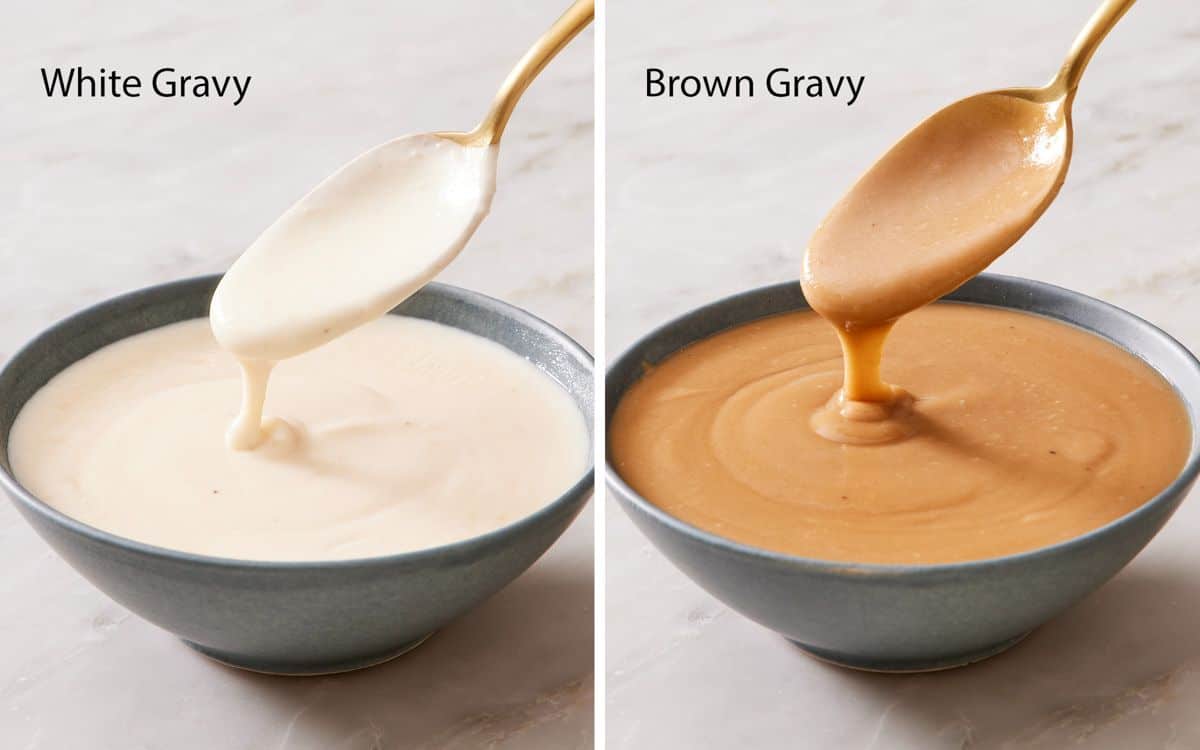
Let’s be honest: gravy is the soul of any good comfort meal. It’s that warm, saucy hug you pour over mashed potatoes or biscuits. But stand in front of two gravy boats at a family dinner, and you face a real dilemma: white or brown?
I remember my first Thanksgiving at my partner’s house. I reached for the brown gravy, and my future mother-in-law gasped. “That’s for the turkey,” she said, nodding toward the white gravy. “This is for the biscuits.” I felt like I’d broken a sacred rule.
So, what’s the real difference? It actually comes down to one simple thing: what you use to brown the fat. That little step changes everything about flavor, color, and purpose.
Must Read
Brown Gravy: The Bold, Meat-Lover’s Choice
Brown gravy starts with the drippings from roasted meat—beef, turkey, or pork. Those drippings are full of browned bits, which give it that deep, savory color.
You make it by whisking flour into those hot drippings and adding broth. Sometimes people add a little kitchen bouquet or Worcestershire sauce for extra oomph.
Think of brown gravy as the confident cousin at dinner. It’s bold, a little salty, and perfect for smothering roast beef, meatloaf, or turkey. It’s the gravy that says, “I’m here to dominate your plate.”
I use brown gravy when I want to feel like I’m at a Sunday potluck. It’s the one you pour over a pile of mashed potatoes and let it soak into every nook and cranny.
White Gravy: The Creamy, Southern Sweetheart
White gravy, often called sawmill gravy in the South, is a completely different animal. It starts with raw fat—usually butter or sausage drippings.
You cook flour in that fat to make a blonde or light roux, then whisk in milk or cream. No browning happens, so it stays pale, smooth, and velvety.
 What is the difference between brown gravy and white gravy?
White gravy is gentle. It’s the gravy that tastes like breakfast, not dinner. I make it on lazy Sundays for biscuits and eggs, and it always feels like a hug in a bowl.
The flavor is mild, creamy, and slightly peppery. It’s not meant to compete with meat—it’s meant to complement soft, doughy things like biscuits or fried chicken.
When To Use Which One (And Why You Care)
Here’s the practical part: you care because choosing the wrong gravy can ruin a meal. Imagine pouring sweet, milky white gravy over a rare steak—weird, right? Or drowning your buttermilk biscuit in beefy brown gravy—just wrong.
Use brown gravy for: roast dinners, pot roasts, meatloaf, turkey, and poutine. It loves bold flavors and dark meats.
Use white gravy for: biscuits, chicken-fried steak, breakfast potatoes, and country fried chicken. It loves tenderness and mild things.
But here’s the secret: you can mix them if you’re feeling wild. Some people call that “gray gravy,” and it’s a happy compromise when you have leftover brown gravy and a biscuit.
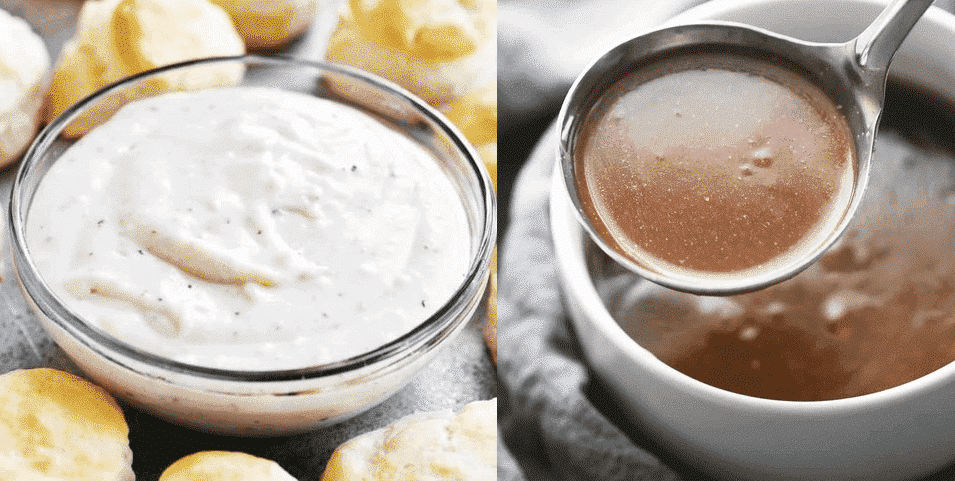 White Gravy vs Brown Gravy: Difference & How Is It Made - Miss Vickie
The Little Stories That Make It Stick
I once watched my uncle pour white gravy over his salad by accident. He didn’t even blink—just ate it. That’s the beauty of gravy: it’s forgiving.
My grandma always said, “Brown gravy is for saving dry meat; white gravy is for loving your breakfast.” She was right. Brown gravy rescues a tough roast; white gravy makes a biscuit feel indulgent.
At the end of the day, the difference is fat and liquid. Brown uses browned drippings and broth; white uses raw fat and milk. That’s it—but it changes everything.
A Fun Way To Remember
Think of brown gravy as the evening gravy: serious, savory, and meant for heavy lifting. Think of white gravy as the morning gravy: soft, creamy, and comforting.
So next time you’re at a potluck, don’t panic. Look at the plate: biscuits? Go white. Meatloaf? Go brown. Both? You’re in gravy heaven.
Now go on—pour with confidence. And if anyone judges you, just smile and say, “It’s all gravy.” They’ll get it.
