What Is The Difference Between Smoked Sausage And Kielbasa

Let’s be honest: walking down the sausage aisle at the grocery store is like entering a misty, meat-filled dimension of confusion. You’ve got the smoked sausage grinning at yo...
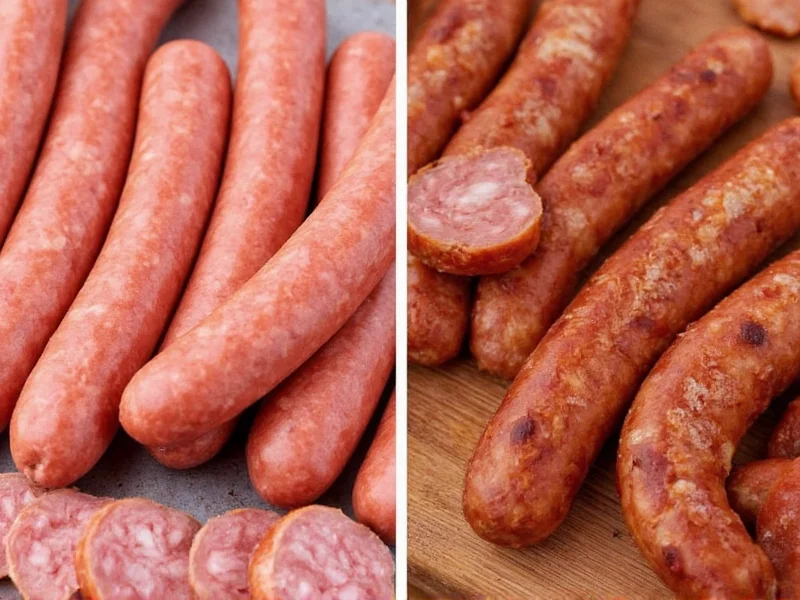
Let’s be honest: walking down the sausage aisle at the grocery store is like entering a misty, meat-filled dimension of confusion. You’ve got the smoked sausage grinning at you from one corner, and kielbasa giving you a smug, East European stare from the other. They’re both pink, both tube-shaped, and both probably delicious—so what’s the actual difference?
First, let’s clear up the biggest myth of all: kielbasa is not a single type of sausage. I know, it’s a betrayal of everything you thought was true. In Poland, “kielbasa” just means “sausage” in the same way “bread” means any loaf of bread here.
So when your buddy says, “I’m grilling kielbasa tonight,” he might as well be saying, “I’m grilling meat-shaped tubes of mystery.” But in American supermarkets, when they slap the word “kielbasa” on a package, they usually mean a specific thing: a smoked, garlicky, roughly textured pork sausage that’s often shaped like a fat horseshoe. That specific shape isn’t just for looks—it’s a polite way of saying “I’m too chunky to fit in a straight line.”
Must Read
The Great Smoke Showdown
Here’s where it gets fun: all kielbasa can be smoked, but not all smoked sausage is kielbasa. It’s like saying all rectangles are squares, but only the cool, garlic-stuffed ones get the special name. Smoked sausage is a huge umbrella category that includes everything from hot dogs to chorizo to those little cocktail weenies your uncle eats straight from the jar at parties.
The key distinction is flavor and seasoning. Smoked sausage generally gets its personality from the smoke itself—hickory, mesquite, or applewood—plus a generic blend of salt and pepper. Kielbasa, however, doesn’t just rely on the smoke; it brings its own garlicky, marjoram-heavy posse to the party.
If smoked sausage is a friendly handshake, kielbasa is a firm, garlic-scented hug from your Polish grandmother who also hands you a potato pancake. One funny fact: real Polish kielbasa often contains no tomato, no paprika, and definitely no sugar. Meanwhile, American smoked sausages can be sweet, spicy, or taste like a liquid smoke factory exploded on a pig.
The Texture Tango
Bite into a standard smoked sausage, and you’ll usually find a smooth, bouncy, almost hot dog-like consistency. It’s polite. It doesn’t fight back. It’s the sausage equivalent of a handshake that ends too quickly. But kielbasa? Oh, kielbasa has texture. It’s coarsely ground, meaning you can actually see little chunks of pork fat and muscle.
That texture is not a mistake—it’s a sturdy, rustic chew that says, “I’ve been through a Polish winter and I’m not going down easy.” A friend of mine once described eating cheap smoked sausage as “licking a smoke-flavored sponge.” That’s not fair to sponges, but you get the idea: kielbasa demands your jaw’s attention.
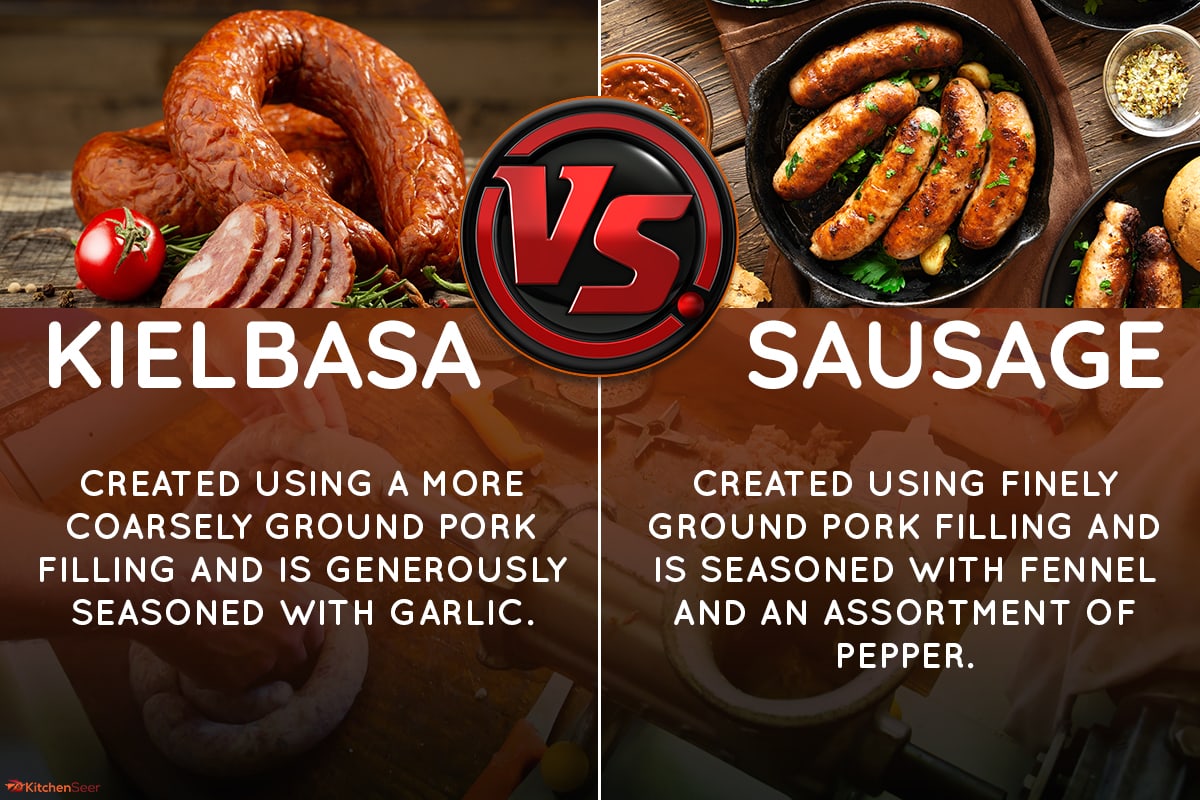 Difference Between Smoked Sausage And Polska Kielbasa | Detroit Chinatown
How to Tell Them Apart Without a DNA Test
If you’re staring at two packages and sweating, here’s the cheat code: look for garlic and marjoram on the ingredient list. If you see “marjoram,” you’re holding kielbasa. If you see “liquid smoke” and “dextrose,” you’re holding generic smoked sausage. Also, shape matters: kielbasa is usually sold in a big C-curve or a loop. Straight links? That’s your standard smoked sausage.
And here’s a surprising bombshell: in Poland, kielbasa is often not smoked at all. There’s white kielbasa (biala kielbasa) that’s boiled or grilled raw. That’s right—the thing we call “smoked sausage” could be a complete stranger to authentic kielbasa. It’s like discovering your favorite taco isn’t actually eaten in Mexico.
The Great Cultural Confusion
Why does America lump them together? Because in the 1900s, Polish immigrants brought over their beloved kielbasa, and manufacturers thought, “Hey, let’s just smoke everything and call it kielbasa to sound fancy.” It was a marketing move as bold as calling a hot dog a “Germanic meat cylinder.”
So when a store sells “smoked kielbasa,” they’re basically selling a hybrid creature: a sausage that’s smoked in the American style but seasoned with garlic and marjoram like a Polish cousin. It’s the culinary equivalent of a mullet—party in the smoke, business in the garlic.
The Final (Sausage) Verdict
Here’s the bottom line: if you want smoky, smooth, and reliable, grab smoked sausage. It’s the dependable friend who shows up to every barbecue and never complains. If you want garlicky, chunky, and complex, go for kielbasa—it’s the eccentric artist friend who brings fermented pickles to the party and talks about his grandmother’s farm in Kraków.
And honestly? They’re both fantastic on a grill with some peppers and onions. Just don’t tell a Polish person that your store-brand smoked sausage is “basically kielbasa” unless you’re ready for a passionate, 45-minute lecture. I learned that the hard way at a picnic. I also learned that kielbasa leftovers are fantastic in scrambled eggs, but that’s a story for another coffee chat.
