What Is The Difference Between Polar Molecules And Nonpolar Molecules

Alright, gather 'round, folks. I've got a tale to tell you about something that's as exciting as watching paint dry - the difference between polar and nonpolar molecules. Now,...

Alright, gather 'round, folks. I've got a tale to tell you about something that's as exciting as watching paint dry - the difference between polar and nonpolar molecules. Now, don't roll your eyes, this is gonna be a hoot and a half, I promise.
Polar Molecules: The Party Animals
Imagine polar molecules as the life of the party. They're always up for a good time, always ready to mingle. Why? Because they're unevenly distributed, that's why. One end is happy as a clam, all negative and stuff, while the other end is as grumpy as a wet cat, all positive. They're like the best of friends and worst of enemies, all rolled into one.
Take water, for instance. It's like the most popular kid in school, the ultimate polar molecule. It's got two hydrogen atoms, all 'I'm not touching you' about it, and an oxygen atom, all 'I'm the boss' about it. The hydrogen atoms are like the shy, quiet ones, while the oxygen is the loud, boisterous one. And boy, do they like to party together!
Must Read
Polar Molecules: The Matchmakers
Polar molecules are like the best matchmakers you'll ever meet. They love to stick together, like magnets. They're attracted to each other because of something called dipole-dipole interactions. It's like they're playing a never-ending game of 'opposites attract'.
But here's where it gets weird. They also like to stick to nonpolar molecules. I know, right? It's like the popular kid in school suddenly befriending the kid who eats glue. But it happens, folks. It's all about something called hydrogen bonding. It's like the polar molecule is saying, 'Hey, you're not so bad. Let's be friends.'
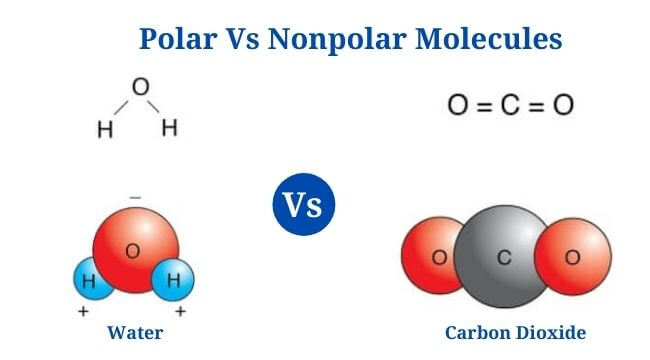 Polar Vs Nonpolar Molecules – Polar and Non-Polar Molecules – LAZB
Nonpolar Molecules: The Wallflowers
Now, nonpolar molecules are like the wallflowers at the party. They're happy to be there, but they're not really into all that mingling nonsense. They're evenly distributed, so they don't have that positive-negative thing going on. They're like the kid in school who's all, 'I'm good, I'm just gonna sit here and read my book, thanks.'
Take methane, for example. It's like the ultimate nonpolar molecule. It's got four hydrogen atoms, all hanging out together, all positive. And it's got a carbon atom, all 'I'm just here to hold you all together' about it. They're all the same, so they don't really care about all that 'opposites attract' business.
Nonpolar Molecules: The loners
Nonpolar molecules are like the loners of the molecular world. They don't really like to stick to each other or anyone else. They're all, 'I'm good, you're good, let's just keep to ourselves, yeah?' They don't have those dipole-dipole interactions or hydrogen bonding shenanigans going on.
 Polar vs Nonpolar Molecules in Chemistry
But here's where it gets interesting. They do like to stick to other nonpolar molecules. It's like they're saying, 'Well, if we can't mingle with the popular kids, let's at least stick together.' It's all about something called London dispersion forces. It's like they're all, 'We might not be much, but we're something, dammit.'
Why Should You Care?
Alright, so you're probably thinking, 'Why should I care about all this molecular nonsense?' Well, let me tell you, it's all around us. It's in the way water beads up on a freshly cleaned car. It's in the way oil and water don't mix. It's in the way certain things dissolve in water and others don't. It's in the way some things are soluble and others aren't. It's in the way some things are miscible and others aren't. It's in the way some things are compatible and others aren't. It's in the way some things are... you get the picture.
So, the next time you're washing your car, or cooking up a storm in the kitchen, or just sitting there, minding your own business, remember the dance of the polar and nonpolar molecules. It's a wild, wacky world out there, folks. And it's all happening at the molecular level.
