What Is The Difference Between Financial Accounting And Financial Management

Ever felt like you're drowning in a sea of financial jargon? Don't worry, you're not alone. But fear not, we're here to shed some light on two of the most confusing terms out...
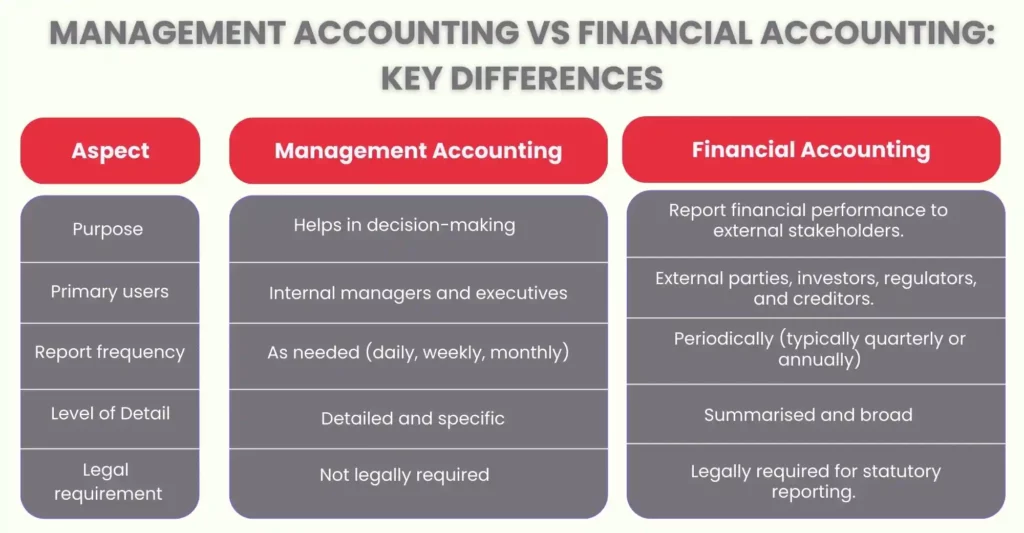
Ever felt like you're drowning in a sea of financial jargon? Don't worry, you're not alone. But fear not, we're here to shed some light on two of the most confusing terms out there: Financial Accounting and Financial Management. So, grab a cup of coffee (or tea, we don't discriminate), and let's dive in.
Financial Accounting: The Scorekeeper of the Business World
Imagine financial accounting as the scorekeeper at a football game. Their job? To keep track of every point, every penalty, and every substitution. In the business world, financial accounting is the scorekeeper, tracking every financial transaction that happens within a company.
These guys are all about the rules. They follow a set of standards, like Generally Accepted Accounting Principles (GAAP), to make sure everyone's playing fair. Their main goal? To provide a clear picture of a company's financial health at a specific moment in time.
Must Read
Think of it like your bank statement. At the end of the month, you want to know exactly how much money you've got, where it came from, and where it went. That's what financial accounting does, but for businesses.
Financial Management: The Quarterback Calling the Shots
Now, picture the quarterback on the football field. They're not just keeping track of the score; they're strategizing, planning, and making decisions to win the game. That's financial management in a nutshell.
Financial management isn't just about the here and now; it's about the future. These folks are looking ahead, planning for growth, and making decisions that will impact the company's financial health down the line.
 Financial Accounting
They're the ones deciding whether to invest in a new project, issue stocks, or take out a loan. It's all about balancing risk and return, and making sure the company's got enough cash on hand to pay the bills.
So, What's the Difference?
Financial accounting and financial management might sound similar, but they're actually quite different. Here's a quick comparison:
- Financial Accounting is all about recording and reporting what's already happened. It's about the past.
- Financial Management is about planning for the future. It's about making decisions that will impact the company's financial health down the line.
- Think of it like driving a car. Financial accounting is the rearview mirror, showing you where you've been. Financial management is the steering wheel, helping you decide where you're going.
Practical Tips: How to Apply This to Your Life
So, how can you apply this to your own life? Well, think of your personal finances like a small business. Here's how:
- Financial Accounting: Keep track of every penny that comes in and goes out. Use a budgeting app, or even a simple spreadsheet. This is your personal balance sheet.
- Financial Management: Plan for the future. Set financial goals, like saving for a house or retirement. Make decisions about how to allocate your resources. This is your personal investment strategy.
Remember, it's all about balance. You need to know where you've been (financial accounting) to plan where you're going (financial management).
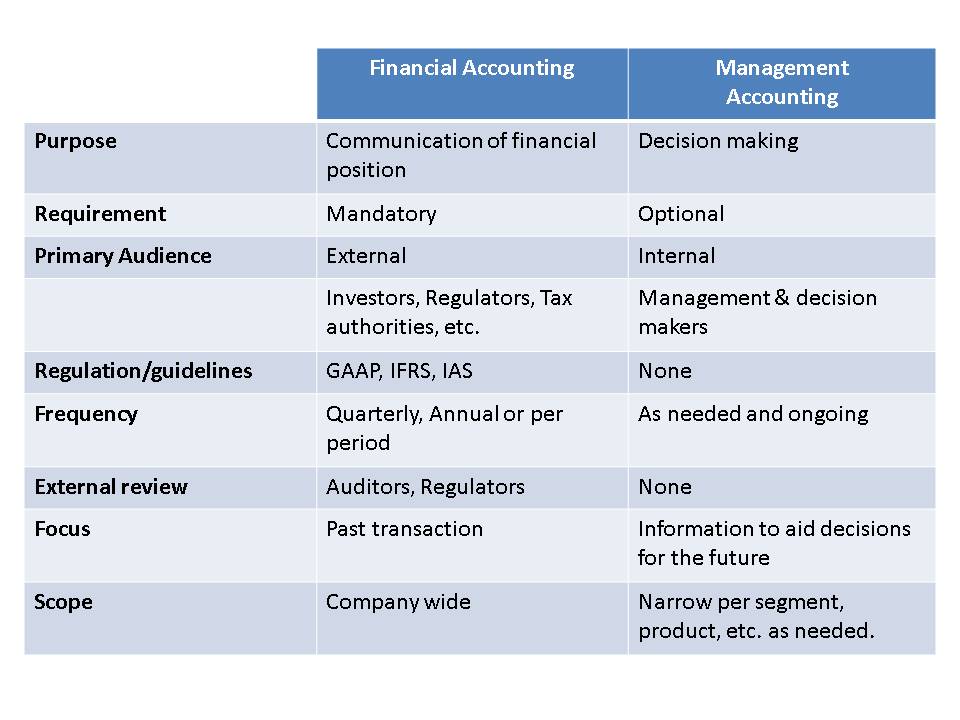 Differences between Financial Accounting and Managerial Accounting
Fun Fact: The Birth of Financial Accounting
Did you know that the first known work on accounting was written in 1494? It was called "Summa de Arithmetica, Geometria, Proportioni et Proportionalita" by Luca Pacioli, a Venetian mathematician. Pretty neat, huh?
Reflection: The Power of Financial Literacy
Understanding the difference between financial accounting and financial management is more than just a fun fact. It's a step towards financial literacy. And financial literacy, my friends, is power.
It's the power to make informed decisions, to plan for the future, and to take control of your financial health. So, whether you're a business owner, an investor, or just trying to make ends meet, understanding these concepts can make a world of difference.
So, here's to you, the financially savvy individual. May your balance sheets be balanced, your investments be wise, and your financial future be bright.
