What Is Considered A Sprig Of Thyme

You’re standing in the grocery store, reaching for that little plastic clamshell of fresh thyme, and the recipe says, “Add a sprig of thyme.” But your brain freezes. A sprig?...

You’re standing in the grocery store, reaching for that little plastic clamshell of fresh thyme, and the recipe says, “Add a sprig of thyme.” But your brain freezes. A sprig? Is it one leaf? A whole branch? The entire plant? Do you need a machete? Let’s pour a cup of tea (or wine, no judgment) and sort this out like the kitchen pros we pretend to be.
First, let’s get visual. Imagine you’re a tiny, herb-loving fairy. A sprig of thyme is basically a single stem from the main plant. You know those woody, spindly stalks that look like a miniature tree? That’s your base. A sprig is typically about 4 to 6 inches long—roughly the length of your index finger, or, if you’re feeling fancy, the length of a standard cocktail straw. It’s not a single leaf (that’s just a tiny green teardrop), and it’s not the whole bush (unless you’re cooking for an army of hobbits).
Now, what does a sprig look like? Thyme has these tiny, paired leaves that cluster along the stem like little green kisses. The stem itself is usually a bit woody, sometimes with a purplish tinge. If you run your fingers down the stem (gently, please—thyme is a drama queen), you’ll feel the leaves pop off in a satisfying, aromatic rain. That’s your cue: the leaves are the flavor superstars; the stem is just their delivery vehicle, like a crispy pizza box. You almost never eat the stem (it’s tough and chewy), so when a recipe says “sprig,” it means you’ll remove the leaves later or toss the whole stem in for flavor and fish it out before serving.
Must Read
Here’s where the giggles start. Is there a universal rule? The internet will fight you on this. Some chefs say a sprig is exactly that 4-6 inch stem. Others will say it’s “whatever fits between your thumb and forefinger.” I’m here to tell you: it’s not that deep. If your recipe is a pot of stew, a slightly bigger sprig won’t ruin dinner. If it’s a delicate sauce, maybe go smaller. The key is intention: you want enough leaves to perfume your dish, not drown it. A single sprig of thyme has about 10 to 15 leaf pairs. That’s plenty for a pot of soup. Two sprigs? You’re getting serious. Three? You’re making a thyme-forward statement, and I respect that energy.
But wait—what about dried thyme? Ah, the kitchen’s version of a plot twist. Dried thyme is much more concentrated, so one sprig of fresh equals about ½ teaspoon of dried leaves. And if you’re using dried, skip the stem entirely—it’s already a crumbled, confused mess. Just sprinkle with confidence.
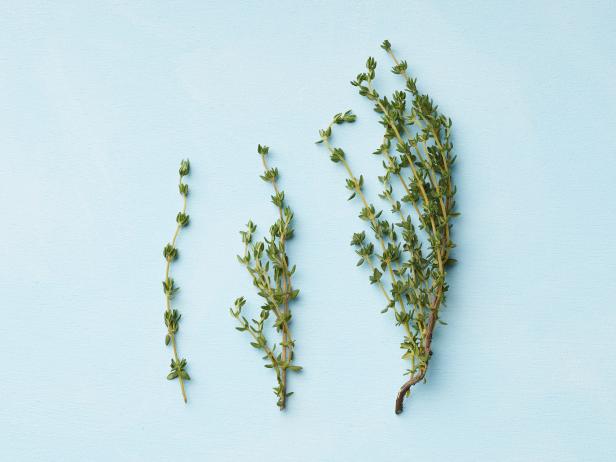 What Is a Sprig of Thyme? | Cooking School | Food Network
Pro tip for the playful cook: to strip a sprig, hold the top of the stem with one hand and pinch the leaves between your thumb and forefinger of the other hand, then slide down. You’ll get a mini avalanche of fragrance. Or, if you’re lazy like me, just throw the whole sprig in and find it later like a treasure hunt. “Oh, a woody stem in my mashed potatoes? Surprise!”
So, my friend, the next time a recipe demands a “sprig of thyme,” don’t panic. Grab a stem, give it a sniff, and trust your gut. Cooking is about feeling, not measuring with a ruler. And if all else fails, just whisper, “This is a sprig,” and the universe will agree.
Now go forth, sprig master. Your stews will sing, your roasts will weep with joy, and you’ll finally look at that herb bundle with the swagger of a seasoned chef. Because a sprig isn’t a test—it’s a little green invitation to create something delicious. And you are perfectly ready to accept. Happy cooking, you beautiful leaf-stripper, you.
