What Is A Maraschino Cherry Made Of

Have you ever stared at a bright red cherry floating in your cocktail or sitting on top of a sundae and wondered, what actually is this thing? It’s so shiny, so neon, so perfe...

Have you ever stared at a bright red cherry floating in your cocktail or sitting on top of a sundae and wondered, what actually is this thing? It’s so shiny, so neon, so perfectly round—it barely looks like something that grew on a tree. Let’s be honest, it looks more like a candy than fruit.
The truth is, that little red orb has a fascinating backstory. It’s not just a cherry that got a bath in red dye. The journey from a real orchard to your glass involves salt, sulfur, sugar, and a whole lot of patience.
It starts with a real cherry—but not the kind you eat
Believe it or not, a maraschino cherry begins its life as a real, honest-to-goodness cherry. But it’s not a sweet Bing cherry you’d buy at the farmer's market. Nope. It usually starts as a Royal Ann or Napoleon variety—pale yellow or blush-colored cherries that are naturally quite tart and firm.
Must Read
Why those? Because they can soak up all the treatment without turning to mush. Imagine trying to turn a soft, juicy peach into a rubbery candy—doesn’t work. These cherries are built to be transformed.
The bleaching step: a weird and essential drama
Here’s where it gets wild. The cherries are first bleached. For real. They’re soaked in a mixture of calcium salt and sulfur dioxide to remove their natural color and preserve their firmness. This process can take weeks or even months.
By the end, those pale yellow cherries have turned into ghostly white orbs that look nothing like fruit. It sounds creepy, right? But it’s actually a genius trick. Without this step, they’d rot or get mushy when you try to dye and flavor them later.
Then comes the sugar bath (the fun part)
Once bleached, the cherries are repeatedly soaked in a sugar syrup that gets more concentrated over time. This is called candying or marinating. They literally absorb the sweetness until they become that squishy, candy-like texture you know and love.
During this step, the cherries also get their signature artificial flavoring. You know that slightly almond-like taste? That’s not almond extract. It’s actually benzaldehyde, a compound found in bitter almonds and cherry pits. It mimics the flavor of the original marasca cherry used in the old Italian liqueur.
The color: from ghost white to glowing red
Now, let’s talk about that insane red color. It’s not from beet juice or cranberries. The vast majority of maraschino cherries are dyed with Red 40 (or, in some cases, Red 3 or Yellow 5). This is the same stuff used in candy corn and fruit punch.
Why so bold? Because marketing, baby. A pale cherry just doesn’t scream “festive” the way a jewel-toned one does. The dye soaks into the pith and skin, giving it that uniform, almost radioactive glow. Ever wonder why it stains your fingers? Now you know.
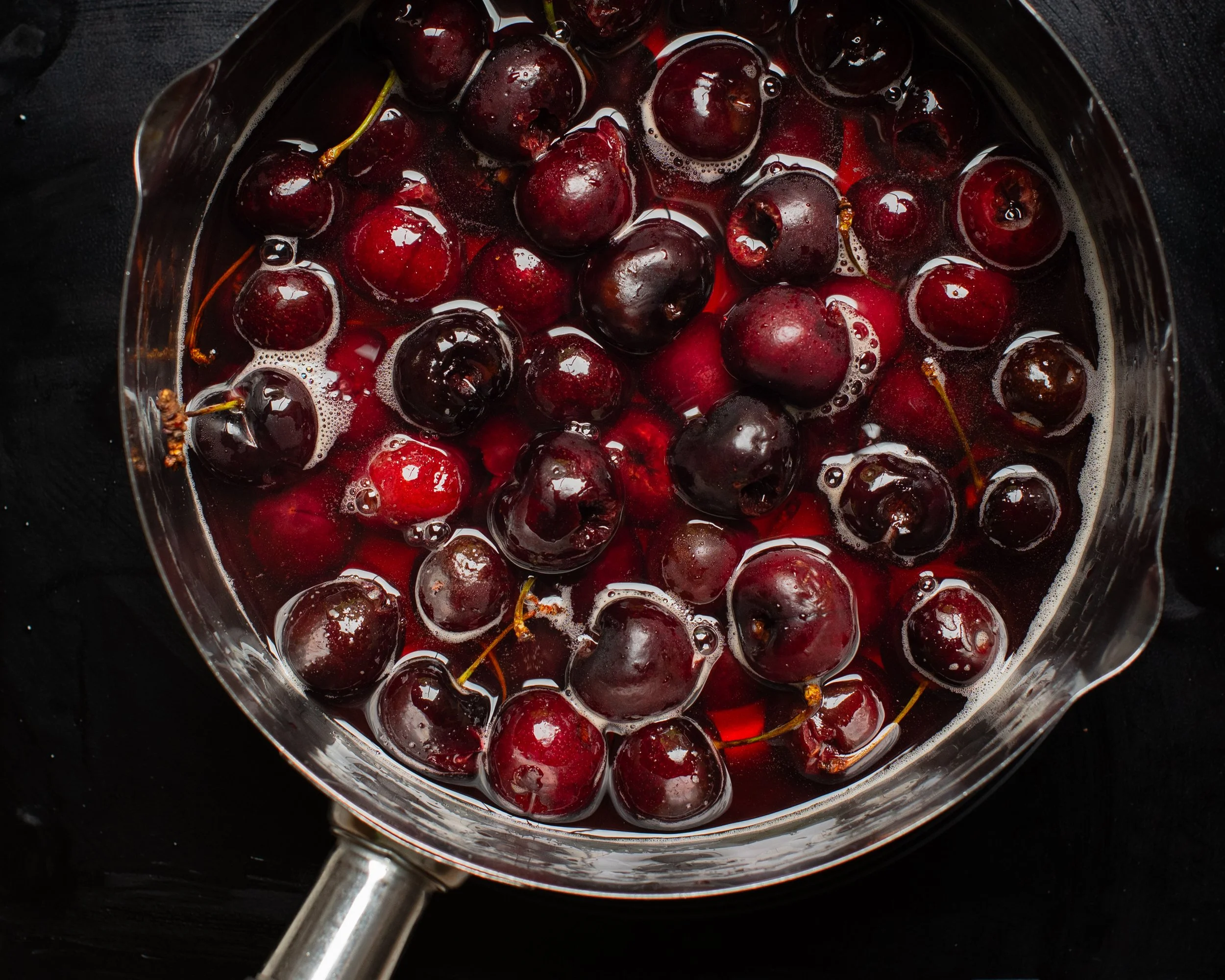 Homemade Maraschino Cherries — saltnpepperhere
What about those “fancy” ones without the dye?
Not all maraschino cherries are neon red. You can find natural maraschino cherries labeled as “no artificial colors.” These are typically dyed with vegetable juice or just left in a syrup that darkens naturally. They end up looking more like dark red or even purple-ish fruit.
And they taste a bit more complex, too—less sugary, more like a real preserved cherry. Fancy cocktail bars love these because they look old-school and elegant. But let’s be real: the classic bright cherry still rules the dessert world.
Why is it called “maraschino” if it’s not from Italy?
The name comes from the Marasca cherry, a sour, dark cherry native to Croatia and northern Italy. Originally, people preserved these cherries in a liqueur made from their own pits, called maraschino. That stuff was potent and deeply flavorful.
Over time, American manufacturers simplified the process, swapped the liqueur for sugar syrup, and used cheaper cherries. The name stuck, even though the modern version is more science fair project than old-world tradition. It’s like calling a hot dog a “frankfurter”—the name outlives the original recipe.
Is it even fruit anymore? (A gentle debate)
If you’re feeling philosophical, you might ask: Is a maraschino cherry still a fruit, or has it become candy? Technically, it started as fruit, but by the time it’s bleached, sweetened, dyed, and flavored, it’s undergone a serious identity change. Most nutritionists classify it as a processed sugar product rather than a healthy snack.
Hey, no judgment. It’s a celebratory food. You don’t eat it for the fiber; you eat it because it’s fun and makes your ice cream look like a party.
The verdict: A little miracle of food science
So, what’s a maraschino cherry made of? The short answer: a real cherry that’s been bleached, candied, flavored, and dyed into a neon treat. It’s one part orchard, one part chemistry kit, and one part pure indulgence.
Next time you see one bobbing in a soda or winking from the top of a cupcake, you can smile knowing exactly what went into that tiny, shiny glimmer of joy. And feel free to impress—or weird out—your friends with these facts. You’re welcome.
