What Is A Disadvantage Of Cost Plus Pricing

So, you’ve started a business. Congratulations! You’re now the proud owner of a headache that goes by the name “pricing.” One of the first strategies you’ll stumble across is...
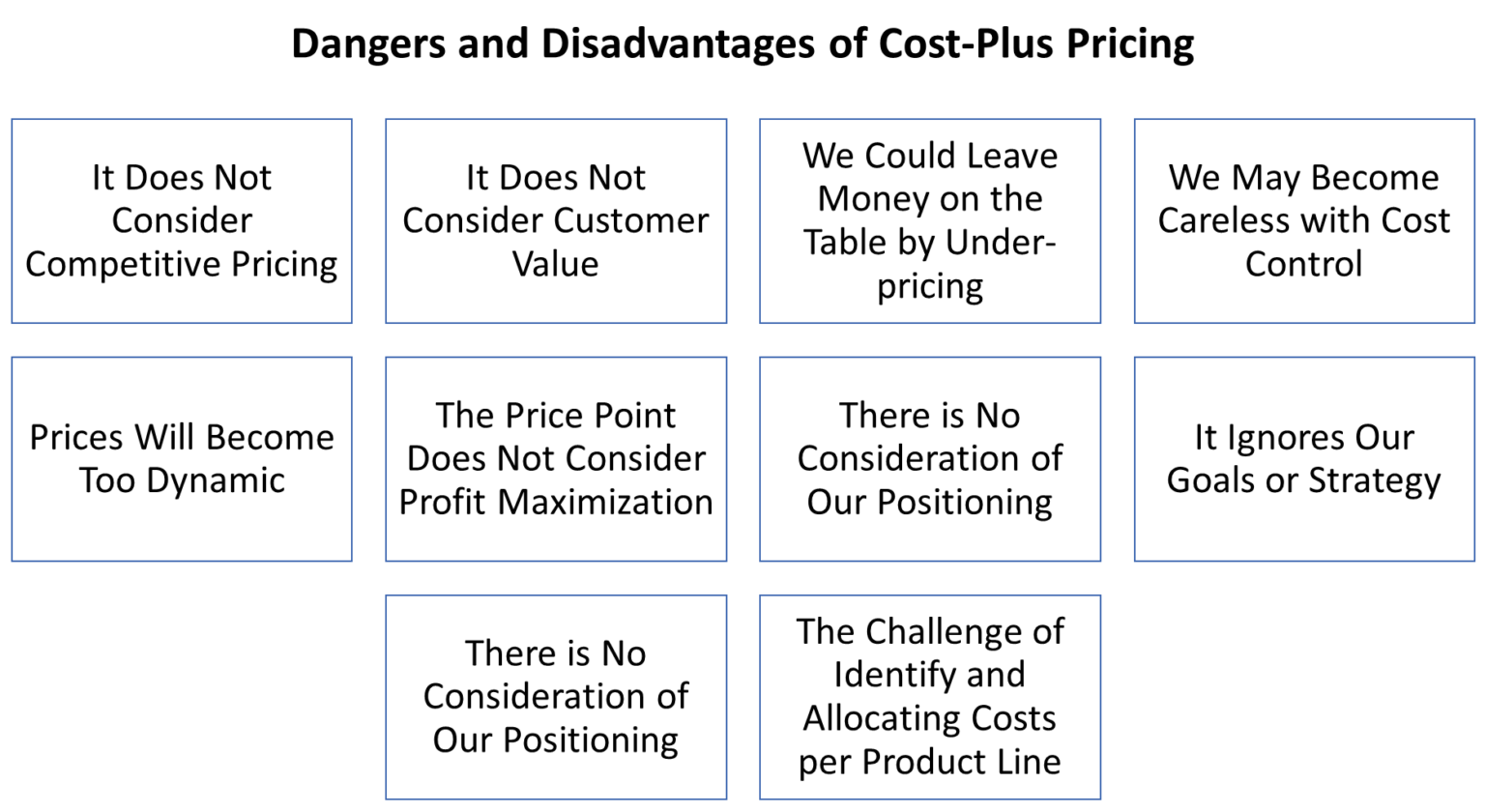
So, you’ve started a business. Congratulations! You’re now the proud owner of a headache that goes by the name “pricing.” One of the first strategies you’ll stumble across is Cost-Plus Pricing. It sounds so simple: figure out your cost, slap on a juicy markup, and watch the money roll in. But here’s the thing—this method has a dark, funny, and frankly absurd disadvantage that can turn your dream product into a dusty shelf-sitter.
The “Let’s Ignore What People Actually Want” Trap
The biggest disadvantage of Cost-Plus Pricing is that it completely ignores what the market is willing to pay. You might calculate that your artisanal, unicorn-shaped, cinnamon-scented candle costs $20 to make, so you price it at $40. That seems fair, right? Well, wrong if the market thinks your candle is worth $10. You’ll end up with a closet full of very fragrant, unsold unicorns.
On the flip side, you could be underpricing something people would desperately pay $200 for. Imagine you make a miracle cure for hiccups, but because your costs are only $2, you sell it for $5. You just left $195 on the table. That’s like finding a winning lottery ticket and using it as a bookmark—financially tragic.
Must Read
The “My Costs Went Up, So Yours Did Too” Hammer
Here’s where Cost-Plus gets really ridiculous. If your supplier raises the price of glitter glue by 50%, your cost goes up. According to the Cost-Plus religion, you then must raise your price by 50% too. Never mind that nobody on planet Earth cares about your glitter glue supply chain drama. Your customers will just blink at the new price, say “nah,” and walk away.
This creates a hilarious cycle: you raise prices because costs rose, demand tanks because you’re now expensive, then you sit in your office muttering about “market inefficiencies.” It’s like stubbing your toe on a rock, then yelling at the rock for existing. The truth is, the rock—i.e., your customer—doesn’t care about your bills.
The “Efficiency? I Don’t Know Her” Paradox
Another sneaky disadvantage: Cost-Plus pricing gives you zero incentive to cut costs. Why bother finding a cheaper supplier or streamlining your production if you can just pass the cost along with a markup? You become a lazy pricing robot. It’s like being on a diet where you eat a whole cake and then say, “Well, I guess I’ll just buy bigger pants.” Eventually, you’re wearing a parachute.
 Disadvantages Cost Plus Pricing In Powerpoint And Google Slides Cpb PPT
Worse, this laziness can kill innovation. A competitor using value-based pricing will see that you’re spending $50 on a widget they make for $10. They’ll undercut you, steal your customers, and you’ll be left wondering what happened. The answer is: you were too busy adding up receipts to look at the real world. Ouch.
The “Why Is This So Expensive?” Cognitive Dissonance
Let’s talk about the emotional side of pricing. People don’t pay for your costs; they pay for perceived value. Cost-Plus pricing creates a weird disconnect. You’ve justified the price internally, but to a customer, it looks utterly bonkers. For example, a restaurant using Cost-Plus might charge $18 for a sad, soggy salad because the arugula was flown in from Mars—while a $12 burger that costs less to make is a steal. The customer’s brain short-circuits: “Why is the lettuce more expensive than the cow?”
This confusion breeds distrust. Your customer starts thinking you’re greedy or incompetent. They’re not wrong. You’ve essentially said, “Here’s my secret formula—cost plus markup”—and they’ve replied, “That sounds like a you problem.” You’ve turned a pricing strategy into a joke about your own business sense.
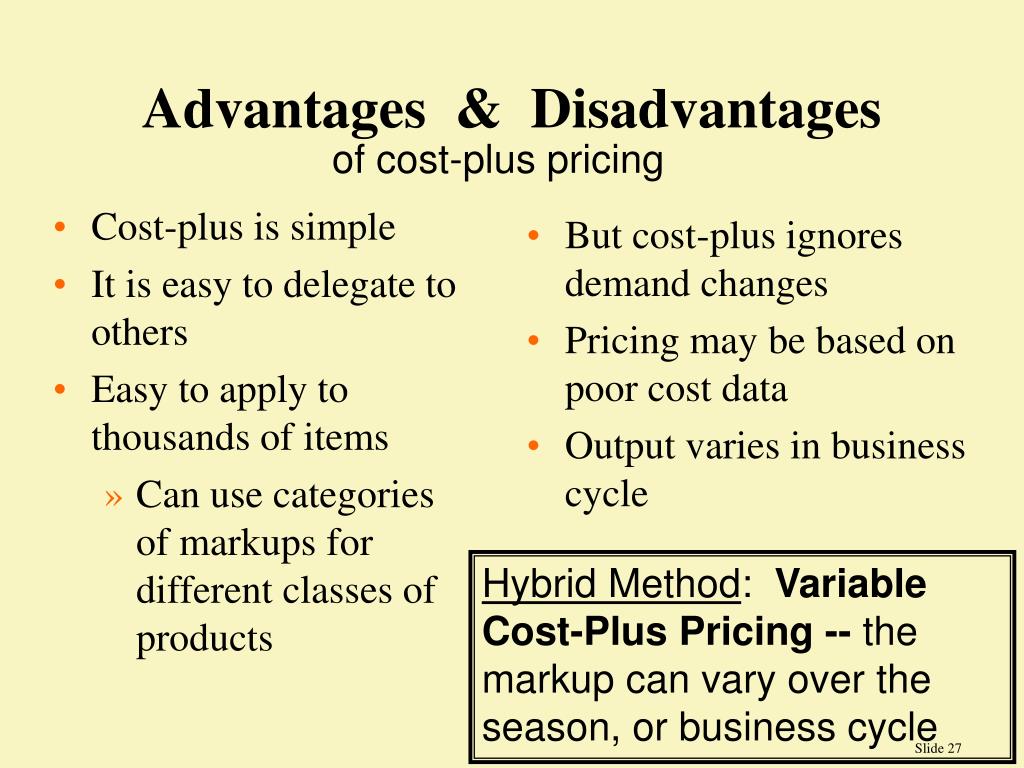 PPT - Pricing Techniques and Analysis Chapter 14 PowerPoint
A Surprising Fact That Will Make You Laugh (Then Cry)
Here’s a wild statistic: some studies show that over 60% of small businesses use Cost-Plus pricing as their primary method. That means the majority of entrepreneurs are playing “price roulette” with their livelihoods. It’s like everyone decided to navigate the ocean using a 17th-century compass made by a blindfolded blacksmith. No wonder half of new businesses fail within five years.
But here’s the real kicker: the most successful companies—like Apple, Tesla, or that fancy bakery downtown—don’t use Cost-Plus. They use value-based pricing, where the price is tied to what the customer feels. Apple isn’t adding up the cost of aluminum and a chip; they’re charging for the feeling of owning a cool, shiny, slightly overpriced brick. And they get away with it because they understand the psychology, not the math.
The Bottom Line (Literally)
Look, Cost-Plus pricing isn’t all bad. It’s a great starting point for beginners or for things like government contracts where everything is boring and regulated. But as a general life strategy, it’s like dating someone just because they’re convenient—it might work for a while, but you’ll eventually realize you’re cheating yourself out of something better.
So next time you’re pricing a product, ask yourself: “Am I building a price based on my receipts, or based on what the world actually values?” If the answer is “receipts,” brace yourself for a comedy of errors. And maybe buy some extra shelf space. You’re gonna need it for all that unsold unicorn glitter. You’re welcome.
