What Internal Temperature Should Chicken Be

There's something deeply satisfying about cooking a piece of chicken to perfection—juicy on the inside, golden on the outside, and safe enough to feed your whole family withou...

There's something deeply satisfying about cooking a piece of chicken to perfection—juicy on the inside, golden on the outside, and safe enough to feed your whole family without a second thought. Whether you're a weekend griller or an everyday weeknight cook, understanding the internal temperature of your chicken is one of the simplest secrets to becoming a better cook overnight. It takes the guesswork out of cooking, boosts your confidence, and dramatically improves the quality of your meals. Best of all, mastering this one skill is fun because it transforms an ordinary dinner into something you can genuinely be proud of.
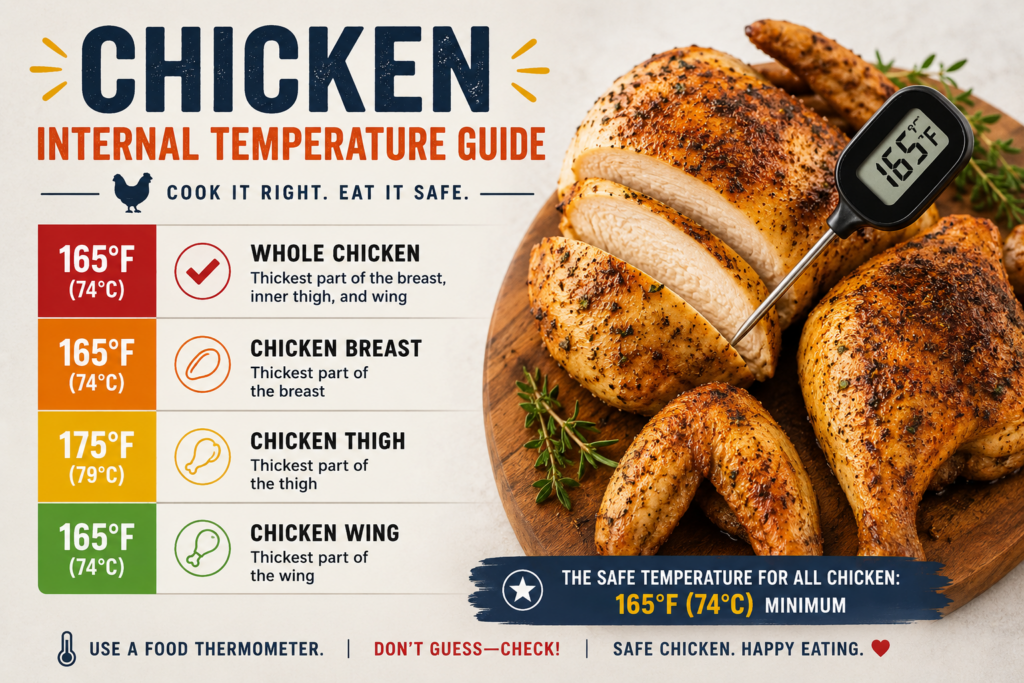
So, what exactly should the internal temperature of chicken be? The United States Department of Agriculture (USDA) recommends that all chicken products reach a minimum internal temperature of 165°F (74°C) when checked with a reliable meat thermometer. This temperature ensures the destruction of harmful bacteria like Salmonella and Campylobacter, which are common culprits in foodborne illness. Each part of the bird should be checked individually—the thickest part of the breast, the inner thigh, and the deepest section near the bone all need to hit that magic number. It might sound overly precise, but this single check can make the difference between a meal your guests rave about and one that sends someone home with an upset stomach.
Here's where many home cooks go wrong: they either overcook their chicken out of fear or cut into it too early hoping it's done. Both approaches are unnecessary when you own a basic meat thermometer. Digital instant-read thermometers cost as little as $10 and give you an accurate reading within seconds. Pro tip: always insert the thermometer into the thickest point of the meat without touching bone, as bone conducts heat differently and can give you a false reading. For boneless, skinless chicken breasts that tend to dry out quickly, you'll want to pull them off the heat at 160°F and let carry-over heat do the final few degrees of work over five minutes—that little trick keeps your chicken unbelievably moist.
Must Read
Wondering about creative ways to apply temperature precision in your cooking? Try a few fun scenarios. Smoking chicken thighs low and slow at 225°F in a backyard smoker until they hit an internal temperature of 190–205°F gives you that fall-apart, barbecue-style tenderness that people line up for at restaurants. Or, consider roasting a whole chicken for Sunday dinner—start by checking the thigh joint at 165°F, then rest the bird under foil for 10 minutes while the juices redistribute. Each bite will be incredibly juicy and the skin will stay profoundly crispy. Even popular comfort foods like chicken pot pie benefit from a quick thermometer check at the center to ensure the sauce and filling have reached the safe zone before serving.
 What Temperature Should a Whole Chicken Be Cooked To?
If you want to make temperature-checking a habit you actually look forward to, give yourself a little system. Keep your thermometer right next to your stove or grill so it's always within arm's reach—out of sight means out of mind, and that's when cooks start guessing again. Make it a game with your family: let the kids take a turn reading the number aloud at dinner, turning a safety check into a memorable kitchen moment. You can also log your temperatures over time to discover which cooking method—grilling, baking, air frying, or pan-searing—consistently gives you the most tender results for your taste preferences.
Ultimately, knowing the correct internal temperature of chicken removes all the uncertainty that makes cooking stressful. It's a quick, inexpensive habit that pays off in safety, flavor, and peace of mind every single time you step into the kitchen. So grab a thermometer, set a 165°F target, and cook your next batch of chicken knowing that you've got science and confidence on your side. Once you experience the difference that precision makes, you'll wonder how you ever cooked wingless wings, dry-as-cardboard breasts, or wobbly drumsticks without one. Happy cooking!