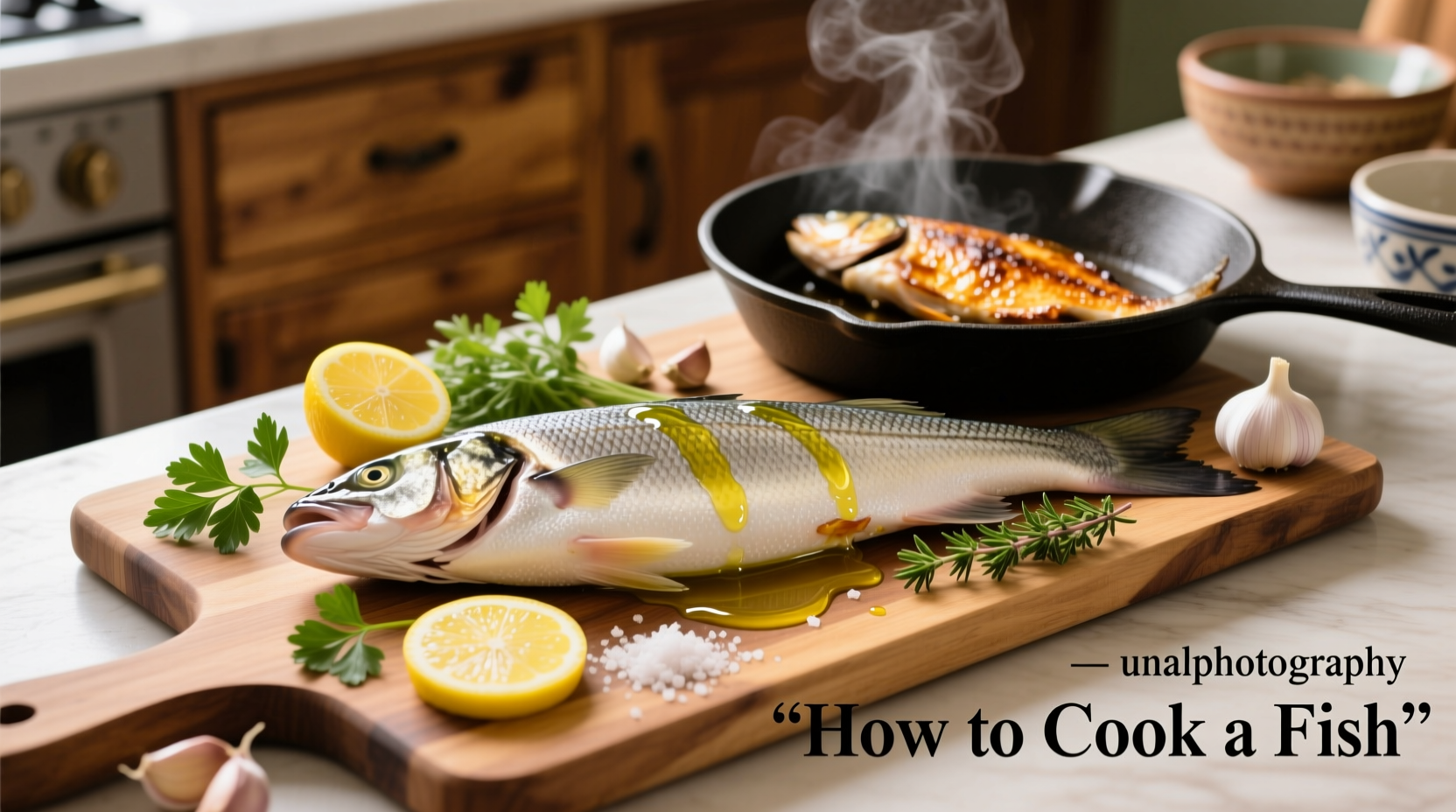
What Happens If You Cook Fish Too Long

Have you ever stood over a pan of sizzling salmon only to realize your attention drifted for just a moment too long? Cooking fish is one of the most **rewarding** kitchen adve...
Have you ever stood over a pan of sizzling salmon only to realize your attention drifted for just a moment too long? Cooking fish is one of the most rewarding kitchen adventures out there, but it also comes with a built-in pressure — because unlike a chicken thigh or a pot of stew, fish does not forgive much. Understanding what happens when you cook fish too long is one of the most useful pieces of food knowledge you can pick up. It saves you from disappointed dinner guests, wasted expensive ingredients, and that lingering question of whether you did it right or ruined it. Whether you are a complete beginner or a weekend grill enthusiast, knowing these limits gives you the confidence to cook with precision and joy.
The first thing that goes wrong when fish cooks for too long is moisture loss. Fresh fish is naturally brimming with water and natural oils, and short, careful cooking is designed to keep those elements locked inside. The moment that interior moisture evaporates beyond a certain point, the texture turns from silky and flaky to dry and chalky. A perfectly seared sea bass or cod fillet should part easily under a fork, still glistening with its own juices. Overcooked fish, by contrast, crumbles apart dryly or even starts to shred, making it look and feel more like old paper than a succulent meal. This is especially noticeable in lean fish like tilapia or sole, which have very little fat to cushion them against the abuse of extra heat.
Once you have lost that moisture, the next casualty is flavour. Fish carries delicate, nuanced tastes — briny from the ocean, subtly sweet, sometimes nutty or buttery — and prolonged heat dulls those notes dramatically. When fillets sit in a pan several minutes longer than needed, the natural sugars and amino acids begin to break down in ways that produce a muted, almost bitter finish. On a grill or barbecue, the same overcooking causes the surface to char unevenly and introduces acrid,-smoky bitterness that masks any real fish taste underneath. Imagine biting into a beautifully seasoned piece of swordfish only to taste nothing — that is the quiet letdown that follows too much cooking time.
Must Read
The visual impact is equally telling. An overcooked fillet often develops a cloudy, opaque opacity right through the center, moving past the translucent blush or gentle whitening that signals perfect doneness. The edges may curl and pull away from the bone, and in extreme cases the fish can literally fall apart into ragged chunks. Skin, which should crisp into a rewarding crunch, instead becomes leathery and tough. These visual and textural cues are your early warning system, so train your eyes to pay attention — the change from lustrous and vibrant to matte and torn is unmistakable once you know what you are looking for.
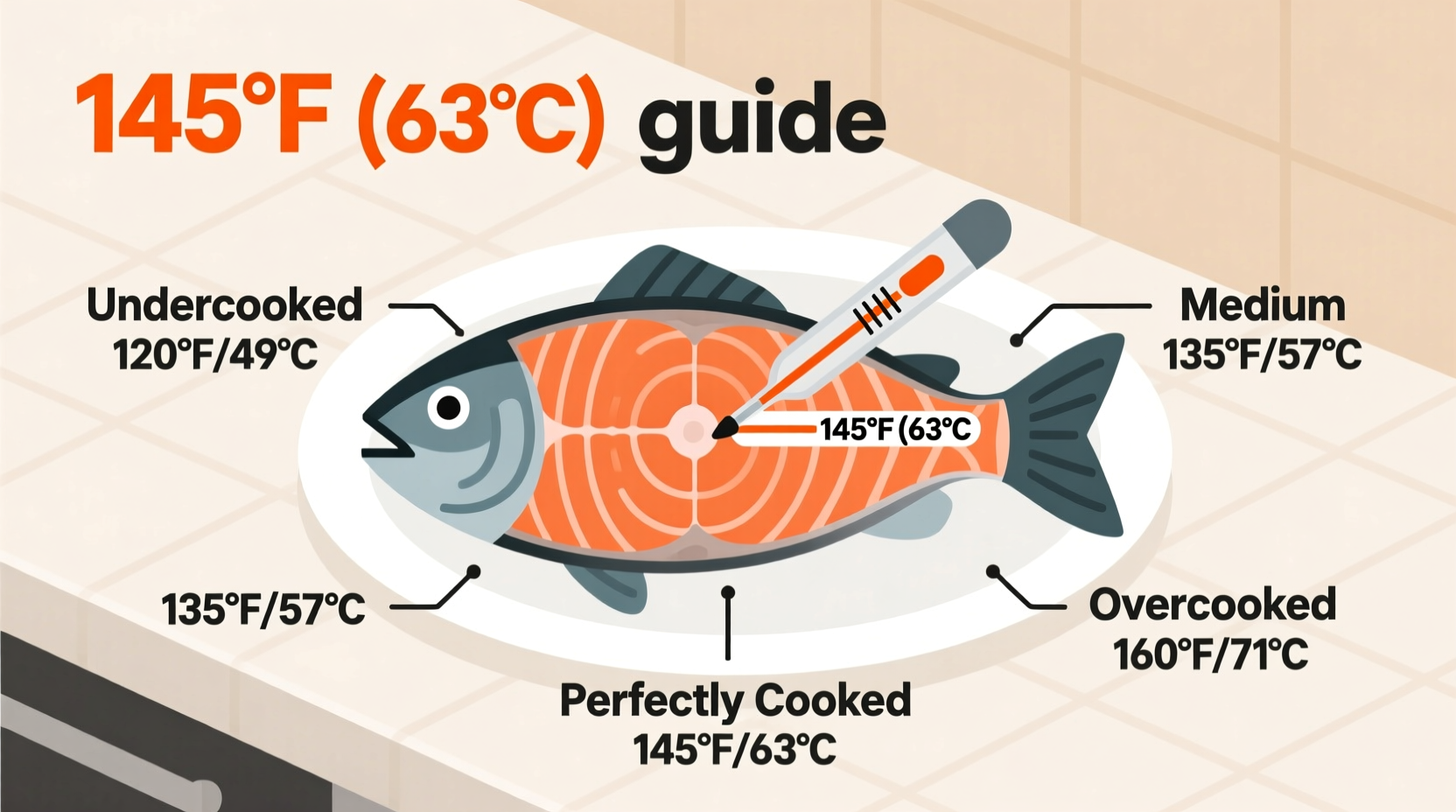 Fish Cooking Temperature: USDA's 145°F Standard
Of course, cooking methods vary, and so do their timing rules. Pan-searing a thin cod fillet might take only three to four minutes per side, while a thick salmon steak in the oven could safely ride at 200 °C for twelve to fifteen minutes. Steaming and poaching are gentler and therefore give you slightly more room for error, because the surrounding liquid keeps the fish from drying out. Deep-frying, on the other hand, is quick but unforgiving — pull the pieces just as the coating turns golden. A helpful general rule is to apply the 10-minute-per-inch-of-thickness guideline and subtract a minute for an early check. Better to undercook slightly and slide it back on for thirty seconds than to overshoot and watch the texture disintegrate.
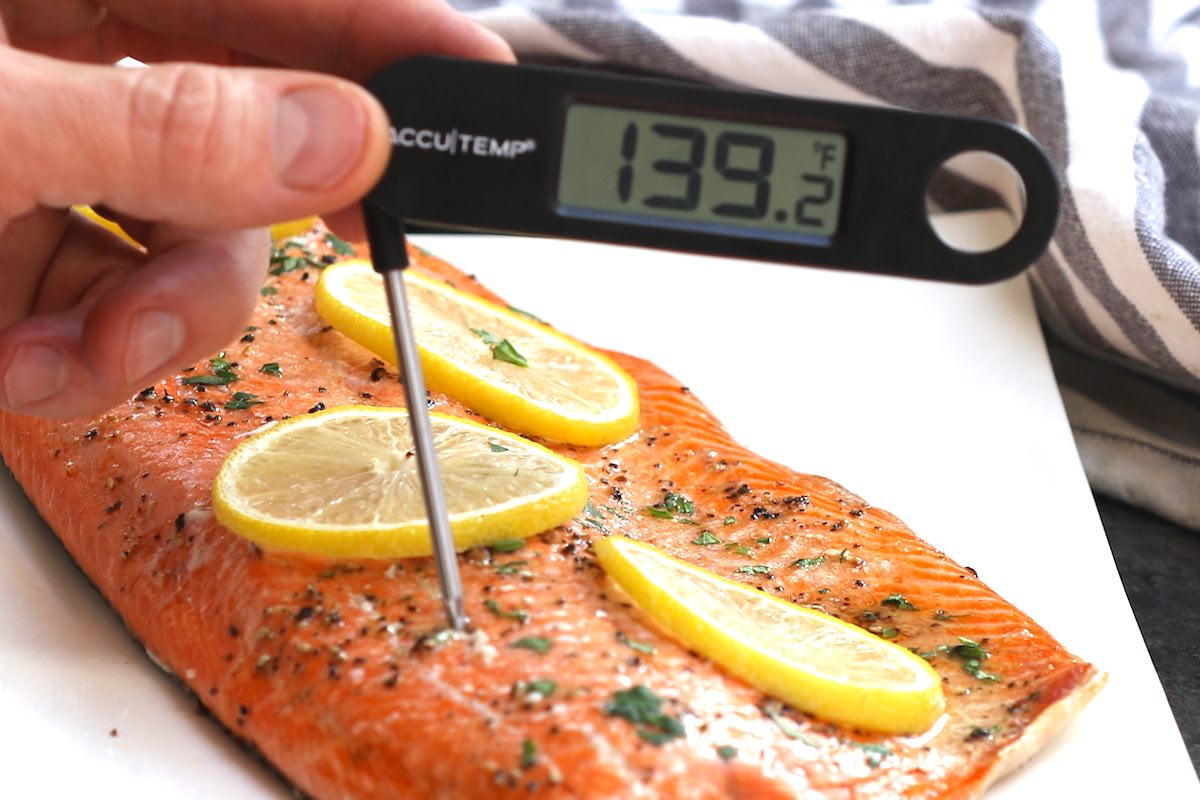
To keep fish perfectly done every single time, build a few practical habits into your kitchen routine. Use a digital instant-read thermometer and aim for an internal temperature around 50–55 °C for most flaky white fish and 55–60 °C for oilier fish like salmon and mackerel. Pat your fillets completely dry before cooking so the exterior sears quickly without steaming the interior. Rest the fish for two to three minutes after cooking — residual heat finishes the job gently without pushing past the ideal zone. Finally, practice the fork test: press lightly on the thickest part, and if it flakes easily and slightly translucent lines remain, you have nailed it. With steady attention and a little patience, you will never dread an overcooked piece of fish again.