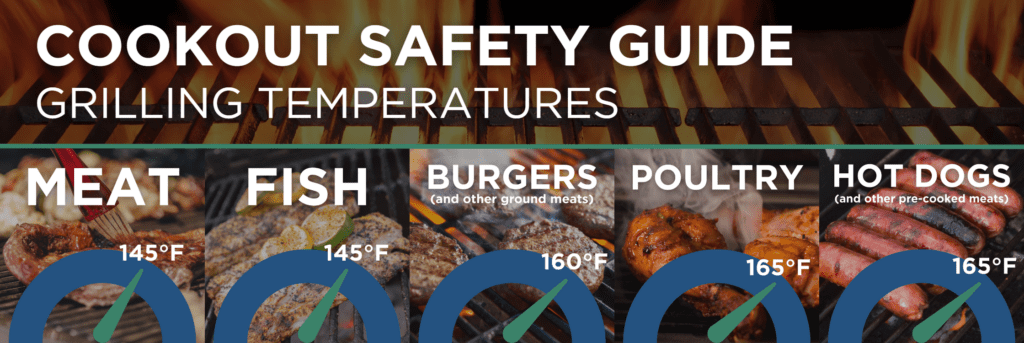
What Food Must Be Cooked To 145

Few things bring people together quite like the shared anticipation of a perfectly cooked meal. Whether it’s a sizzling steak after a long week, a tender pork chop for a famil...
Few things bring people together quite like the shared anticipation of a perfectly cooked meal. Whether it’s a sizzling steak after a long week, a tender pork chop for a family dinner, or a delicate fish fillet on a summer evening, the moment when food reaches its ideal state is deeply satisfying. The key to that satisfaction, however, lies not just in taste, but in safety. Cooking certain foods to an internal temperature of 145°F (63°C) is a non-negotiable standard that ensures you and your loved ones can enjoy every bite without worry. This temperature represents the precise point at which harmful pathogens are eliminated while the food’s natural moisture and texture are preserved, bridging the gap between culinary pleasure and health protection.
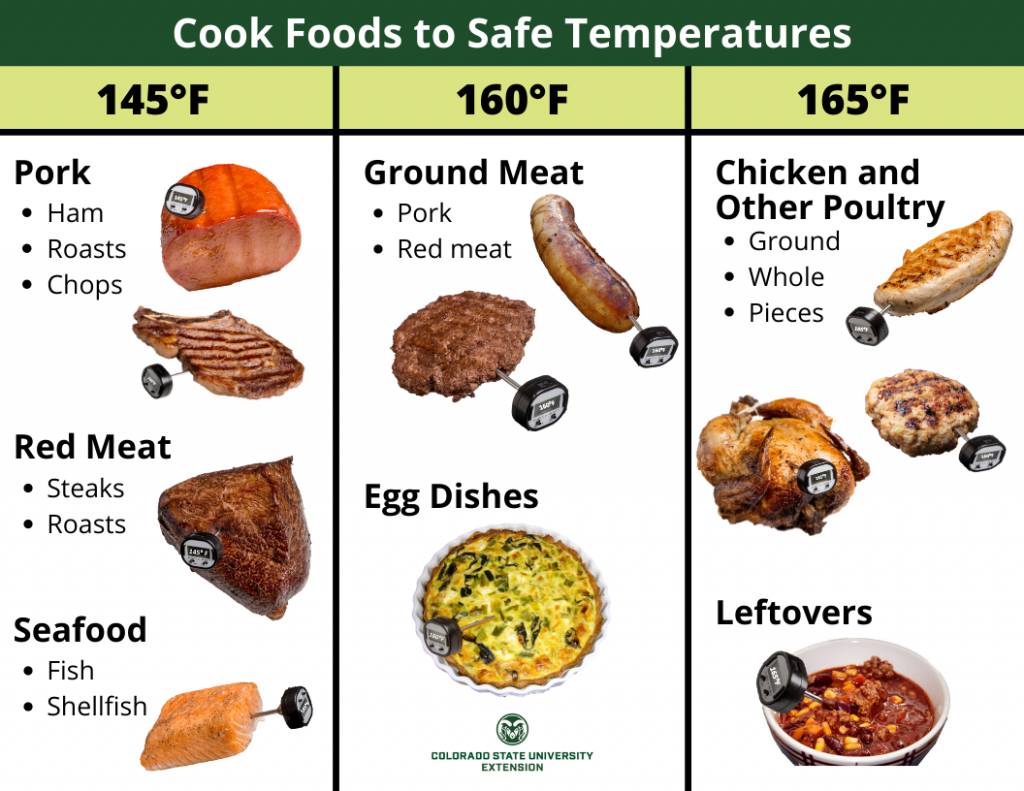
The primary purpose of the 145°F guideline is to target and destroy dangerous bacteria like Salmonella, E. coli, and Listeria that can thrive in raw meats, fish, and eggs. Unlike higher temperatures that might dry out or toughen food, 145°F is a gentle yet effective threshold. For example, a whole cut of beef, such as a roast or steak, reaches this temperature to become medium-rare—juicy, pink in the center, and safe. The key rule according to the U.S. Department of Agriculture (USDA) is that after reaching 145°F, the food must rest for at least three minutes before carving or eating. This resting period allows the heat to continue circulating, killing any lingering pathogens and ensuring the final temperature is stable.
This standard applies to a specific and valuable category of foods. You must cook the following to 145°F with a three-minute rest: whole cuts of beef, veal, lamb, and pork (including steaks, chops, roasts, and fresh ham). Fish and shellfish also fall under this rule, reaching a flaky, moist texture at this temperature. For instance, imagine grilling a thick salmon fillet on a weeknight; using an instant-read thermometer to confirm 145°F in the thickest part gives you confidence it’s safe to serve children or elderly relatives. Similarly, a pork loin roast for a Sunday dinner, cooked to this precise point, remains tender rather than dry, offering a superior eating experience compared to the overcooked, gray pork of the past.
Must Read
One common misconception is that 145°F is necessary for all meats, but it is not. Ground meats (like hamburger, sausage, or meatloaf) must be cooked to 160°F because grinding spreads bacteria throughout the product, requiring a higher temperature to ensure complete elimination. Poultry—chicken, turkey, and duck—must reach 165°F for the same reason. Understanding these distinctions is essential for everyday life. For example, if you’re making burgers, you cannot rely on a pink center as a test; you must use a thermometer to hit 160°F. But if you’re grilling a lamb chop, the 145°F rule lets you enjoy a pink, flavorful center that is both safe and delicious.
The benefits of mastering this temperature extend beyond safety. When you consistently cook to 145°F, you achieve optimal texture and flavor. Fish becomes opaque and flakes easily without being rubbery; pork is juicy and slightly pink inside; beef steaks retain their rich, beefy taste. This consistency transforms cooking from a gamble into a reliable skill. Imagine a busy parent preparing a quick meal—knowing that a pork chop cooked to 145°F is safe and tasty means less stress and more time at the table. For those hosting dinner parties, it eliminates the fear of undercooking a prime rib or overdoing a delicate piece of halibut.
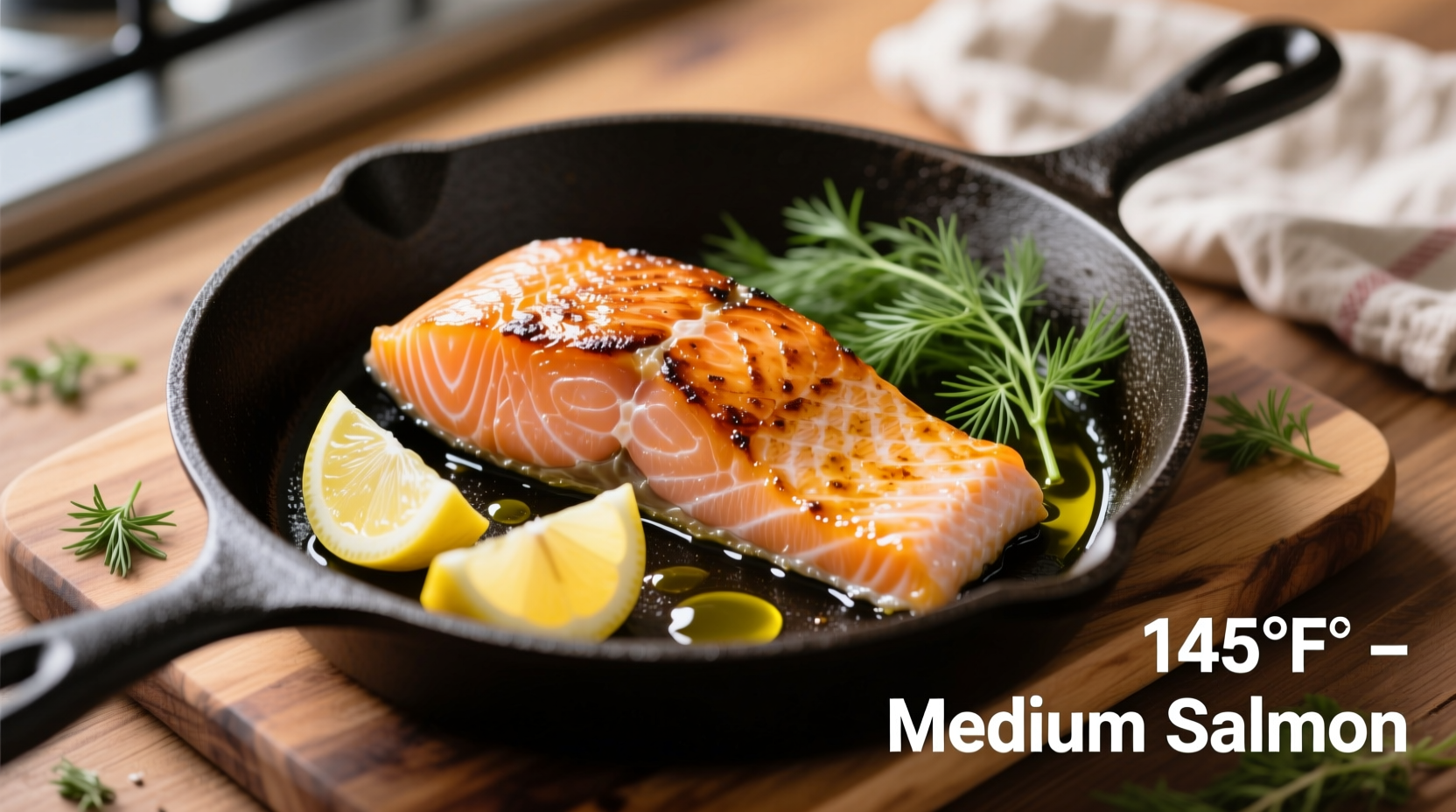 Salmon Cooking Temperature: 145°F for Safe, Juicy Results
To explore this yourself, start with a simple tip: invest in a reliable instant-read thermometer. Insert it into the thickest part of the meat, away from bone or fat, and wait until the reading stabilizes. For fish, aim for the center of the fillet. Another practical tip is to account for carryover cooking—food often rises 5–10°F while resting. So, if you want a perfect 145°F steak, remove it from heat when it reads around 135–138°F; the rest time will bring it up. Lastly, always let the food rest for the full three minutes—this is not a suggestion but a critical part of the safety process. A digital thermometer with a thin probe is best for quick readings, and washing it after each use prevents cross-contamination.
In conclusion, cooking to 145°F is a small, actionable habit that delivers outsized rewards. It empowers you to serve meals that are safe, flavorful, and satisfying, whether for a quick weekday dinner or a festive celebration. By embracing this standard, you move beyond guesswork and into confident, enjoyable cooking. So next time you prepare a steak, a pork chop, or a fillet of fish, remember that a simple temperature check is your best friend—a tool that protects your health and elevates your food. It’s a worthwhile investment in your everyday well-being and culinary pleasure.