What Does The Internal Temp Of Meatloaf Need To Be

So, you’ve got a beautiful meatloaf sitting in the oven. It smells like comfort and childhood, right? But a question hangs in the air: what does the internal temp of meatloaf...
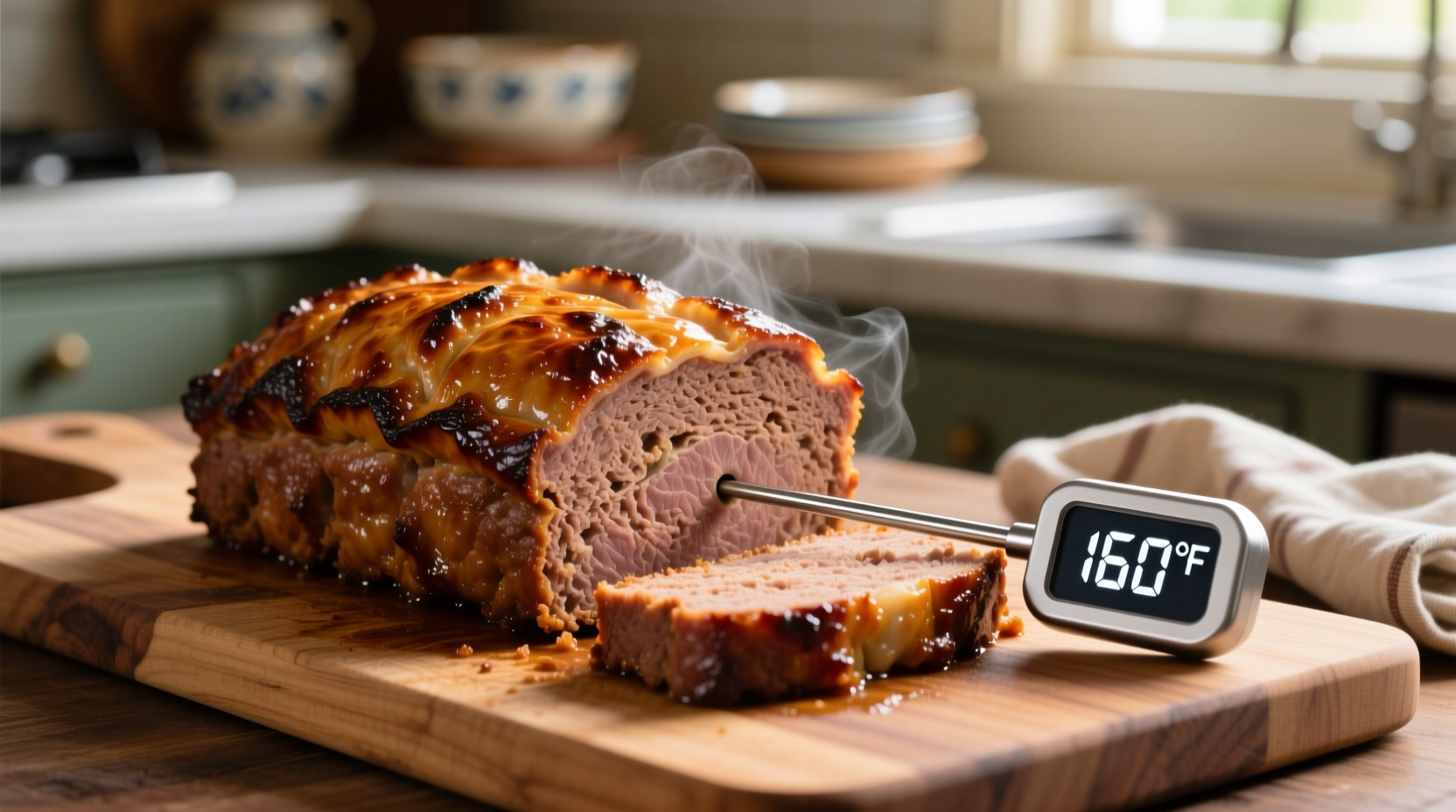
So, you’ve got a beautiful meatloaf sitting in the oven. It smells like comfort and childhood, right? But a question hangs in the air: what does the internal temp of meatloaf actually need to be?
It’s a solid question, and honestly, it’s a game-changer. Nobody wants a slice that’s dry and sad, or worse, a slice that makes you nervous.
Let’s get this straight: your meatloaf’s best friend is 160°F (71°C). The USDA swears by it, and for good reason.
Must Read
Now, I know what you might be thinking: “160°F? That sounds like a very specific number.” It is! And it’s the magic number where all the bad stuff—like Salmonella and E. coli—get the boot.
Think of 160°F as the velvet rope at a fancy club. Bacteria are the rowdy dudes trying to get in, and 160°F is the bouncer who says, “Not tonight.”
But here’s the cool part: meatloaf isn’t just one kind of meat. It’s a mélange. Ground beef, pork, maybe some veal, breadcrumbs, eggs—a whole party in a pan.
That party needs to get uniformly hot. A steak can be medium-rare at 135°F because it’s a solid muscle. Your meatloaf is ground-up pieces, which means more surface area for bacteria to hang out.
So, 160°F is the safety net. It’s not a suggestion; it’s the law of the land for ground meats. It’s also the point where the proteins and fats have a little dance party and everything firms up.
If you pull it out at 150°F, you’re playing a dangerous game. Think of it like stopping a movie ten minutes before the ending. You miss the best part, and you might get a stomach ache.
But wait—what about juiciness? Isn’t 160°F the death of a good loaf? Let’s be real: a dry meatloaf is a tragedy.
Here’s the secret, and it’s a good one: carryover cooking. When you take meatloaf out of the oven, it keeps cooking for a few minutes as the heat evens out.
So, if you pull it out at 158°F or 159°F, it will coast right up to 160°F while it rests. It’s like your meatloaf is taking a victory lap.
You need a thermometer. Not a guessing game, not a poke test. A trusty instant-read thermometer. It’s the difference between being a chef and being a hopes-and-dreams chef.
Stick it into the center of the loaf. Not touching the pan, not near the edge. You want the deepest, most vulnerable spot. That’s where the slowest heat lives.
Think of it like checking the temperature of a swimming pool. You don’t test the shallow end; you jump into the deep end.
Now, here’s a fun twist: beef is not turkey. If you made a turkey meatloaf, you might want a slightly different dance, but the standard rule of 160°F still applies for ground poultry.
For turkey or chicken meatloaf, you actually want to hit 165°F (74°C). It’s a higher bar because poultry is a trickier guest. It takes a bit more heat to make sure everything is friendly.
:strip_icc()/BHG-when-is-meatloaf-done-step-01-0573-1_124kA6HcqWvAY2qjC5kgME-6805831c409d4ac990e0a4c4101addba.jpg) Target This Meatloaf Temperature
Target This Meatloaf Temperature
But your classic beefy, porky meatloaf? 160°F is your golden ticket. It’s the temperature of reassurance.
Why is this so cool? Because it takes the guesswork out of dinner. You stop being a worried parent and start being a confident food wizard. You can actually relax while it bakes.
Imagine pulling that loaf out, inserting the thermometer, and seeing the needle settle at 160°F. That little beep or steady number is the sound of success. It’s your personal ovation.
And don’t forget the rest time. After it hits 160°F, let it sit for ten minutes. This is crucial, like letting a runner catch their breath.
During this rest, the juices redistribute. The loaf firms up so it doesn’t crumble into a pile of sad mush when you slice it. Patience pays off big time.
If you slice it immediately, it’s like opening a present before the wrapping paper is off. The juices run away, and you get a dry, messy plate. Not cool.
So, here’s your checklist: 1) Use a thermometer. 2) Pull at 159-160°F. 3) Let it rest for ten minutes. That’s it. That’s the whole secret.
Some people will tell you to rely on the “wiggle test” or the color of the juices. Ignore them politely. They mean well, but they’re living in the Stone Age.
A thermometer doesn’t lie. It’s the most honest tool in your kitchen. It doesn’t care about your day; it only cares about the truth.
The internal temp of meatloaf is really a story about respect. Respect for the food, respect for your family’s health, and respect for your own sanity.
Once you know this number, you can experiment. Add some ketchup glaze? Go for it. Throw in some shredded cheese? Why not? The 160°F rule keeps you safe while you get creative.
It’s like having a safety harness while you’re rock climbing. You can still take risks, but you won’t fall. That’s a beautiful thing.
So next time you shape that loaf and slide it in the oven, remember this: you’re not just making dinner. You're orchestrating a perfect moment of science and soul.
And that 160°F reading is the finale. The bow at the end of the show. Enjoy every juicy, perfectly safe slice.
