What Does Spam Meat Stand For

You’ve seen it. Maybe you’ve even eaten it. It’s the squishy, pink block that lives in a can and has a shelf life longer than most celebrity marriages. We’re talking about Spa...
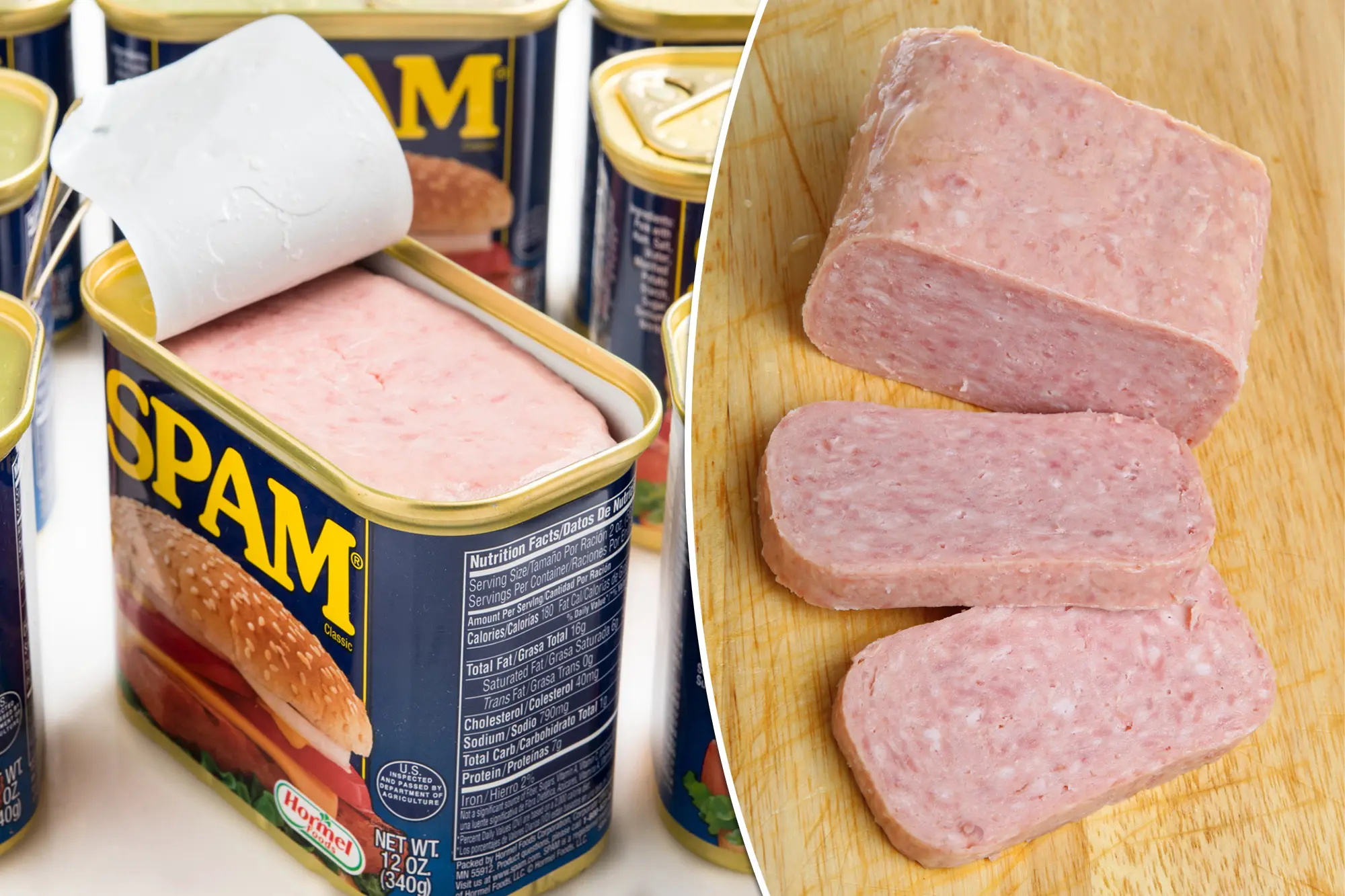
You’ve seen it. Maybe you’ve even eaten it. It’s the squishy, pink block that lives in a can and has a shelf life longer than most celebrity marriages. We’re talking about Spam, of course. But here’s the billion-dollar question that’s haunted lunch tables for decades: What does “Spam” actually stand for?
The official answer, straight from the folks at Hormel Foods, is a bit of a letdown. They say it’s a portmanteau of “spiced ham.” That’s it. Spiced ham. Sounds almost fancy, right? Like something you’d serve on a silver platter at a royal banquet, if the royal banquet was held in a fallout shelter.
But let’s be real—does spiced ham really capture the essence of that gelatinous, salty, pink cube of mystery meat? I think not. The name sounds like a marketing executive in 1937 stared at a can and said, “It’s ham… with… spices. Brilliant!”
Must Read
The Real Origin Story (As Told by a Cynic)
When Hormel launched Spam in 1937, they needed a name that would stick. They held a contest, and a guy named Kenneth Daigneau, an actor and brother of a Hormel VP, won $100 for “Spam.” It wasn’t scientific genius; it was a convenient genius. The name is short, punchy, and impossible to forget—unlike that can you shoved to the back of your pantry in 2019.
The real confusion started during World War II. Spam became a staple for soldiers. Millions of pounds of the stuff were shipped overseas. Suddenly, “Spam” wasn’t just a brand; it was a military maneuver. GIs gave it their own nicknames, like “Ham that didn’t pass its physical.” But the official origin stayed boring: spiced ham.
So It’s Just Ham? Not Exactly.
Here’s the first shocking fact: Spam is mostly pork shoulder, not the pink slime of urban legend. That’s right—it’s the same cut used for pulled pork. The other main ingredient is pork ham, plus salt, water, sugar, and sodium nitrite for that cheerful pink color. It’s actually closer to a real pork product than, say, a hot dog. But don’t let that fool you—it’s still processed within an inch of its life.
The second shocking fact: Spam is hugely popular in Hawaii, South Korea, and the Philippines. In Hawaii, they eat more Spam per capita than any other state. They fry it, glaze it, and stick it on rice for a breakfast called Spam Musubi. It’s practically a religion. There’s even a Spam-themed museum in Austin, Minnesota, where you can buy “Spam Jell-O.” I swear I’m not making that up.
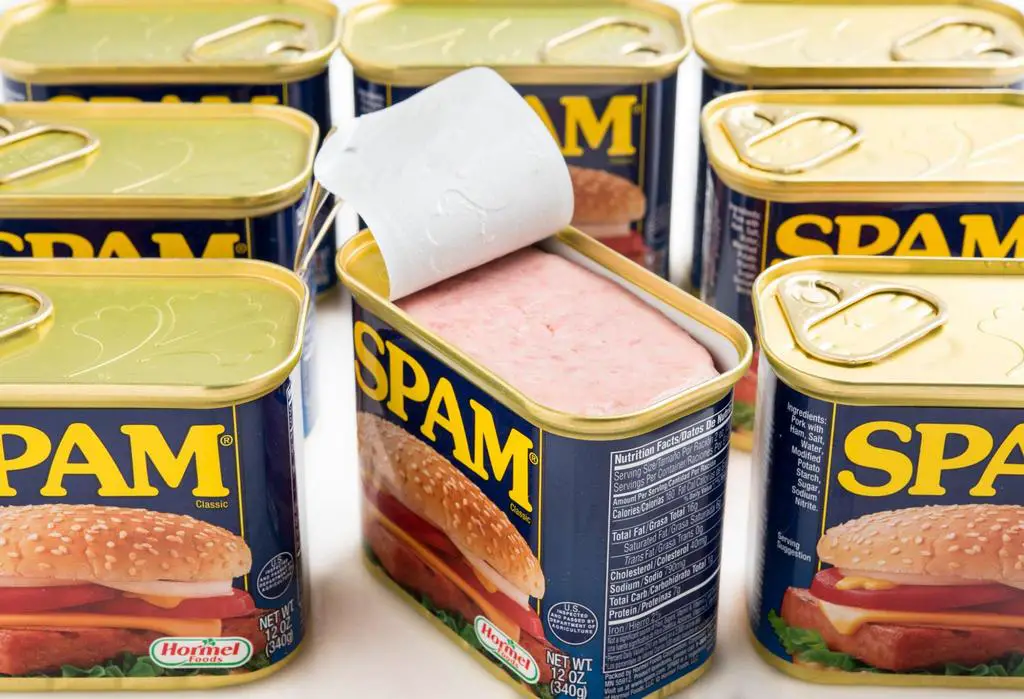 Is Spam Basically Just Spiced Ham in a Can? Behind the Label
What Does SPAM Stand for in the Digital World?
Here’s where it gets weird. Email spam got its name from a Monty Python sketch. In the sketch, Vikings sing “Spam, Spam, Spam, Spam” over and over, drowning out all other conversation. Early internet users compared that to unwanted, repetitive messages flooding forums. So, technically, email spam is named after the canned meat. The meat is the original spam. The internet is just a tribute band.
Think about that for a second. Every time you delete a Nigerian prince email, you’re channeling the spirit of a canned pork product from the 1930s. It’s poetic, in a greasy, salty way.
The Great Conspiracy Theories
Over the years, people have invented their own meanings for the acronym SPAM. My personal favorites include: Something Posing as Meat, Specially Processed Army Meat, and the grim Spare Parts Animal Meat. None of these are official, but they’re way more fun than “spiced ham.” I’ve also heard Some Parts Are Meat, which feels aggressively honest.
One persistent rumor claims Spam stands for “Spiced Pork and Ham.” This is almost true, but Hormel sticks to the simpler version. Why? Probably because “Spiced Pork and Ham” sounds like a menu item at a diner that also serves boiled eggs and a side of nostalgia. Which, honestly, fits.
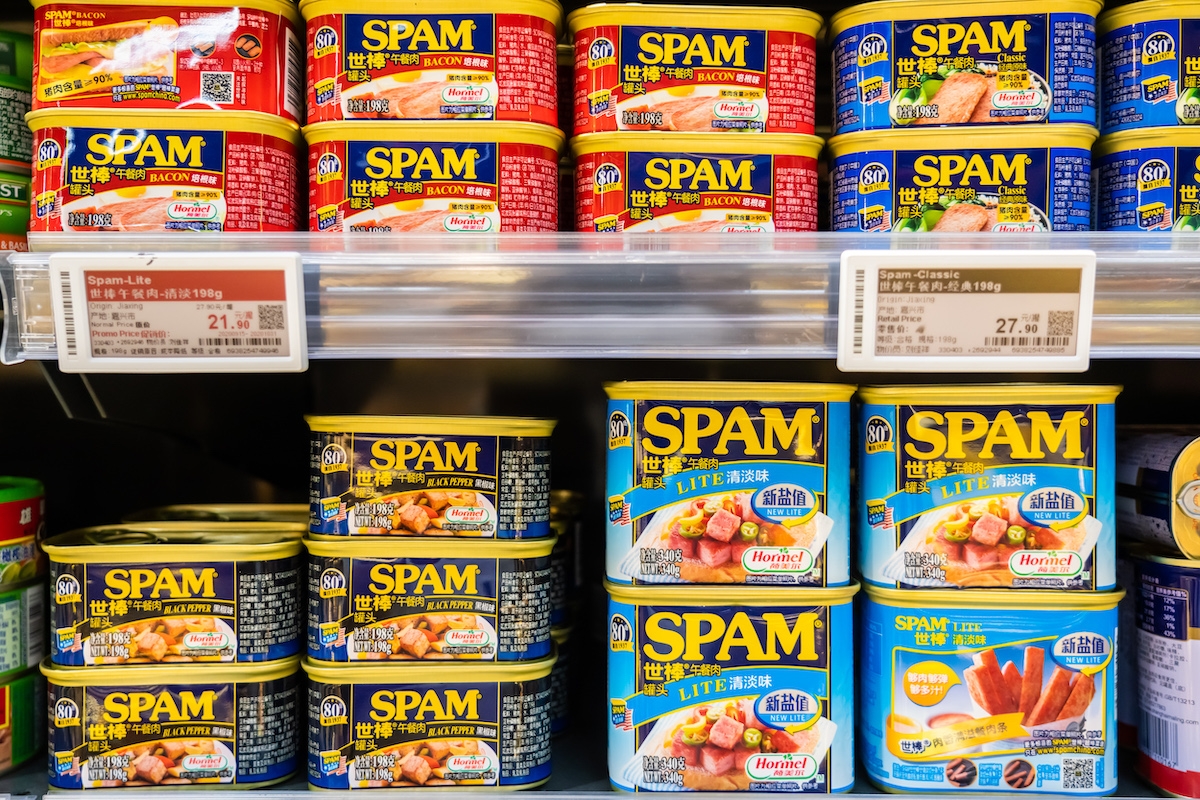 What does SPAM stand for? People are just learning
How to Cook Spam (Without Offending Your Taste Buds)
If you’re brave enough to try it, here’s the pro tip: Slice it thick, fry it until crispy, and pretend it’s bacon’s weird cousin. Do not eat it straight from the can—that’s a texture that can only be described as shudder. The best Spam experience is the “Hawaiian Breakfast”: fried Spam, white rice, and a fried egg. The salt and the rice balance out into something almost… sophisticated.
And if you’re feeling truly adventurous, you can make Spam musubi. It’s like sushi, but instead of tuna, you get a slab of pink processed pork wrapped in seaweed. It’s the snack that says, “I’m trying something new, but I’m also afraid of flavor.”
The Final Slice
So, what does Spam really stand for? Officially, spiced ham. Unofficially, it stands for Anything You Want It to Be. It’s a breakfast protein, a wartime hero, a pantry endurer, and a beloved cultural icon. It’s the food that refuses to die, mostly because it’s stored in an airtight metal fortress.
Next time you see that blue-and-yellow can, you can confidently say, “Ah, the original spam.” Then grab it, fry it, and forgive it for being what it is: a perfectly preserved, slightly embarrassing, surprisingly tasty piece of history. Just don’t ask what’s in the jelly. Some mysteries are better left unsolved.
