What Can Be Used To Substitute Baking Powder

Who hasn’t stared at a recipe that calls for baking powder only to realize you’re out of it? The problem sounds tiny, but it can feel like a mini‑panic moment when you’re in t...

Who hasn’t stared at a recipe that calls for baking powder only to realize you’re out of it? The problem sounds tiny, but it can feel like a mini‑panic moment when you’re in the middle of a fluffy pancake batter or a golden birthday cake. Luckily, the world of kitchen hacks is full of clever, fun alternatives that can keep your baking adventures going without a trip to the store. This guide will show you what you can swap in, why the swap works, and how to do it with confidence.
Baking powder works as a chemical leavening agent that creates bubbles, causing dough and batter to rise quickly. Its double‑acting formula releases gas when it meets moisture and again when heat is applied, giving you lift without the need for yeast. Knowing this helps you understand why a substitute must provide acid and base reactions, or simply generate gas on its own. The good news is that many pantry staples can mimic these reactions, often at a fraction of the cost and with the added bonus of being all‑natural.
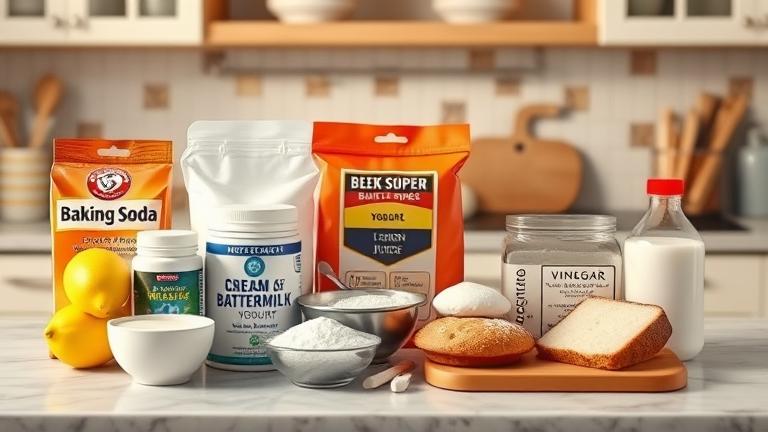
One of the simplest swaps is buttermilk. Its natural acidity reacts with a pinch of baking soda to produce carbon dioxide, giving your batter the same lift you’d expect from powder. If you’re out of buttermilk, a splash of vinegar or lemon juice mixed into milk works the same way. For a completely dairy‑free option, try club soda; its carbonation adds a subtle rise, perfect for light cakes and fluffy muffins. Each of these alternatives is easy to measure and already lives in most kitchens, making them instant heroes when you need a quick fix.
Must Read
If you love experimenting, consider self‑rising flour, which already contains the perfect balance of acid and base. It’s especially handy for biscuits and quick breads because you can simply replace regular flour with the self‑rising variety and skip the separate activation. Another fun trick is to make your own powder by whisking together cream of tartar, baking soda, and a little cornstarch; the cornstarch acts as a stabilizer, giving you a homemade version that stores beautifully in a jar. For a vegan twist, a dash of baking soda paired with a splash of apple cider vinegar creates a rapid bubble burst that mimics double‑acting powder.
Before you swap, always check the ratios: a common rule is to replace one teaspoon of baking powder with one‑half teaspoon of baking soda plus one‑half teaspoon of an acid (vinegar, lemon juice, cream of tartar). Keep the overall volume the same so your batter doesn’t become too dense or too airy. Also remember that fresh substitutes work best, especially if you’re using buttermilk or club soda; old ingredients may lose their potency. Finally, give the batter an extra minute to rest if you’re using a liquid‑based swap, allowing the reaction to fully develop before baking.
 The 10 Best Baking Powder Substitutes We Bet You Didn’t Know About
With these simple swaps, running out of baking powder becomes a fun challenge rather than a setback. Whether you reach for buttermilk, craft your own blend, or dust off self‑rising flour, each option keeps your kitchen adventures lively and your treats delightfully fluffy. So the next time a recipe calls for that little canister, smile, count on your pantry staples, and enjoy the creative freedom of baking without limits!
Even the best swap can stumble if you ignore a few common traps. When using vinegar or lemon, be sure to stir it into the dry ingredients promptly; otherwise the acid may react before the batter is assembled, leaving you with a less‑rising result. If a recipe calls for baking powder in two portions (sometimes listed as “double‑acting”), you can mimic that by adding half of your substitute at the start and the other half just before you whisk the batter. For storage, keep homemade powder in an airtight jar away from moisture, and label it with the date—its potency fades after a few months. Finally, trust your senses: if the batter smells faintly sour after adding an acidic swap, you’re on the right track to a fluffy, well‑leavened treat. Keep experimenting, share your favorite swap with friends, and watch your confidence rise as high as your cakes. Every kitchen becomes a playground for flavor and imagination, joyful.