What Can Baking Powder Be Replaced With

There is a quiet magic in the alchemy of baking—the way a dense batter transforms into a light, airy cake in the heat of the oven, or how simple flour and liquid become a fluf...

There is a quiet magic in the alchemy of baking—the way a dense batter transforms into a light, airy cake in the heat of the oven, or how simple flour and liquid become a fluffy pancake on the griddle. Much of this sorcery comes down to one humble ingredient: baking powder. It’s the reliable leavening agent that introduces tiny gas bubbles into doughs and batters, creating the texture and rise we so often take for granted. For the home baker, a can of baking powder is a kitchen staple, a silent partner in making muffins rise tall, scones flaky, and cookies tender. Its key purpose is chemical leavening, reacting with moisture and heat to release carbon dioxide, which expands and lightens your baked goods. This convenience is a daily benefit, allowing anyone to whip up a quick bread or dessert without the patience required by yeast.
But what happens when you reach into your pantry only to find the canister empty, or when a sudden baking craving hits late at night? The panic is real, yet completely avoidable. Fortunately, baking powder is not irreplaceable. Several common kitchen ingredients can step in to save your recipe, each offering a slightly different chemical reaction and texture. Understanding these substitutes not only rescues a batch of muffins but deepens your grasp of baking science. You don’t need to run to the store; you likely have a solution already waiting in your fridge or cupboard.
The most straightforward substitute is a simple mixture of baking soda and an acid. Baking powder is essentially pre-mixed baking soda (a base) with a dry acid (like cream of tartar) and a starch. To replicate it, combine one part baking soda with two parts cream of tartar—for example, 1 teaspoon of baking powder equals ¼ teaspoon of baking soda plus ½ teaspoon of cream of tartar. This works perfectly in almost any recipe, from sugar cookies to scones. Tip: Use it immediately, as the reaction starts the moment it touches liquid; don’t let the batter sit around.
Must Read
If you don’t have cream of tartar, buttermilk or plain yogurt is your next best ally. Because these dairy products are naturally acidic, they can activate baking soda directly. For every 1 teaspoon of baking powder your recipe calls for, replace it with ¼ teaspoon of baking soda and reduce the recipe’s liquid by about ½ cup, swapping that liquid for buttermilk or yogurt. Imagine making fluffy pancakes: this substitution yields a tender, tangy crumb that is often even more flavorful than the original. Scenario: You’re making banana bread and have no baking powder. Use the baking soda + buttermilk trick, and your loaf will still rise beautifully.
Another surprising hero is vinegar or lemon juice mixed with baking soda. This combination creates an immediate, vigorous fizz—a visual confirmation of leavening at work. For each teaspoon of baking powder, mix ¼ teaspoon of baking soda with ½ teaspoon of white vinegar or fresh lemon juice. Add this liquid mixture at the last moment to your batter. This works wonders for simple cakes and quick breads, but avoid it in delicate pastries where a strong acid flavor could overpower. The benefit is that you almost always have these ingredients on hand, turning a potential fail into a baking success.
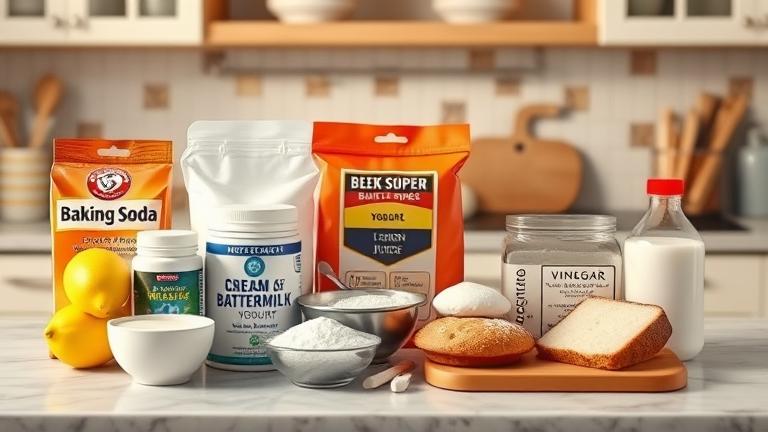 what can you substitute for baking powder? - Test Food Kitchen
For those who prefer a non-dairy, non-acidic option, self-rising flour is a built-in shortcut. Self-rising flour already contains baking powder and salt mixed into the flour. Simply replace the all-purpose flour in your recipe with self-rising flour, and omit both the baking powder and any added salt. If your recipe calls for 2 cups of flour and 2 teaspoons of baking powder, using 2 cups of self-rising flour covers that perfectly. This is a time-saver for everyday baking like biscuits or drop cookies, though it won’t work for recipes that rely on precise pH balance (like very sugary cakes).
Finally, remember that egg whites can contribute leavening, though they don’t replace baking powder directly. Whipped egg whites incorporate air that expands in the oven, providing lift. For recipes like soufflés, angel food cake, or some pancakes, you can reduce baking powder by half and beat the egg whites until stiff before folding them in. This is a more advanced technique, but it yields exceptionally light and airy results. Tip for exploration: Try a simple recipe—like one-bowl muffins—and test one batch with standard baking powder, then a second batch using the baking soda + buttermilk substitution. Compare the texture and flavor; you’ll learn exactly how each substitute changes the final bake.
Baking powder is indispensable, but it is not invincible. With a few pantry staples and a little understanding, you can confidently replace it using baking soda plus an acid, buttermilk, vinegar, self-rising flour, or even whipped egg whites. Each method brings its own character to your baked goods, from tangy tenderness to airy lightness. The next time you find the baking powder tin empty, don’t despair—embrace the experiment. Your kitchen is full of leavening possibilities, and your next batch of scones or cupcakes might turn out even better than you imagined.
