What Are The Extensive Physical Properties Of A Silver Spoon

Welcome, curious minds! You might think a silver spoon is just a fancy utensil for stirring tea or showing off at dinner parties. But hold on—this everyday object is actually...
Welcome, curious minds! You might think a silver spoon is just a fancy utensil for stirring tea or showing off at dinner parties. But hold on—this everyday object is actually a treasure chest of physical properties waiting to be explored. Why should you care? Because understanding the science behind a silver spoon helps you appreciate the invisible magic in your hands: how it feels, shines, heats up, and even fights germs. By the end of this article, you’ll never look at a spoon the same way again—and you might even impress your friends with cool facts at your next meal. Let’s scoop into the extensive physical properties of silver!
First, let’s talk about density and weight. Silver is a dense metal, with a density of about 10.5 grams per cubic centimeter—roughly ten times denser than aluminum. That’s why a silver spoon feels satisfyingly heavy in your hand, not flimsy like a plastic one. This heft gives you a sense of quality and balance. When you stir hot soup, the weight helps you control the motion without effort. Fun fact: a typical silver spoon weighs around 40 to 60 grams, depending on its size. If you’re a collector, you can even test a spoon’s authenticity by feeling its solid, substantial heft—fake silver often feels too light or hollow.
Now, shine on—let’s explore luster and reflectivity. Silver has the highest optical reflectivity of any metal, reflecting over 95 percent of visible light. That’s why a polished silver spoon acts like a tiny mirror you can use to check your teeth or signal a friend across the room. This property isn’t just for show; it also makes silver ideal for crafting decorative heirlooms that catch candlelight beautifully. But here’s a trick: if you notice a yellowish or dull spot on your spoon, that’s tarnish—a chemical reaction with sulfur in the air. To restore that brilliant shine, just rub it gently with a baking soda paste. The high reflectivity is also why silver spoons were once used in photography, acting as primitive reflectors to direct light onto film!
Must Read
Let’s heat things up with thermal conductivity. Silver is the best conductor of heat among all metals—even better than copper or gold. When you dip a silver spoon into hot tea, the handle gets warm within seconds, because heat zooms through the silver at an incredible rate (about 430 watts per meter-Kelvin). This makes it dangerously efficient—you can burn your fingers if you leave the spoon in boiling water! But for practical use, it means your spoon cools your drink faster by drawing heat away. Want a fun experiment? Place a silver spoon and a stainless-steel spoon side by side in icy water. After 30 seconds, touch each handle—the silver one will feel colder because it transfers heat from your hand away quicker. That’s the same reason a silver spoon feels instantly cold against your tongue on a summer day.
 The Adventures of A Silver Spoon – Heenan Footsteps
Beyond conductivity, consider malleability and ductility. Silver is incredibly soft and bendable compared to steel or titanium. A single gram of silver can be hammered into a sheet just 0.00024 centimeters thin—thin enough to cover a postage stamp a thousand times over! A silver spoon, though not that thin, will dent or bend if you try to pry open a jar with it—so be gentle. That same softness makes it a dream for artisans who engrave delicate patterns or shape handles into elegant curves. If you ever inherit an antique silver spoon, look for hallmarks (tiny stamps) that prove its purity and origin. The malleability also means you can test its authenticity with a simple magnet: real silver is non-magnetic, so a magnet won’t stick. Try it on a spoon from grandma’s drawer—just don’t scratch the finish!
Of course, we can’t ignore antimicrobial properties. Silver has been used for centuries to keep water fresh and wounds clean, because it kills bacteria, fungi, and viruses on contact. The science: silver ions released from the surface disrupt microbes’ cell membranes, stopping them from growing. That’s why a silver spoon is naturally sanitary—even if you drop it on the floor, it’s less likely to harbor harmful germs than a plastic or wooden spoon. In fact, studies show that silver can kill over 99 percent of bacteria within a few hours. For a fun daily use, stir your yogurt or honey with a silver spoon—the antimicrobial action may help preserve the food longer. Just avoid leaving it in acidic foods like lemon juice too long, as that can cause a metallic taste (and a chemical reaction).
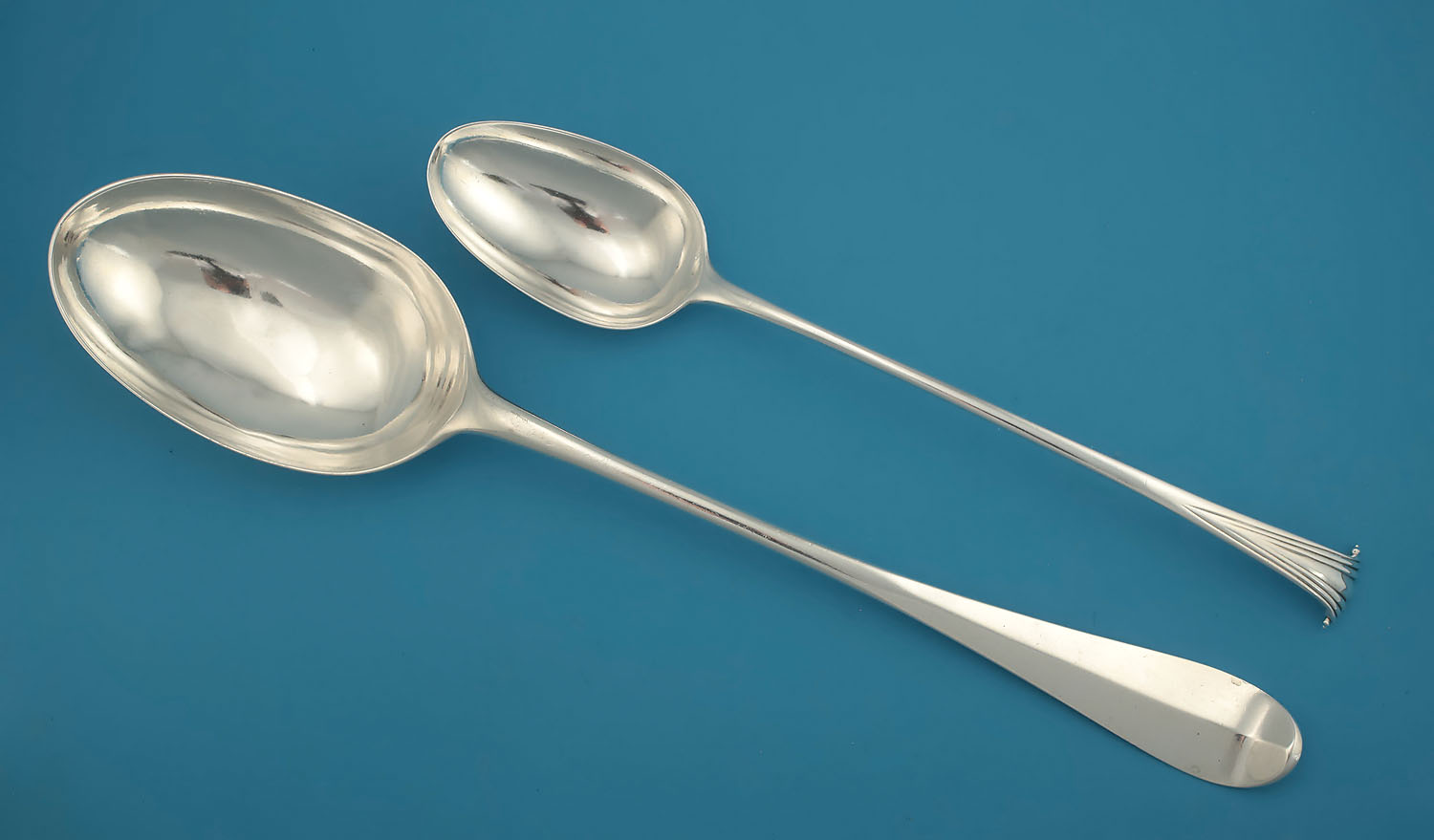
 Antique English 18th Century Sterling Silver Spoon London 1784 William
Finally, let’s talk about acoustic properties—the sound a silver spoon makes. When you tap a silver spoon against a glass, it produces a clear, ringing tone that lasts for several seconds. This is because silver has a high elastic modulus, meaning vibrations travel through it quickly and linger. Compare that to the dull thud of a stainless-steel spoon. Musicians sometimes use silver spoons as percussion instruments in folk bands—just strike two together for a crisp bell-like sound! For a practical tip: if you’re dining in a quiet restaurant, avoid tapping your spoon against the table—it will sound like a church bell and draw every eye. But at home, you can test the purity of your spoon by holding it by the handle and striking it with another silver object. A pure silver spoon will ring for 10 to 15 seconds, while an alloyed one will stop much faster.
So, next time you pick up a silver spoon, take a moment to appreciate its extraordinary properties. It’s dense yet delicate, shiny yet tarnish-prone, heat-conducting yet cold-feeling, strong yet soft—and it even fights germs! Whether you’re a cook, a collector, or just a curious soul, you now have the knowledge to choose, care for, and play with your silverware in new ways. Try the magnet test tonight, or challenge a friend to a spoon-ring-off. Remember, a silver spoon is not just a tool; it is a miniature science lab sitting right in your drawer. Enjoy turning the ordinary into the extraordinary—one spoonful at a time.
