Vodka Or Whiskey Which Is Better For Health

So you’re staring at the liquor cabinet, pondering life’s truly burning questions: vodka or whiskey? And more importantly, which one won’t make your liver send you a passive-a...

So you’re staring at the liquor cabinet, pondering life’s truly burning questions: vodka or whiskey? And more importantly, which one won’t make your liver send you a passive-aggressive email tomorrow? Let’s settle this, preferably with a glass in hand and a snack nearby. Spoiler alert: neither one is a health food, but one might be trying a little harder to pretend it is.
The Great Alcohol Showdown
First, let’s admit we’re all just drinking fancy antiseptic with flavors. Vodka is basically water and ethanol, filtered so aggressively it has no personality—like a friend who agrees with everything you say. Whiskey, on the other hand, is aged in wood, picks up weird notes of vanilla, smoke, and regret, and has actual history in a bottle.
But health-wise? Vodka is the minimalist of the booze world. It has fewer congeners—those toxic byproducts that give you a hangover that feels like a tiny man with a hammer is renovating your skull. Whiskey, being darker and more complex, has more congeners, which means it can hit you harder in the morning.
Must Read
The “Healthy” Club: Vodka’s Weak Case
Vodka is often marketed as the “low-cal” option, and sure, a shot has about 64 calories. But let’s be real—nobody takes one shot of vodka unless they’re at a funeral for their social life. Vodka’s purity means it’s mostly just alcohol, which your body treats like a toxin and burns for fuel before it touches any actual food.
Here’s a surprising fact: vodka might actually help with stress—in the sense that drinking it makes you forget your problems, which is basically a mental health hack if you squint. But one study from the British Medical Journal (yes, real doctors study this) found that moderate vodka drinkers had slightly lower risks of heart disease. Interpret that as you will, preferably while eating a salad.
Whiskey: The Pretentious Health Nut?
Whiskey fans love to brag that it’s made from grain and aged in oak, which apparently counts as “whole food” if you’re optimistic. It contains ellagic acid, an antioxidant that might kill cancer cells in a petri dish—which is great unless you’re a cancer cell living in a lab right now. The same acid is also found in raspberries, so you could just eat raspberries and not deal with a hangover.
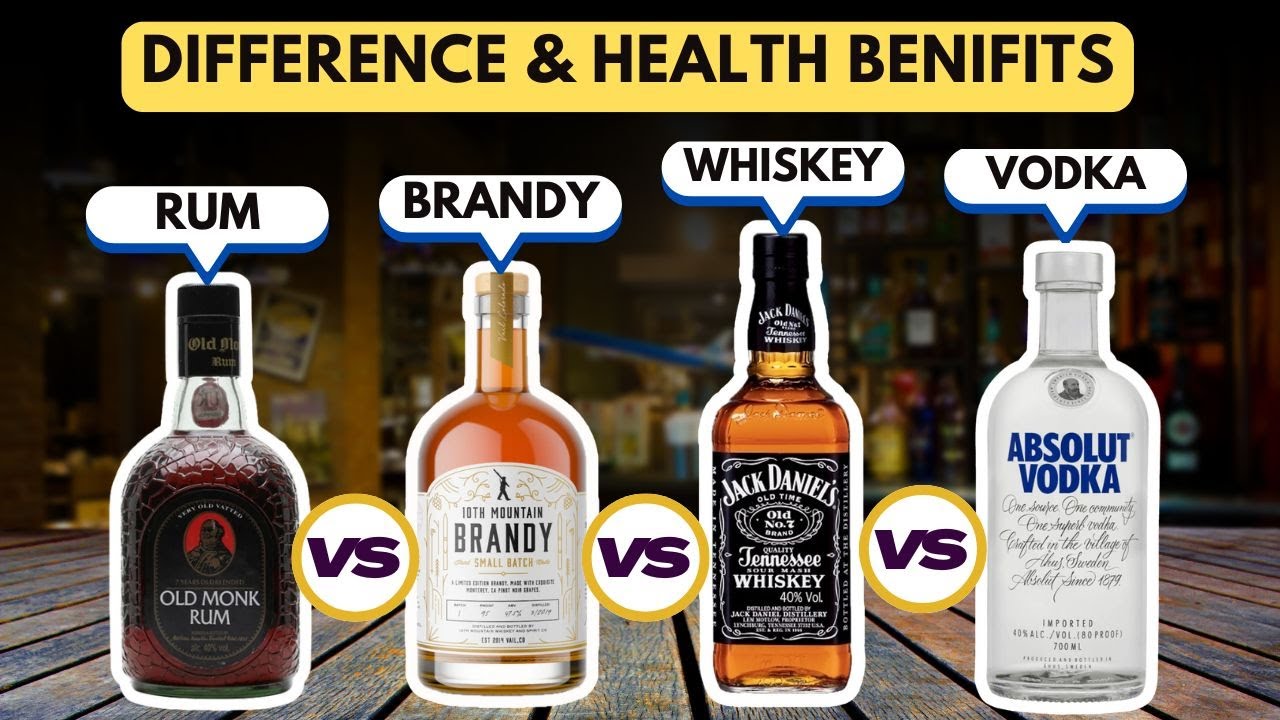 Rum vs Whiskey vs Vodka vs Brandy | What’s the Real Difference? Which
But let’s be fair: whiskey has less sugar than vodka, because vodka is often diluted with sugar to hide its paint-thinner flavor. A single shot of whiskey has zero carbs, while flavored vodkas might as well be liquid candy. Also, whiskey’s darker color comes from compounds called tannins, which are also in red wine and are linked to better heart health—if you drink it like a responsible European, not like a pirate who just found treasure.
The Hangover Math
Let’s talk about the morning after, because that’s where the real health test happens. Vodka is cleaner, so you’re less likely to wake up with a splitting headache. But whiskey’s congeners (specifically methanol and acetaldehyde) can make your head feel like a drum kit being played by a toddler. One study even found that bourbon (a type of whiskey) gave people worse hangovers than vodka—but only if they drank enough to feel regret.
Here’s the kicker: your body processes alcohol the same way regardless of the source. The liver doesn’t care if you’re drinking artisanal small-batch whiskey or vodka that was used in a science experiment. It just sighs, converts the ethanol into acetaldehyde (a known carcinogen), and then turns it into harmless acetate. The speed you drink matters way more than the color of the liquid.
 Vodka vs Whiskey: Everything You Need to Know in 2026 – ATH Vodka
The Unofficial Verdict (with Caveats)
If you’re trying to be healthy, drink vodka if you’re calorie-counting and want a clean buzz—just avoid the flavored stuff that’s basically a chemistry set. Whiskey is a better choice if you want antioxidants (and a story to tell at parties about “maturation in charred oak”). But honestly, the healthiest move is to not drink either, which is the boring answer no one wants to hear.
Remember: both are alcohol, which increases your risk of cancer, liver damage, and texting your ex. So pick your poison based on taste, not a science paper. And if you’re really concerned about health, just switch to water—but I promise, water never made anyone dance badly to ABBA at 2 AM.
So which one wins? Neither. But if I’m being honest, I’ll take a whiskey on the rocks. It looks intellectual, and maybe the antioxidants will help me feel better about the poor life choices I’m about to make. Cheers, sort of.
