Trade Finance Security Key Concepts

So, you’re diving into the glamorous world of trade finance? I know, I know—it sounds about as thrilling as watching paint dry in a spreadsheet. But trust me, once you wrap yo...
So, you’re diving into the glamorous world of trade finance? I know, I know—it sounds about as thrilling as watching paint dry in a spreadsheet. But trust me, once you wrap your head around security, you’ll realize it’s the ninja of the business world: quiet, deadly serious, and absolutely crucial to keeping your cargo from being hijacked by a guy named “Vlad” in a fake port.
Let’s chat over coffee—or wine, I don’t judge. The first big concept is credit risk. Imagine you’re selling fancy Italian leather bags to a buyer in Brazil. You ship them, and then… silence. No payment, just the sad sound of crickets. That’s the bad kind of risk. So, we use letters of credit (LCs). Think of an LC as a financial bouncer: it says, “No bag leaves the warehouse until the bank promises the cash.” It’s not sexy, but it keeps your Italian leather from becoming a Brazilian patio ornament.
Next up: fraud. Oh yes, the fun stuff. Trade fraud is like that friend who “borrows” your car and returns it with a flat tire and a note that says “Oops.” Common scams include fake shipping documents, phantom cargo (crates full of air), and double-financing (selling the same invoice to two banks). The key here? Due diligence. In plain English: check everything. Verify the ship exists. Google the captain. Look up the warehouse address on Street View. If the deal smells like a bargain bin at a fish market, walk away.
Must Read
Now, let’s talk country risk. This is where geopolitics gets cozy with your wallet. If your buyer is in a country where the currency does the limbo—drops lower and lower—you need protection. That’s where political risk insurance comes in. It’s like a cozy blanket for your anxiety: if a government decides to nationalize your cargo or a war breaks out, your insurer will cry with you—and then pay you.
Here’s the plot twist: digitalization is the new hero. Blockchain isn’t just for hype bros and crypto millionaires. It creates an immutable record of every step in a trade deal—like a spy camera for your shipment. Smart contracts can auto-release payment when the truck arrives. It’s trust, coded. And while it won’t solve your fear of public speaking, it seriously reduces the chance of “Hey, where’s my money?” headaches.
But wait, there’s more! Collateral management is the bouncer’s cousin. You hold the goods (or a warehouse receipt) until payment clears. It’s the trade finance version of keeping the remote control hostage until your partner admits you won the board game. Effective? You bet.
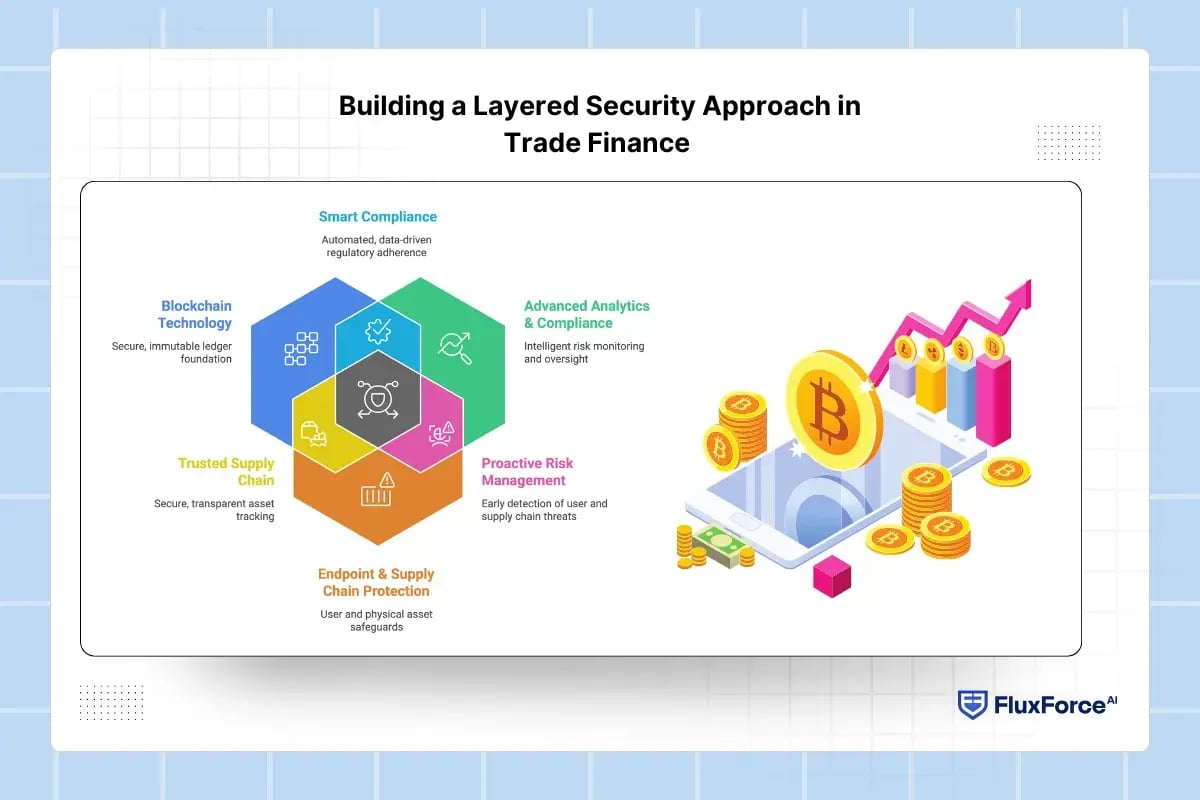
.webp?width=1200&height=800&name=Building a Layered Security Approach in Trade Finance (2).webp) Trade Finance Security: Why Blockchain Alone Isn't Enough
Trade Finance Security: Why Blockchain Alone Isn't Enough
And never, ever forget the unsung hero: KYC—Know Your Customer. It sounds like a boring compliance checkbox, but it’s really just a polite way of saying, “Let’s not do business with that guy whose LinkedIn photo looks like a mugshot.” Run background checks, ask for references, and if their email address is “totallylegit@hotmail.com,” run for the hills.
So here’s your takeaway, friend: trade finance security is basically a toolkit of smart paranoia. You verify, insure, digitize, and document like your favorite overprotective aunt at a family BBQ. The goal? Not to stop the music, but to make sure no one steals the grill.
And the beautiful truth is, all this caution lets you sleep better at night—and dream bigger by day. Because when the cargo arrives, the money flows, and your client smiles, you realize that security isn’t the boring stuff. It’s the stuff that makes the adventure possible. So go on, trade boldly, laugh at the risks you’ve tamed, and maybe treat yourself to that Italian leather bag. You’ve earned it. 👜✨
